
Below is a review of the posts on Facebook and LinkedIn from the past week. You can check out the full posts by clicking on the links.
NOTE: remember that we now post every other day.
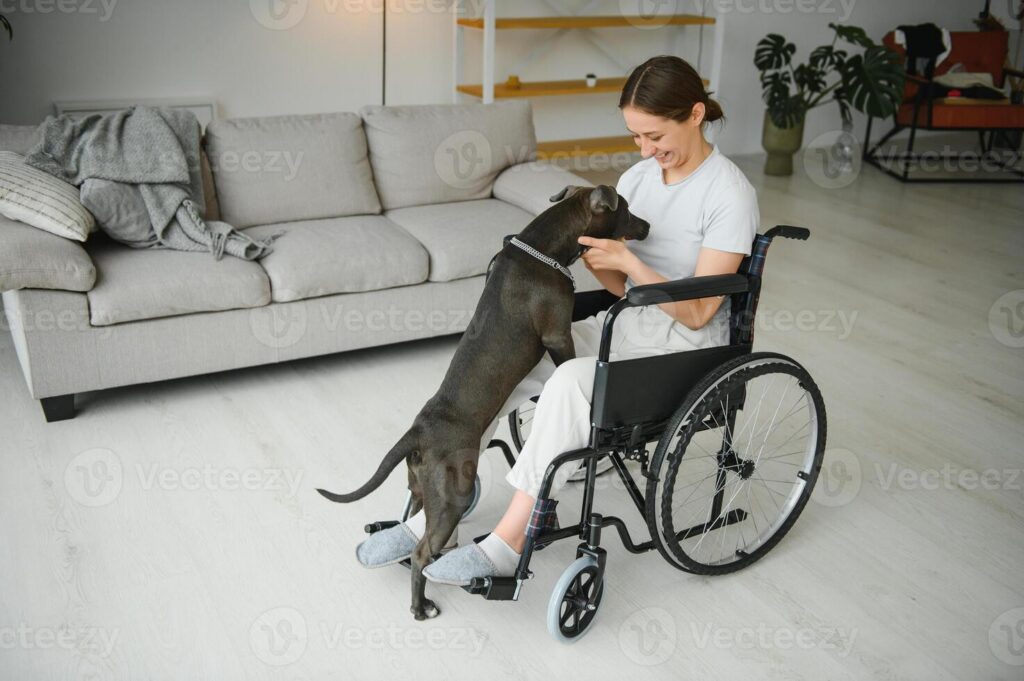
The posts on Monday 9/28/2026, here and here, alerted that HUD updated emotional support animal (ESA) Guidance. You should know what is required of your condominium or homeowners association (HOA).
On May 22, 2026, the US Department of Housing and Urban Development (HUD) issued the new guidance concerning its ESA complaints under the Fair Housing Act (“the Act”) which has prohibited housing discrimination against people with disabilities since 1988. As relevant, the Act requires property managers, condo/HOAs, and others to provide “reasonable accommodations”, meaning to change or waive a rule or policy in order to allow a person with a disability to fully use and enjoy their home.
First, let’s lay out the stage. For decades, and as recently as 2020, HUD made clear through its fair housing enforcement actions and official guidance that ESAs needed by people with nonphysical disabilities are covered by the Act’s reasonable-accommodation provision. An example is in the post.
But HUD’s May 2026 guidance rescinds its 2020 statement on ESAs. Now HUD will not accept complaints from individuals whose ESAs are not “individually trained to perform work or tasks directly related to the person’s disability.” HUD now will use the foregoing Americans with Disabilities Act (ADA) definition of service animal to assess reasonable accommodation complaints under the Act. So what does this mean as relates to a Fair Housing Act-required reasonable accommodation? See the post.
Although HUD is not currently accepting these ESA complaints, housing providers (yep, that still includes condo/homeowner associations!) should be aware that private litigants and state agencies may still file suits. The Act’s reasonable accommodation provision has never included a training requirement (as in the ADA definition). And while courts have regularly ruled – or just assumed – that ESAs are included in the FHA’s protections, they are not bound by HUD’s new enforcement posture (because of the demise of Chevron deference (for more on that and the effect, see our posts of 8/11/2024, 8/16/2024, 8/18/2024, 8/22/2024, 8/26/2024, 10/13/2024, 1/13/2025, 2/6/2025, 2/19/2025, 4/21/2025, 8/8/2025, 8/17/2025, and 11/19/2025). Also, many states and localities have their own fair housing laws that are enforced independently of HUD.
TAKEAWAY: Before changing any practice based on HUD’s new guidance (or for individuals, before making any assumptions about how your condo/HOA will look at a situation involving ESAs), check with a community association attorney.

The posts on Wednesday 9/30/2026, here and here, explained How AI created an HOA controversy. This wasn’t the first time nor will it be the last, but it’s a great example of what NOT to do.
Board members at the Foothills Club West HOA say they used artificial intelligence when writing new parking policies, and that led to an overflow crown of angry homeowners at a recent meeting. The board ended up rescinding the policies and the board president said mistakes were made in the process, including trusting AI to write the new rules.
How did the AI-generated rules go wrong? Richard Lake, a board member at-large, said the AI-generated parking rules document went from a dozen points to multiple pages. Lake’s comment is in the post.
Why AI absolutely requires human oversight. Sean A. Harrington, director of the AI and Legal Tech Studio at ASU, says organizations can use AI to help create policies, but only with the right oversight. What does that mean? See the post for his explanation.
That process did not happen here, and it’s a warning for the Foothills Club West board and any other elected official (condo/HOA or other) before using AI as part of governance.
Another AI expert reaffirms that artificial intelligence isn’t perfect and must be treated that way. His further explanation is in the post.
The Foothills Club West HOA board president says he learned his lesson from the situation and the board plans to make public and community input a priority when creating new policies.
NOTE: there is also a nice VID embedded in the post
TAKEAWAY: It is not necessarily owner input that is the issue, but rather what Ai creates and whether it is a feasible, reasonable, and legally valid document ready for board adoption. And that is where the human touch – both board and community association lawyer – comes in.

The posts on Friday 10/2/2026, here and here, were about 9 documents to have ready in case of your death. And since we are all going to die, but just don’t know when, get them in place now.
Most people assume that once they’ve created a will or trust, their loved ones will be taken care of and everything will go according to plan. The reality is that estate plans may not play out as intended. Often families face delays, unexpected costs and painful disputes, not because a plan didn’t exist, but because critical details were overlooked.
It is recommended that you keep several key documents at the ready for when you die.
So what are the non-negotiable documents and records your loved ones will need? In addition to legal paperwork, they often need account records and information to locate and access assets and carry out your wishes. The documents that help do that are:
- A will or trust: this details how your assets should be distributed and who is responsible for carrying out your wishes.
- Updated beneficiary designations on retirement accounts and life insurance: this ensures the assets go directly to the intended recipients without delays or disputes (and usually outside of probate).
- A list of all accounts, debts, and assets: this helps your family (and especially the executor named in your will) identify what you own and what and who you owe so there are no surprises down the line.
- Deeds and property records: these documents prove ownership of real estate and simplify the transfer or sale of property. While they are (or should be) available in the local land records’ office, it is best to keep your copy (or the original if it was returned to you).
- Other documents (with the reasons why they are important) as listed in the post.
A don’t forget the guide to where important documents (Including those discussed above) are stored. Be specific. The best thing to do is to tell someone (again, most helpful is the executor named in your will) where they can find the guide.
One certified elder law attorney noted a common and expensive error he often sees – see the post. And note that this error can be avoided by documents in the list in this post!
Yep, small documents can and do create big problems. Another attorney said that most of the problems he sees are from things that can be done in 15 minutes while you are alive, but end up taking family members months (or more) to sort out. To say nothing of the potential $$ involved. His detailed explanation is in the post.
Keeping original documents in a known location is also critical. Courts often require the original signed document, not a copy, and if the original cannot be produced some states presume it was intentionally destroyed. What might happen in those cases is noted in the post (and not what anyone wants).
There is one simple, common and telling example in the post as to what could happen by not following the advice in the post. And in a time when families should be able to just grieve, they end up dealing with months (or more) of court hearings and more attorneys fees, with all of it playing out on the public record. Ugh.
TAKEAWAY: Make things easier on those who will need to deal with things after you die by getting the appropriate documents and taking other actions while you are alive to do it.