
Below is a review of the posts on Facebook and LinkedIn from the past week. You can check out the full posts by clicking on the links.
NOTE: there is still some instability and fluctuation with the (attempted) changes in federal labor and employment law, so check with us or another employment lawyer before taking any action based on something in our posts.
The post on Sunday 7/20/2025 noted former General Manager can proceed with age bias case after Chili’s Grill & Bar failed to retain documents, court rules.
The federal appeals court held June 17th that Chili’s restaurant owner Brinker International should not have been granted summary judgment on a general manager’s Age Discrimination in Employment Act (ADEA) lawsuit because the evidence it presented to justify his termination couldn’t be authenticated and wasn’t admissible. Let’s take a closer look.
Per court records in Kean v. Brinker International, Inc., the manager ran a Chili’s in the Nashville, Tennessee, area. When he was terminated at age 59, he was one of the oldest general managers in the region and was replaced by an allegedly inexperienced 33-year-old. Brinker said it fired him for creating a toxic culture and not turning a good profit. What Brinker presented in support of its position is listed in the post. The (federal) trial court relied on one of Brinker’s documents when it granted summary judgment to Brinker. But on appeal the court said that was in error.
The report that was relied on could not be used to justify the GM’s termination because it couldn’t be authenticated and Brinker failed to retain original documents — including performance reviews and purported complaints — relating to the GM’s employment and why he was fired, the court explained. An HR employee functioning as the relevant specialist appeared to have drafted the report, apparently from her notes and post-termination emails circulated among her and the other team members, the court said. But what the specialist testified to is in the post. And compounding the destruction of evidence, none of the involved management team had “any independent recollection of either their role in terminating [the GM] or why the decision to terminate was made,” the appeals panel said. (Yes you can say “ugh”).
In contrast, the GM presented admissible evidence contradicting Brinker and raising trial questions over whether he was fired because it wanted a more youthful work culture. Some things the appeals court specifically noted are discussed in the post. And regarding alleged ageism, both an earlier supervisor and the GM’s assistant manager noted a trend of more senior employees leaving while younger employees were being promoted and hired into management.
The case should serve as a critical reminder for employers: Timely and properly prepared documentation can make or break a lawsuit.
In 2020, for example, the same appellate court ruled that a furniture company proved it fired an employee for poor performance, not because of his race, based on written warnings it gave the employee detailing his performance problems and how he could improve.
And what might happen to employers with incomplete or contradictory documentation? Or those who destroy documents? See the post. In the Chili’s case, the trial court found Brinker’s destruction of pre-termination documents was not intentional but rather “grossly negligent.”
On appeal the court left that finding intact but instructed the trial court to consider imposing more severe sanctions than just fees and costs.
The appellate court surmised why Brinker initially failed to preserve relevant documents – see the post – and gave it a pass. But after the GM was fired and said he was planning to hire a lawyer, Brinker then waited five months to place a litigation hold on documents going forward, an action that was nowhere near favorable.
TAKEAWAY: Know what to do with documentation to protect yourself in case of the need to defend a charge or suit.

The post on Monday 7/21/2025 was about employment terminations based on “cultural fit”: a cautionary tale for employers. We revisited Kean v. Briner Internattional, Inc.., wherein a federal appellate court reversed summary judgment for the employer and sent a former Chili’s general manager’s Age Discrimination in Employment Act (ADEA) case back for trial. We looked at the opinion in our post yesterday, Sun. 7/20/2025, and do so again from a slightly different viewpoint.
The ruling provides a cautionary roadmap for employers that rely on “culture” or “cultural fit” as a basis for termination decisions, especially where documentation is scant or electronic records have been lost. Let’s first look at what the court decided.
The plaintiff, Kean, a 59-year-old general manager, was discharged and replaced by a 33-year-old with no managerial experience. Brinker International, Inc., Brinker International Payroll Company, and Chili’s, Inc. (jointly “Chili’s”) said the termination was based on the restaurant’s “culture” and the belief that Kern was not “living the Chili’s way,” (i.e., providing a positive work environment for employees and customer experience for guests, respectively). The federal trial court granted summary judgment for Chili’s, crediting its “culture” rationale and rejecting Kean’s evidence as insufficient to show pretext.
But then on appeal, the Sixth Circuit reversed, holding that:
- Chili’s key exhibit, a “Team Member Relations” (TMR) report summarizing internal emails regarding Kean’s alleged mismanagement of the restaurant, was inadmissible because no witness could authenticate it after the underlying emails were deleted as a result of Chili’s “gross negligence”;
- Chili’s failure to preserve those emails and other personnel records constituted spoliation (and so the appellate court acted as noted in the post relative to sanctions); and
- Without the TMR report, Chilis’ lacked sufficient evidence that “culture” problems actually motivated the termination (but Kean’s evidence, specified in the post) created a triable issue of pretext.
So what takeaways does the ruling provide for employers? It serves as a reminder that terminations resting on vague concepts such as “toxicity” or “cultural mismatch,” unsupported by contemporaneous documentation defining these concepts, are vulnerable to wrongful termination claims. There are a few things employers can do to minimize such risk:
- Document Performance Concerns in Real Time. That is described in the post;
- Preserve Electronically Stored Information (ESI) When Appropriate. A litigation hold must issue when an employer reasonably anticipates litigation. More on what should be covered, and what employers should do if litigation is anticipated, is in the post.
- Corroborate Complaints Before Acting. What HR should do is described in the post.
- Ensure Decision-Makers Know — and Can Defend — Key Facts. How and when employers should ensure this is done is in the post.
TAKEAWAY: When it comes to terminations that are fair and minimize litigation risk, employers should tighten documentation protocols, reinforce ESI preservation and train leaders to articulate performance-related reasons in concrete, nondiscriminatory terms

The post on Tuesday 7/22/2025 explained that DOL terminates practice of seeking liquidated damages in wage and hour investigations and administrative settlements. Some states have robust state laws and see little of DOL, but the others need to pay attention. Occasionally DOL will conduct audits and investigations of employers in response to employee complaints.
The Wage and Hour Division of the USDOL recently issued a press release (linked in the post) and field assistance bulletin (also linked) prohibiting the USDOL from seeking liquidated damages in any pre-litigation investigation. They also prohibit the USDOL from recovering liquidated damages as part of any settlement/resolution of any pre-litigation matter. USDOL retains the right to seek liquidated damages in judicial proceedings where it files suit against employers for violating federal labor laws, but it will no longer do so in pre-litigation proceedings, investigations and settlements.
The post traces the practice of seeking liquidated damages against employers in administrative investigations and settlements over the last handful of presidential administrations. This latest twist is a positive development for employers who are under investigation by the USDOL for potential federal wage and hour violations and violations of other federal labor laws (like FMLA) under the jurisdiction of the USDOL.
TAKEAWAY: While you never want to be subject to an administrative audit or investigation, it helps to know what the agency will or will not be looking for by way of remediation. Talk to your employment lawyer.

The post on Wednesday 7/23/2025 asked: Can HOA board limit meeting comments to 3 minutes, even for big issues? What does PA law provide?
The question is whether a board of directors of an HOA (or condo association) can limit discussion or questions from an owner to three minutes or less, after the board discusses issues and offers time for questions?
The answer starts by suggesting you look at applicable state law. Often statutes provide that the board may make reasonable rules concerning the frequency, duration and manner of unit owner statements at board and membership meetings. Some common examples are in the post.
Is it a good idea for a board to limit owner comments on all topics until the very end of the meeting (because the board will have already voted on every topic so the comments would be meaningless)? If not, what about providing owners a limited amount of time to speak to the issues on the agenda? It could come down to a matter of practicality — see the post.
TAKEAWAY: Boards must control discussion on various items – setting tie limits might be feasible. Work with a community association lawyer.

In the post on Thursday 7/24/2025, we saw a jury awards $100M in shooting death of former state senator’s son. This is a good reminder to condo and homeowner associations as to what is or is not notice of a potential security issue.
A Miami jury recently awarded a former Florida state senator $100 million in a wrongful death lawsuit brought against the condominium complex where her son was shot to death in 2021. Daphne Campbell, who served for eight years in the Florida Senate, sued the Monte Carlo Condominium Association, the property management firm, and a security company.
After four years of litigation, the state court jury recently returned the verdict. How the jury allocated liability is in the post.
The Campbell family’s lawsuit alleged that the attack was reasonably foreseeable (based on the facts noted in the post). The condo association, property manager and security company allegedly failed to secure the premises, protect tenants and invitees, and warn people of the danger.
The damages award will be shared by the former senator and her husband, as well as the children of the victim. The shooter pleaded guilty to the murder and is being held in jail.
This verdict is just one of many high-dollar and high-profile jury awards in cases involving premises liability and negligent security in Southeastern states in recent years (some of which are linked in the post).
TAKEAWAY: Community associations must ensure security of persons and property in many situations; talk to a community association lawyer to make sure your association is fulfilling its legal obligations (and have appropriate insurance just in case).
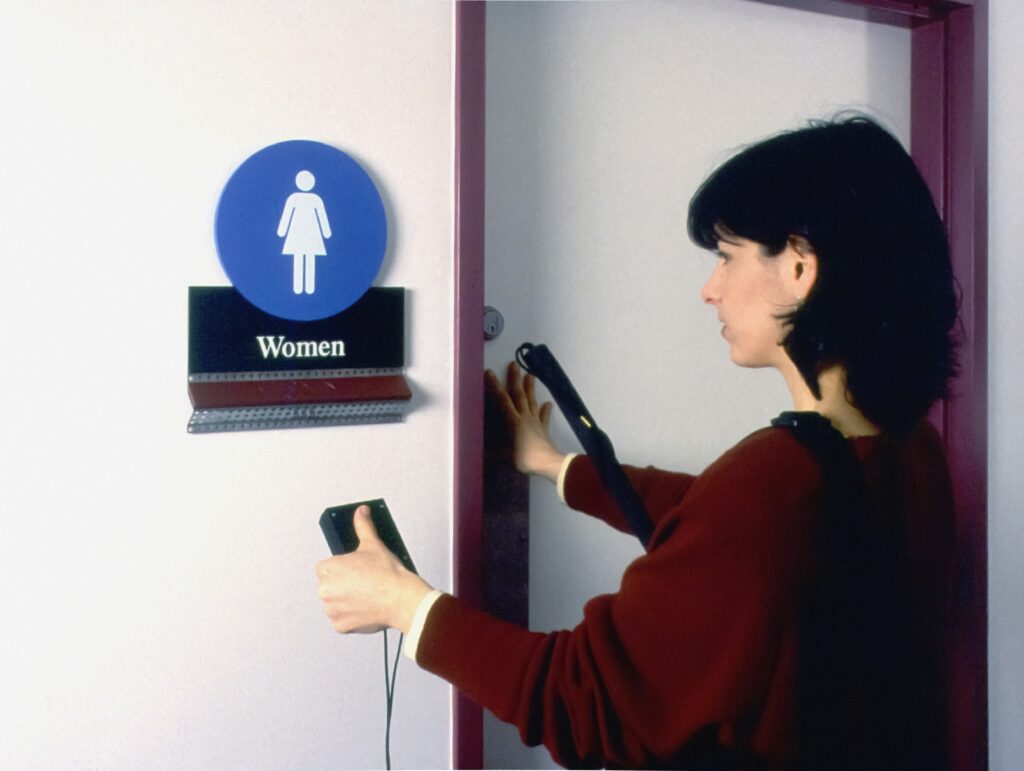
The post on Friday 7/25/2025 notes EEOC said workers with vision impairments could not access education company’s training.
The EEOC filed suit in federal court on June 27, alleging that Pearson Education, Inc., failed to provide equal access to training for employees with visual impairments. The complaint alleged that Pearson, an educational publishing and services company, violated the ADA when it used third-party vendors for training, payroll, benefits, performance and leave information that weren’t fully accessible to blind or visually impaired employees and couldn’t accommodate screen-reading software. What employees had to do as a result, and other problems employees raised, is described in the post.
One example in the complaint was that during the employee onboarding process in 2018, one plaintiff could not independently elect their health insurance benefits, assign beneficiaries, or complete their IRS W-4 tax form through ADP and had to receive assistance from Human Resources. Then some time in March 2019, the same person discovered that the W-4 form had automatically elected zero tax withholding, which resulted in a $10,000 tax bill. And that same worker — a senior quality assurance engineer for blindness technologies who was responsible for evaluating Pearson’s assessment and courseware products to ensure they were accessible by people with visual impairments — had other issues too; see the post.
The relief sought in the lawsuit is detailed in the post.
TAKEAWAY: Employers must remember their obligations under the ADA including what might be a reasonable accommodation (such as the ones listed in the post).

Finally, in the post yesterday 7/26/2025, we learned a Las Vegas resort settles lawsuit alleging widespread failure to accommodate religious beliefs. Look at the $$ – everything is big in Vegas!
The owners of the Venetian Resort Las Vegas agreed to pay $850,000 to settle EEOC allegations that the resort refused to accommodate employees of diverse religious faiths (including the many listed in the post).
The EEOC alleged that the resort suspended, denied promotional opportunities to, and discharged or constructively discharged employees as a result of denied accommodations. When the alleged discrimination started is also in the post.
The EEOC’s Acting Chair issued a statement noted in part that employers have a broad obligation to protect “the rights of workers in our pluralistic society to live out their various faiths in the workplace.” More of what she said is in the post. Unless there is undue hardship (which is more difficult to prove now after the Supreme Court’s decision in the DeJoy case), Title VII requires employers to provide a reasonable accommodation to an employee or job applicant whose sincerely held religious belief, practice or observance conflicts with a work requirement. What accommodating usually entail is in the post.
Neither the lawsuit nor the July 1 consent decree outlining the settlement’s terms identified what accommodations were requested or should have been provided. But what the consent decree said will happen instead is in the post. And employers may be able to gain insight into possible issues by looking at other recent cases.
For example, the EEOC recently sued a Wisconsin sports park and events venue for allegedly firing an employee because he frequently posted on his personal social media account Bible verses and faith-based messages.
Another example was part of an EEOC settlement in 2022 involving United Airlines and a Buddhist pilot. See the post for those details.
in the current case, in addition to the monetary settlement, there is a lot of non-monetary relief (which is standard). Here the resort’s HR and supervisory personnel must complete a minimum of two hours of compliance training. And the resort must do what is noted in the post. And the EEOC has a part too – see the post.
TAKEAWAY: remember not to take adverse action against employees or applicants based on their sincerely held religious beliefs. Tak to an employment lawyer before taking such action.