
Below is a review of the posts on Facebook and LinkedIn from the past week. You can check out the full posts by clicking on the links.
NOTE: remember that we now post every other day.

The posts on Sunday 5/31/2026, here and here, asked: What are the skills of an effective condo or HOA board member? Finance know-how helps. So do patience, transparency, and a willingness to keep showing up— especially after a natural disaster. Let’s dive deeper …
Serving on the board of a cooperative, condominium or homeowners association (all referred to as HOA for this post) is both a privilege and what some might call a predicament. There’s a real benefit to having a seat at the table when issues are being discussed and decisions made. But trading weeknights (or perhaps even some weekend time) for spreadsheets — alongside neighbors you’ll inevitably bump into at the mailbox the morning after a heated vote — might be better left to others.
For those who do raise their hands, the skills and backgrounds associated with being a strong board member are as varied as the residents on any given street. Some roles such as treasurer, though, are traditionally better suited to a person with a background in finance and accounting or, at the least, an ease with numbers, budgets, and contracts.
One person (Lynne) interviewed for the post is a longtime resident and has served for years on the board of her neighborhood’s HOA. How long she’s been involved – well into double digits – and why is in the post in her words. Over the years, Lynne has called on her background in accounting and facility with technology to carry out work for the board. How things were done by the HOA before she arrived (which might be common for self-managed associations), and what Lynne helped to do, is all in the post.
Soon after moving to St. Louis, Hannah was looking for a way to meet more of her neighbors. When she heard about a position on the board in her neighborhood, she decided to volunteer for it. That was four years ago. Today, Hannah manages communications; what that entails (and how integral it is) is in the post. Hannah said her background in compliance has been helpful, especially when questions arise about board governance. But Hannah encourages everyone to serve because everyone has some useful skill– see the post.
Lynne echoes what Hannah said, including that attributes of a successful board member are not necessarily pinned to one particular profession or background. The same goes for leading with integrity and being transparent with neighbors. Hannah pointed out some other traits that are useful for Board service and noted that Boards are most effective when they’re run by people who want to contribute. While Lynne loves what she’s doing, she also pointed out one drawback (for her at least); see the post.
Similar to a career, some skills are developed “on the job”, including dealing with natural disasters. After the tornado hit St. Louis last May, working with insurance companies and filing claims has become somewhat of a specialty for some HOA boards. One HOA president said that after dealing with that and a 300-page insurance policy, the board has gained experience which will be helpful when it comes time for future insurance renewals.
In the aftermath of the St. Louis tornado last spring, the workload for most HOAs affected by the storm intensified. Before the tornado, Lynne noted that the biggest project they had undertaken was repaving the street. And after? See the post. Hannah chimes in on that too – in the post.
And how do people volunteer for a board position? Let neighbors know of the interest; mention it at the annual meeting (or sooner if the HOA’s procedure is different) and have somebody make a nomination. It is unlikely that there will be too many people for the open Board spots (it does happen occasionally, but then those not elected are usually placed on committees until a Board spot opens up).
What did those who were interviewed say were some of the skills the best board members have? See the post. And what are the types of skills that some HOAs seek out? Yup, see the post.
One thing those interviewed all said is so important: people can’t think about being on the board as a prestigious position. Rather, how they said it must be thought of is in the post.
TAKEAWAY: Board service may not be for everyone, but it is for a lot of people. And it is necessary to the continued operations of the association – meaning the neighborhood in which most people’s largest asset is located.

The posts on Tuesday 6/2/2026, here and here, were about Your Medicare Roadmap: What to Know Before You Turn 65. And take care of the rest of your estate planning needs/documents too – it all works together.
Sixty-five is more than just a number. It’s a milestone in more than one way. It presents a moment to reflect on where you’ve been and to look forward with confidence to what comes next. And for millions of Americans, turning 65 also means unlocking one of the most valuable benefits they have earned: Medicare eligibility.
People may know they can unlock the Medicare door, but it’s important to know the options. The official source for Medicare information, Medicare.gov (linked in the post), can help with clear, trusted information.
The path to Medicare is not the same for everyone. Some people get Medicare automatically while others have to sign up. It depends on whether you are already getting Social Security benefits. Either way, you will still want to choose how you get your Medicare coverage. Again, the official site, Medicare.gov, can help you know when and how to enroll (both of which are so important!) and the coverage options. But let’s take a bit of a closer look here.
Understanding Medicare Coverage Options
When you first sign up for Medicare, you choose how to get your coverage. There are two main options: Original Medicare and Medicare Advantage.
Original Medicare is health coverage provided directly by the federal government. It has two parts: Part A (Hospital Insurance) for which there is usually no premium cost and which covers the things listed in the post and Part B (Medical Insurance) for which the standard premium is $202.90 per month and which covers the things listed in the post. The Part B premium is normally deducted from your Social Security check.
With Original Medicare, you can visit any doctor or hospital in the U.S. that accepts Medicare. You can also add optional coverage to help manage some costs: Medigap (Supplemental Insurance)andPart D (Prescription Drug Coverage). What each of those covers/does is in the post.
Medicare Advantage is an alternative to Original Medicare that provides Part A and Part B coverage and is offered by private insurers approved by Medicare. You still pay the Part B premium. What you pay for the various plans varies – some examples are in the post. Most Medicare Advantage plans include in Part D drug coverage along with extra benefits like dental, vision and hearing. But there is a big difference in providers between Original Medicare and Medicare Advantage – see the post.
5 Steps to Enroll with Confidence (when you are ready – or required – to enroll):
- Use official sources. See the post for the website and phone number.
- Start early. You don’t have to wait until you turn 65. Start much earlier so you’re ready when your enrollment window opens (and to know when that is, go to the official sources!).
- Know your enrollment path. Again, this depends on your individual circumstances. And there are unique steps for people who are still working (for which there is a link in the post).
- Avoid late enrollment penalties. This is NOT a time to be late. If you miss your enrollment window, you might incur a permanent premium penalty for both Part B and Part D (that means it hits your wallet).
- Compare plans and save. Use the official source (in the post) and compare plan costs side-by-side, using your individual specific information. This way you know what you will or won’t be getting and can tailor your coverage to your needs. See the post for why this matters.
TAKEAWAY: When it comes to Medicare, there’s no one-size-fits-all plan. Each person must find an option that works for them and their individual health and financial needs. (And make sure your estate planning documents take into account, or supplement, your Medicare coverage – contact an estate planning attorney.)

The posts on Thursday 6/4/2026, here and here, noted that Ritzy condo residents sue gym in their building – because fitness visitors are grunting too much and disturbing the peace. Can’t make this up …
Condo residents are asking the court to require Summit Strong gym to delay its opening until 9 a.m. and to stop excessive noise and vibration coming from the gym. Um, yeah … let’s take a closer look at what’s going on there.
We can hear you lift, bro. Residents of a ritzy condo complex are taking their complaints to court, accusing a gym inside their building of turning home life into a constant soundtrack of clanging weights and grunts.
Third-floor tenants Thomas, Elizabeth and Robert say the Summit Strong gym directly below their units has disrupted daily life since opening in 2024 – their details are in the post and come from a lawsuit that was filed April 21. The complaint alleges that the powerlifting gym operates without adequate noise controls – including what it listed in the post – and how that affects the residential units above the gym. The gym noise apparently starts as early as 5 a.m. and continues until about 9 p.m. (it is open Mon – Thurs). The suit alleges that noise is not only a direct issue, but also an indirect one – see the post.
The complaint says that the gym should not be surprised by the noise dispute because residents reportedly raised concerns as early as March 2023, before the gym opened. What the owner Todd Zalinski, allegedly told residents at that time about noise control in the post. But the complaint alleges that what Zalinski promised was insufficient. What actually happened is detailed in the post. Plaintiffs say that the ongoing noise has caused them stress, anxiety, inconvenience, discomfort, and loss of sleep.
Oh, but there’s more. The lawsuit also alleges the noise violates the Condominium Association’s rules and that attempts to resolve the issue (through the noted methods) were unsuccessful (hence suit was filed).
So what do the plaintiffs want the court to do? See the list in the post. Responses to requests for comment to the plaintiffs’ lawyer, the Association and the gym are in the post.
TAKEAWAY: Remember that all occupants of units in a condominium (or other type of common ownership interest association) must comply with applicable association rules and restrictions. Sometimes it takes a suit to gain compliance. Consult a community association lawyer.
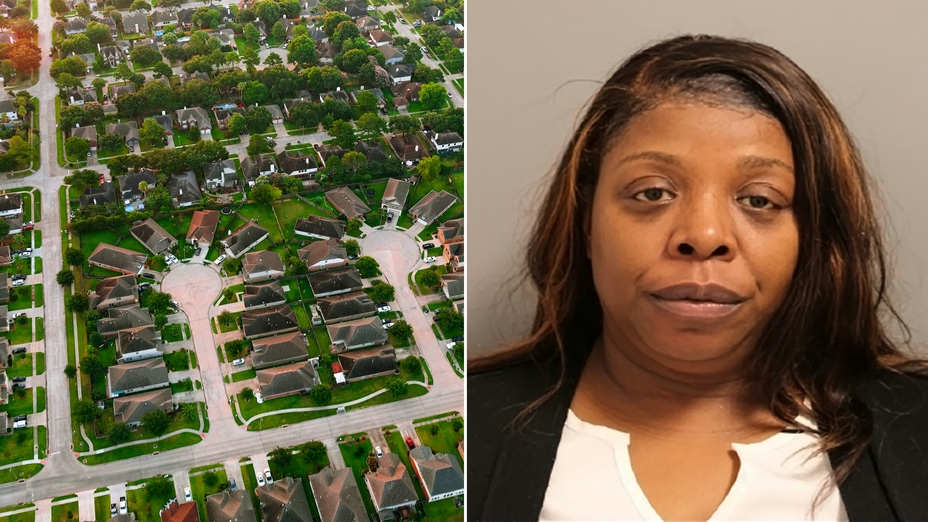
The posts on Saturday 6/6/2026, here and here, noted HOA Manager Is Charged With Stealing $53K for DoorDash and Amazon Purchases – and How HOA Members Can Protect Their Money.
The former general manager of an HOA in TX has been charged with illicitly spending more than $53,000 of the HOA’s funds on DoorDash, Amazon, and other personal expenses. Shiesha Laquette Sparrow, 50, was arrested on a felony theft charge after officials with the Lakewood Forest HOA accused her of using the HOA’s credit cards to cover thousands of dollars in personal expenditures. Let’s see how this went down.
According to a police warrant affidavit, Sparrow’s alleged crimes were discovered in September 2025, when a new general manager took over her position. The employee told the police that she discovered a binder full of unopened bank statements behind a desk in the HOA’s office and, after reviewing them, discovered dozens of transactions unrelated to HOA responsibilities. What was included in those transactions is detailed in the post (and might surprise you). In total, investigators tracked $53,630.77 in unauthorized spending from April 2024 – September 2025.
The criminal charges against Sparrow, and the possible prison sentence and fine, are discussed in the post. She is currently free on a $20,000 bond and has a court-appointed defense attorney (whose response to the request for comment is noted in the post).
The Lakewood Forest HOA case is the latest in a series of high-profile HOA scandals across the country. Luckily there aren’t many, but those cases involving huge amounts of money certainly get more publicity.
Recently Marglli Gallego, the former president of the Hammocks Community Association, pleaded guilty to racketeering and grand theft in what is considered the largest HOA fraud in U.S. history. She also pleaded guilty to one count of money laundering; her sentence is in the post. Her husband was also involved; see the post. There are even more details on this in our posts on Saturday 5/9/2026, here and here.
And in another recent case, a former HOA bookkeeper was arrested and charged with stealing more than $200,000 from two HOAs by writing personal checks to herself. Alexandra Delacaridad Gonzalez faces 124 felony charges including those detailed in the post. How she did it is also described in the post. She allegedly used the stolen funds for personal expenses, including shopping, plastic surgery, and vacations.
Yes, this is all horrible – and takes money that came from the pockets of owners to fund the association now (current operations) and in the future (reserves). But there are several things HOAs can do to safeguard funds including maintaining separate operating and reserve funds, requiring countersignatures on all expenses, and the other thing noted in the post (which may require working with a lawyer to ensure it’s done properly).
And one of the biggest ways to help prevent fraud in an HOA is to get involved. Really. According to the Community Associations Institute (a nationwide organization linked in the post), only 10-15% of homeowners regularly attend HOA meetings (the easiest way to participate). One effect of this lack of participation is in the post.
Other suggestions on what HOA boards should do relative to financial procedures (some of which are usually required by the Governing Documents, others not so much) are listed in the post.
TAKEAWAY: Assessments are paid with hard-earned dollars; Boards must safeguard those funds so that they are available for the purposes for which they were paid. Work with a community association lawyer to put in place appropriate (internal and insurance) controls.