
Below is a review of the posts on Facebook and LinkedIn from the past week. You can check out the full posts by clicking on the links.
NOTE: remember that we now post every other day.

The posts on Sunday 10/18/2026, here, and here, gave us 8 reasons your Social Security check might be lower than expected. NOTE: This could make a difference when doing your estate planning ….)
You claimed before full retirement age. As of now, full retirement age is 67 for anyone born in 1960 or later. If you claimed at 62, the earliest you can, then your monthly benefit is permanently reduced by up to 30%. The reduction doesn’t go away when you hit 67 or 70. No, it determines your check for the rest of your life, including every future cost-of-living adjustment.
The Social Ssecurity Administration (SSA) applies the reduction gradually; see the post for the calculation and an example of the reduction. A lot of people claim early because they need the income or maybe they are worried about the program’s long-term solvency. The point is to make your decision knowing the math rather than discovering it later.
You’re working and haven’t hit full retirement age yet. If you collect Social Security before your full retirement age and still work, the earnings test can significantly reduce your benefit. In 2026, the SSA withholds $1 for every $2 you earn above $24,480 for the year. And if you earn $40,000, what is the withholding from your benefits? See the post.
The threshold is more generous in the calendar year you actually reach FRA: $65,160, with $1 held back for every $3 over, and only for months before your birthday. And in the month you hit full retirement age, that earnings test disappears entirely, poof, no matter how much you make.
The good news is that the withheld money doesn’t vanish. It just takes a while to come back to you. See the post for how SSA readjusts your benefit.
Medicare Part B is coming out of your check before you see it. Most Medicare enrollees have their Part B premium automatically deducted from their Social Security benefit before the payment hits their bank account. In 2026, the standard Part B monthly premium is $202.90, an increase of $17.90 from 2025. That year-over-year jump is the second-largest increase (by percentage) in the program’s history. That makes a difference when considering the COLAs and increases – see the post for the actual effect and how long this has bene happening.
You’re paying an IRMAA surcharge on top of the standard premium. Higher-income beneficiaries pay more for Medicare than the standard $202.90. The income-related monthly adjustment amount, known as IRMAA, is an additional charge stacked on top of the base premium, and it comes directly out of your Social Security check. The range for 2026 Part B premiums for IRMAA-affected beneficiaries, which depends on income, is noted in the post (and might surprise you).
IRMAA is calculated from your tax return from two years prior. So, for example, your 2026 premium is based on your 2024 income. If you had a high-income year because of a one-time event, a large IRA withdrawal, a home sale, or a business payout, you can end up paying IRMAA in a year when your income has already dropped. There is a procedure to appeal – see the post.
For someone at the top IRMAA tier, the Medicare deduction can be a game-changer. The post looks at actual numbers. Some people see the deduction and assume it is a billing error. But it usually is not.
Part of your benefit is treated as taxable income. Contrary to what most people think, Social Security isn’t automatically tax-free. Depending on your total income, the IRS can treat up to 85% of your SS benefits as ordinary taxable income (which can wreck your plans and your budget). Single filers with combined income above $34,000 may have up to 85% of benefits included in taxable income; the upper threshold for married couples filing jointly is $44,000. The taxable percentage and lower threshold amounts are noted in the post.
What is this calculation for combined income? Your adjusted gross income plus nontaxable interest plus half of your Social Security benefit. Yes that includes tax-exempt municipal bond income and the other things in the post that most people think are irrelevant but do factor in for these purposes.
A big problem is that the income thresholds were set in the mid-1980s and early 1990s and have never been adjusted for inflation. Every COLA effectively pushes more people over the line. The tax doesn’t reduce your monthly benefit check directly unless you elect voluntary withholding, but it reduces what you net from the benefit at tax time – and it can be significant.
SSA found an overpayment and is recouping it. If the SSA determines it paid you more than you were entitled to, it starts taking back money from your checks. Overpayments can happen because your income changed or the other reasons in the post, including simply that SSA made a calculation error on their end. As of April 2025, the default withholding rate for retirement, survivor and disability benefits is 50% of your monthly check until the overpayment is fully recovered by SSA. If someone is counting on getting the full benefit amount, this can be a shock.
SSA contacts over a million Americans every year about overpayments – and the amounts can go back years. The deadline to appeal and information about a possible waiver is in the post.
You have fewer than 35 years of earnings on record. The SSA calculates your retirement benefit using your highest 35 years of earnings. If you have fewer than 35 years on record, every missing year counts as $0. Every zero pulls down your lifetime average, and your monthly benefit goes down with it.
This snags people who left the workforce to raise children, had extended gaps due to illness, worked off the books for stretches, or simply spent years in school or low-wage jobs that didn’t generate significant earnings. Even 35 years on the record isn’t always enough if many of those years have low earnings. But all is not lost if you are in any of those categories. The post mentions some things that can help increase your calculated benefit. The place to start is to check your earnings record – see the post for the place.
Federal debt is being offset against your payment. The federal government can reduce Social Security checks to collect certain delinquent federal debts through the Treasury Offset Program. Federal law caps the offset at 15% of your benefit, with the amount noted in the post that must remain after collection. Know that defaulted federal student loans and unpaid federal taxes are both bases for offset. How many older people fall into the first group is detailed in the post.
Child support and alimony operate under different rules, and not in a good way. See the post for the benefits reduction percentage and limit. And each type of these garnishments has its own appeal process and, in some cases, hardship waiver options – see the post.
TAKEAWAY: If you absolutely will need your full Social Security benefit, know the things that can reduce it – or cause it to be taxed – and plan ahead.
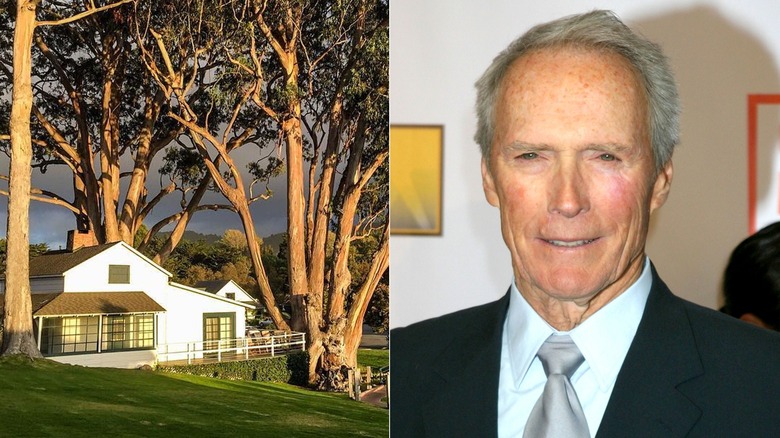
The posts on Tuesday 10/20/2026, here and here, told us that Clint Eastwood bought Carmel’s Mission Ranch in 1986 to stop a condominium development …
Most of us know Eastwood as an award-winning actor and filmmaker, but few know that in the 1980s, he spent $5 million to save a beloved ranch in a small California village—the same year he became that village’s mayor. Let’s look at the amazing story.
Born and raised in the Bay Area, Eastwood’s ties to there go back decades. He turned 21 at the Ranch which is located in a tiny CA village called Carmel-by-the-Sea, and, in Eastwood’s own retelling, he had his first legal beer there. How? Seethe post.
At the time, Mission Ranch consisted of a group of buildings on the outskirts of the town and functioned as a casual restaurant and hotel. It had already gone through many changes since its construction in the 1800s, including dairy farm and an officers’ club for the Army and Navy during WWII.
What did Eastwood think when he first stumbled upon Mission Ranch? See the post. And then, many years later, after having found fame playing characters like Dirty Harry and the Man with No Name, Eastwood was once again living in Carmel-by-the-Sea, having become its mayor. As he explained in an article that is linked in the post, it was around the time he became mayor that he heard the owners were putting the Mission Ranch up for sale. And unlike in his early 20s, he then had the resources to make a real difference.
To prevent the site from being demolished and turned into condominiums, as the buyer intended, Eastwood bought the 22 acre property for $5 million, getting run-down buildings in exchange. But he did not just make simple repairs; what he did instead, his labor of love, is detailed in the post.
And there’s more. Each building on the property represents a different architectural period, from the century-old Martin Farmhouse and Bunkhouse to the 1840s feel of the dance barn and restaurant. That’s a far cry from condominiums …
NOTE: make sure to view all of the old Clint Eastwood photos in the post!
TAKEAWAY: Although Eastwood served as mayor for only one term, from 1986 to 1988, his fame stopped a condominium development and instead helped protect a local favorite and put the tiny town of Carmel on the map.

The posts on Thursday 10/22/2026, here and here, explained that condominium and homeowner associations (HOAs) trying to ban outside Trick-or-Treaters may face legal limits on public roads. But private Common Elements/Areas (perhaps sidewalks or grassy areas next to the road or sidewalk) are a different story … Talk to your attorney first.
You know that a large percentage of US households live in homes in community associations. That translates to the ~73 million US children potentially having over 133.2 million homes to visit for Trick or Treat.
But some of those homes may be off-limits if HOAs have their way. Some associations have prohibited “outside” trick-or-treaters from coming into desirable neighborhoods. Why? See the post.
Trying to limit access to only those who live in the community can be frustrating, not just for would-be visitors on Halloween, but also for residents who are told they can’t invite guests on the big day. For an example, see the post.
So can an HOA stop outside trick-or-treaters from coming in?Although state laws can and do vary, legal experts tend to agree that an HOA may be on shaky ground as banning “outsiders” may actually be possible only in very limited circumstances, if at all.
One attorney distinguished between public and private roads in the community and how that affects the ability of the HOA to ban “outsiders”. The post also goes into more detail on that. Another attorney agreed and also noted that boards can generally make “reasonable rules” concerning common areas and guest access. But whether banning guests on Halloween is a reasonable rule is up for debate. And is possibly discriminatory on the basis noted in the post. See the post for how the road status may affect the example.
But even if the HOA can regulate roads treated as common areas, enforcing the restrictions can be a huge challenge for the reasons noted in the post.
An HOA can’t ban guests of owners. Seems obvious, right? That means that even if the HOA can ban non-resident trick-or-treaters from coming onto private association roads without an invite from a homeowner, it is probably powerless to prohibit owners from inviting guests. What the attorneys said on this, and how that further affects the example, is in the post.
TAKEAWAY: Community associations looking to restrict non-resident trick or treaters should work with a community association lawyer to ensure any such restriction would be legally valid – and how it would be enforced.

The posts on Saturday 10/24/2026, here and here, told us about 10 wealthy pets that inherited their owner’s fortune. (photo credit usweekly). When it comes to the concept of family and children, things have certainly changed.
Not only are more and more Americans putting off the idea of having kids until their 30s and older, but a growing number are not interested in having kids at all — at least not the two-legged kind. The result of a May 2025 poll as to a preference of pets over children is revealing – see the post. While cats and dogs are the most adored options, some pet parents will happily adopt other animals such as those listed in the post.
Regardless of what kind of animal, they ultimately become a very much loved part of the family, experiencing many of the same milestones as human children, like birthdays and holiday celebrations and more as in the post. And pet parents want the same for their furry kids as any parent: to know that their loved ones will be always be safe and cared for, especially when they pass away, leaving their pets behind.
This concern about caring for pets after death transcends income classes. The difference is that those pet parents with great wealth are capable of going to great lengths to make sure their beloved pets continue to get pampered treatment long after the parents are gone. The result? Very rich pets that inherit $$$ and properties.
This article looks at pets representing some of the richest animals ever, who were lucky enough to inherit a sizable fortune from their wealthy parents/owners. Make sure you look at each pet’s photo in the post! And you won’t believe #9 … Let’s go.
1. Tinker. In 2003, Tinker the cat inherited a sizeable chunk of wealth following the passing of his owner, Margaret Layne, the wealthy British widow who (according to the news stories linked in the post) took in the stray and even set up a special trust to ensure he would live a comfortable lifestyle for the rest of his days. How much Tinker got, cash and real estate, is in the post. And to ensure Tinker lived his best feline life, Layne named her neighbors, Eugene and Ann Wheatley, as trustees, tasking them with seeing to Tinker’s every need.
Although Tinker did inherit the money, there was a catch. See the post.
The Wheatleys took their roles as trustee over Tinker seriously. Per a news article linked in the post, by 2005 they had to relocate Tinker because of the situation described in the post. They moved him to an undisclosed location to live out the rest of his life in pampered peace.
2. Boon, Coco, Eileen, Hamish, and Tuffnel. When it comes to inheritance, it’s hard to argue against the perk of being an only child. The family heir is pretty obvious — unless there’s familial strife that continues from beyond the grave. The single child also will not have to worry about splitting the inheritance with siblings. Being an only child usually avoids messy post-death lack of harmony.
When it comes to pets, even if they find themselves splitting a lot of money, they’re less likely to fight over it and more likely to scrap over a favorite stuffed toy instead. A group of cats named Boon, Coco, Eileen, Hamish, and Tuffnel were not torn apart by infighting when their owner, actress Beryl Reid, decided to add the felines to her will. How much the mansion they inherited is worth is in the post. The likely reason Beryl decided to leave the home to her beloved cats is rather touching – and is also in the post. .
3. Choupette. Some animals don’t just inherit a lot of money; they actually are capable of affording a fabulous lifestyle due to becoming a celebrity in their own right. That was Choupette, a pet Burmese cat who was the beloved pet of none other than fashion industry icon Karl Lagerfeld. He died in 2019, leaving behind a vast fortune (how much is in the post – sit down first).
Even without Lagerfeld making arrangements for her, Choupette would have apparently had the funds to live a pampered lifestyle thanks to the money earned through her sizeable Instagram following. But Lagerfeld did not want to leave that to chance, making sure that his precious feline friend would inherit a respectful chunk of his wealth. An article linked in the post relates what her inheritance is thought to be.
Another article (also linked I the post) explains that Choupette may have been able to enjoy her inheritance only through special arrangements because of French Law (as explained in the post). However it was done, it’s likely that Choupette continued her luxurious lifestyle both online and offline, which is exactly what Lagerfeld would have wanted.
4. Trouble. With a name like Trouble, you can already guess that the inheritance situation for this Maltese was never going to go smoothly. How much the late Leona Helmsley, a real estate tycoon who was as wealthy as she was notorious, wiled to Trouble is in the post (and yes, there are quite a few zeroes to the left of the decimal). Nicknamed the “Queen of Mean,” Helmsley reportedly served 19 months in prison for fraud and tax evasion. But she was a loving mother to her dog and wanted to ensure that her pet got a decent share of her many millions when she passed away.
But things didn’t work out the way Helmsley directed in her will. The post explains what a judge did – and why. So in the end, Trouble lived a lavish lifestyle, just with far less funds than initially intended. What Trouble ended up with is also in the post (and would probably make any reader pretty happy).
Trouble was ultimately left in the care of Carl Lekic, the general manager of Helmsley Sandcastle hotel. How much Lekic was paid to act as Trouble’s guardian, and what some of Trouble’s inheritance went for, is in the post. Sounds almost like a human celebrity …
5. The pets of Majel Barrett-Roddenberry, widow of Gene Roddenberry. If ever there were humans able to go boldly where no man has gone before in terms of millionaire pets, it should be of little surprise that the Roddenberrys would be on that list. Gene Roddenberry came up with the Star Trek franchise, ensuring his estate’s vast wealth for many years. When he passed away in October 1991, the fortune passed to his widow, Majel Barrett-Roddenberry.
What love Majel was no longer able to give to her dearly departed husband she lavished lovingly on her many pets. But she thought ahead to ensure their high-end lifestyle would continue when she was no longer living. One news article (linked in the post) reported on what their inheritance would be, but Mrs. Roddenberry wasn’t done. She also left a hefty sum (noted in the post) to her housekeeper, who would also be able to continue living in the family home and care for the various cats and dogs.
How did the 4-legged pets’ inheritance compare to that of Mrs. Roddenberry’s son Eugene? See the post.
6. Conchita, April Marie, and Lucia. They could almost be something out of a Disney movie similar to “The Aristocats.” Here the animation would star a chihuahua called Conchita, a Maltese named April Marie, and their Yorkshire Terrier sister Lucia. In reality, the trios were the much loved pets of Gail Posner, a Miami heiress and socialite. How she got her money is interesting – and in the post.
What Gail left for her pets when she dies is in the post. And, unfortunately, it invited both controversy and a lawsuit. As reported in a news article linked in the post, while the dogs received their share (as described in the post), Posner’s estranged son, Bret Carr, was willed $1 million. But he was not happy with that when compared to the pets’ inheritance, so he went to court in 2010. (No, we don’t know how the case ended.)
7. Blackie. Blackie, a black cat from the United Kingdom, might not be the richest cat on the list per se, but he does hold the distinction for officially having his inheritance officially recognized by none other than Guinness World Records – as “Wealthiest Cat.” That came thanks to his late owner, a U.K. millionaire named Ben Rea.
How much Blackie inherited (yep, sit down) is in the post. But Blackie wasn’t the only animal Rea sought to care for; he reportedly willed the majority of his fortune to his favorite cat charities. And he also left a small sum to a few staff members and a friend.
Rea’s will probably left the majority of his family very disappointed as they were cut out of the will. But, surprisingly, there is nothing showing that they challenged the will. Blackie’s inheritance was large and intact.
8. Tommaso. Italy’s Tommaso might be able to contest Blackie’s title as wealthiest cat; his inherited fortune, when converted to American dollars, just might eclipse his furry competitor. Tommaso is yet another former stray that found himself taken into a loving home where the pet parent just so happened to be a wealthy widow. Tommaso’s pet mom was a woman named Maria Assunta. According to news reports (yep, linked in the post) Assunta herself inherited a sizeable amount of money after her Italian real estate tycoon husband (linked in the post) died.
Assunta spoiled Tommaso until she passed away at age 94. How much did Tomasso inherit? See the post. And here’s a twist. According to a news report (lined in the post), Assunta did not always plans to leave the money to Tommaso directly. Her lawyer explained what she originally wanted to happen and why that changed.
Tommaso was not eh only pet mentioned in the will – there was another unnamed cat that was likewise to be provided for, but the details are intentionally murky (as explained in the post). Yep, celebrity again.
9. Gigoo. The story of Gigoo is often what one thinks of when they imagine an eccentric and ultra-wealthy millionaire who decides to leave behind a massive fortune not for a widow or their children, but specifically for a family pet. Weird but you’ve heard of it, right? Well, Gigoo is a pet hen, an heiress who received $$$ (the amount is in the post) after following the passing of her owner, publishing tycoon Miles Blackwell.
The anticipated life span of chickens is noted in the post. So depending on how old Gigoo was when she became a chicken heiress, we can assume she was well-cared for during the remaining few years of her life. (See the post for an attempt at humor given Gigoo’s species.)
10. Gunther. If you’ve read previous lists about the world’s wealthiest pets who inherited a fortune from rich owners, you no doubt heard about a German countess named Karlotta Leibenstein who left her beloved dog Gunther III a substantial amount of money. One article linked in the post mentions the amount usually mentioned (yep, many zeroes again). The caretaker, Maurizio Mian, is the one seen taking the dog around in a fancy car and feeding him luxurious meals.
But there’s just one problem: the entire thing is mostly a hoax. Netflix made a documentary about this (the title of which is in the post). There was never a German countess. There is a vast fortune, but reportedly it was meant to be Mian’s via tax haven where a family friend managed the millions. The twists and turns the money took were reported by the New York Post (and are linked in this post). And of course the bizarre arrangement caught the attention of local news and soon went viral.
Mian leaned into the global fame, dreamed up a countess, and more as described in the post. In the end, though, it seems true that “Gunther” is living well.
TAKEAWAY: 4-legged children (and sometimes other species too) can be just as loved as human children – and their pet parents treat them as such in their wills. And don’t forget about pet trusts – talk to an estate planning attorney for that.