
Below is a review of the posts on Facebook and LinkedIn from the past week. You can check out the full posts by clicking on the links.
NOTE: remember that we now post every other day.

The posts on Sunday 10/4/2026, here and here, were about Planning Ahead: How Community (condo and homeowners) Associations (HOA) Can Build Stronger Financial Futures.
With community associations representing more than one-third of the nation’s housing stock (yep, that much!), rising costs are putting increased attention on how communities plan for their financial future. As insurance, maintenance, and operating expenses increase, associations across the nation are strengthening budgeting practices, using reserve studies to guide long-term investments, and planning proactively to manage costs responsibly.
Dawn M. Bauman, CAE, CEO of Community Associations Institute (CAI), talked about this in more detail. See the post. According to the Foundation for Community Association Research (a great resource that is linked in the post), more than 78.1 million Americans live in 373,000 community associations nationwide. And those communities are responsible for maintaining and replacing common areas and infrastructure while insurance premiums, labor and construction costs, and the other things listed in the post are reshaping those associations’ budgets (and not in a favorable way).
CAI, the leading international authority on community association housing, recommends six priority steps to help boards plan for those costs and, at the same time, strengthen long-term financial stability:
• Plan for long-term community investments. Associations are responsible for maintaining, repairing, and replacing major common elements, including roofs and elevators and more (as noted in the post). Regular reserve studies help boards evaluate the condition and remaining useful life of those assets, anticipate future financial needs, and prioritize investments over time. CAI also has Reserve Study Standards that provide a framework to help communities plan for their long-term investments.
• Build realistic budgets and monitor them year-round. Boards should regularly review contracts, utilities, insurance, maintenance, and other major costs and (if possible) adjust budgets as the costs change throughout the year. The source of funds for those expenses, as well as the derivation of them, is explained in the post. What some boards forget or overlook is that failing to increase assessments does not reduce the underlying expenses, and that can leave a community without the funding needed to meet financial obligations (which, in turn, results in those dreaded special assessments …).
• Invest in cost-saving and risk-mitigation improvements. Examples of strategic investments in building improvements are in the post. They can help associations identify opportunities to reduce operating costs, mitigate risk, improve efficiency, and strengthen the performance and resilience of community assets.
• Support homeowners facing financial hardship. Boards and managers should establish clear, supportive processes for homeowners who are struggling to pay assessments. That includes early outreach, flexible payment plans, and consistent, fair application of collection policies. And what about an association foreclosing on units? See the post for what CAI recommends (and most associations follow).
• Reassess insurance coverage and risk exposure. Boards should work with qualified insurance professionals to review coverage, deductibles, and property valuations as insurance markets shift, rather than assuming existing policies still reflect current risk or replacement costs. This should happen every year in the current environment.
• Communicate early and often with homeowners. What to do, and when, is explained in the post.
More resources are available at www.caionline.org
TAKEAWAY: Condo and HOA boards are charged with operating the association, including the common elements (which often includes building infrastructure and amenities). Making sure to budget appropriately for current and future costs is important. A professional manager or community association lawyer can assist.

The posts on Tuesday 10/6/2026, here and here, talked about common HOA and Condo Budgeting Pitfalls and How to Avoid Them (because it’s budget season so a theme …).
A well-planned budget is one of the most important tools a condominium or homeowners’ association (HOA) board can have. It is the financial roadmap for maintaining the community, protecting property values, and ensuring that the association can meet its current and future obligations. But even experienced boards can inadvertently make errors or omissions that cause unnecessary financial challenges for the association in the future. As your board moves toward or through budget season, be aware of these common pitfalls and strategies that can help you avoid them.
Failing to Adequately Fund Reserve Accounts – Reserve funds help community associations prepare for major repairs and replacements including those listed in the post. When reserves are inadequately funded, communities often face difficult choices if unexpected expenses arise. Potential consequences of a failure to adequately fund reserves include levying special assessments (yep, always unpopular with homeowners!), needing to obtain a loan (the payment of which will cause assessments to increase in the future if there is no special assessment), or the other things descried in the post. None of these things is good for the association.
A professional reserve study can help determine how much money should be set aside each year (which helps justify increased assessments!). What a reserve study does, and how often it should be updated, is detailed in the post.
Underestimating Operating Expenses – A budget is only as effective as the expense projections behind it. One of the most common budgeting mistakes is underestimating or overlooking recurring costs. Common budget items that can fluctuate include maintenance and repairs, landscaping (and snow/ice removal) services, and the other things listed in the post. Reviewing the association’s historical financial data may help point out trends and areas where costs are rising. And keep in mind that old adage about an ounce of prevention …
Taking an Overly Optimistic Approach to Revenue – While assessment income is the primary source of revenue for most HOAs, collections don’t always go as planned. Delinquencies and the other things noted in the post can all impact an association’s cash flow. So when boards forecast revenue, they should consider past collection rates, delinquency trends, and the other things listed in the post. A board should be especially cautious if relying on uncertain income sources such as amenity rental fees, miscellaneous income, or investment earnings to fund known income shortages. And there is another thing to keep in mind about those other funding sources that boards often forget – see the post. Taking a conservative approach to revenue projections is the responsible course of action and might provide a valuable cushion when (not if) challenges later arise.
Neglecting to Adjust for Changing Conditions – Community needs rarely stay the same from year to year. Inflation, new laws/regulations, aging infrastructure, and more (as detailed in the post) can all influence an association’s financial needs. Boards should regularly evaluate whether the budget still reflects current realities by asking whether service provider costs have increased, if any new projects are planned, and the other important questions listed in the post.
Budgets should be viewed as living documents that may require adjustments as circumstances change (so it’s good to know how to amend your association’s budget – or at least work with a community association lawyer to do that). The annual budget review process is a critical inflection point when forecasting and due diligence should inform budget changes. If budget impacts occur throughout the year, then the budget generally does not need to revised, but significant impacts should be included on the monthly (actual to budget) variance report and notes to the association’s auditor.
Limiting Transparency With Homeowners – Financial transparency plays a major role in building trust within a community. When owners understand where their assessments are going and why financial decisions are being made (especially when it results in increased assessments or special assessments), they are more likely to support the board’s decisions. Boards should consider as best practices regularly sharing budget updates, making financial reports accessible to owners, and the other things in the post. Open communication now can reduce future misunderstandings (or worse) while helping boards in the other ways detailed in the post.
Maintaining Poor Financial Records – Accurate recordkeeping is vital for sound budgeting. Without organized financial records, boards may struggle to identify trends, verify expenses, or make informed decisions. Strong financial documentation should include detailed income and expense records, easy access to supporting invoices and receipts, and the other things detailed in the post. As discussed above, having access to previous years of financial data can reveal trends, highlight opportunities for possible savings, and improve future budget accuracy.
Handling Budget Planning Without Professional Guidance – Board members provide valuable insight into their community’s needs, but budgeting can be a complex process that benefits from professional expertise. Resources that can assist boards with budget development include community managers, reserve study specialists, and the others noted in the post. And starting the budgeting process early allows everyone involved enough time to review expectations, evaluate recommendations, and make good decisions before final approval.
The Bottom Line – A successful association budget requires more than just balancing income and expenses (or even planning for a surplus). It requires planning for the future, preparing for unexpected costs, and making reasonable and prudent decisions that support the long-term health of the association. The budget should focus on adequate reserve funding, realistic expense projections, conservative revenue estimates, and the other things listed in the post.
TAKEAWAY: There are ways that condo and HOA boards can build a financial plan (including budgets) to protect property values, maintain community assets, and support the needs of residents now and in the future. But they have to take the time to do it right (as in this post). A community manager or community association lawyer can be of great assistance.
The posts on Thursday 10/8/2026, here and here, were about 12 entitlements retirees should be claiming (because it’s basically free money). Note that some of these have income or asset thresholds, but all are worth checking into …
Most of these programs have been running for decades, available but quietly underclaimed by the people who most need them. If you’re not sure which ones you qualify for, the post contains a link to a free eligibility screening tool that lets you check hundreds of federal and state programs just by entering your zip code. Remember that you paid into the system through your working lifetime, so the money is there.
What is the most money a retiree can get from these programs combined? There’s no single ceiling because each program is separate and eligibility varies by income, state, and personal circumstances. A qualified low-income senior in one situation (noted in the post) could receive well over $1,000 a month in combined benefits on top of any Social Security payment. VA Aid and Attendance alone can pay up to $2,424 a month for a qualifying single veteran.
Will getting SNAP or SSI reduce my Social Security benefit? SNAP benefits don’t affect Social Security benefits at all. But SSI is different so pay attention to what is in the post about the interaction of SSI and (regular) Social Security.
You are already on Medicare. Can you still get a Medicare Savings Program? Yes. Medicare Savings Programs are specifically for Medicare enrollees with limited income, so having Medicare is a requirement (not a disqualifier). How and when to apply is in the post.
Do you need to reapply for these programs every year? It depends on the program. The post discusses SNAP, the QI program under Medicare Savings, QMB and SLMB, SSI, LIHEAP, and VA Aid and Attendance.
If you were never told about the Social Security Fairness Act repeal, do you need to do anything? If you were already receiving a benefit affected by WEP or GPO, then your Social Security payment should already have been recalculated (with retroactive funds sent to you automatically). What you should do now and if there is an issue or problem is all in the post.
TAKEAWAY: Don’t thrown away money that you might be entitled to – check into whether you qualify for any of these things.
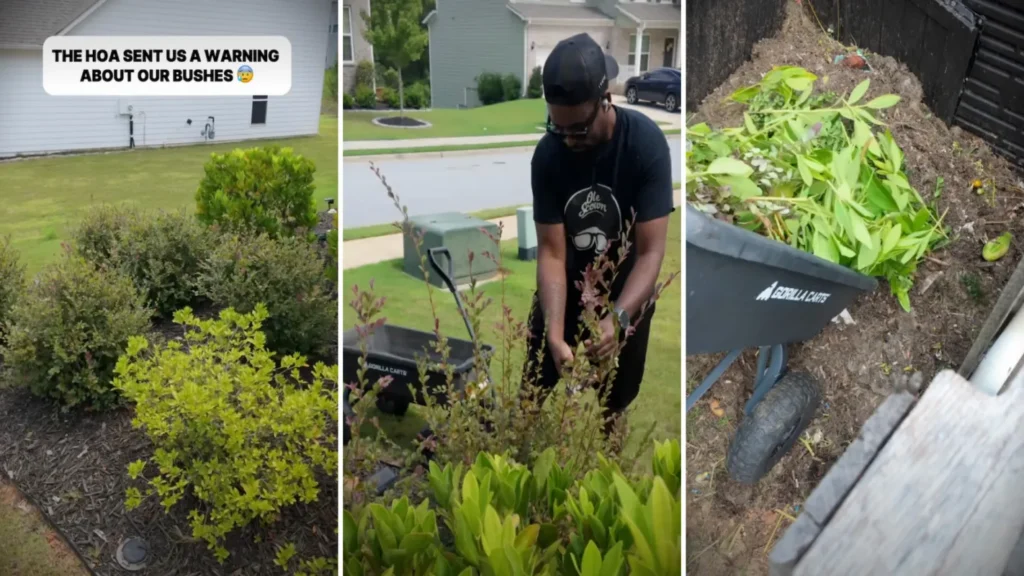
The posts on Saturday 10/10/2026, here and here, explained that homeowner turns HOA landscaping warning into a 15-minute fix with no issue/complaint about warning (other than embarrassment that the HOA had to issue it in first place). What a nice change.
Rather than turning an HOA warning into a complaint (as happens more and more these days), one owner (identified in the post) took the moment as an opportunity to show a simpler way to handle overgrown bushes.
The extended ViD embedded in the post focuses on efficiency, showing how the owner made the best of the HOA warning (putting the need for the warning on himself, for not doing what he should have, and not on the HOA). What the owner said about the situation is in the post (and the VID), including the “embarrassment that two grown people had to be told to cut their own bushes.” And what he did to take care of the situation also provides tips for others trying to work smarter and not harder (and save time and cost and help the environment at the same time).
The post also contains more details on how compost can be useful. But those living in community associations should make sure there is no HOA (or municipal) restriction on composting.
TAKEAWAY: When a condo or HOA warning is justified, don’t complain about it, just quietly remedy it as did the owner here. You chose to