
Below is a review of the posts on Facebook and LinkedIn from the past week. You can check out the full posts by clicking on the links.
NOTE: there is continued instability and fluctuation with the (attempted) changes in federal labor and employment law resulting from executive orders (EOs) and court decisions, so check with us or another employment lawyer before taking any action based on something in our posts.

The post on Sunday 7/6/2025 was an Ames redux. No more extra hurdles: Supreme Court strikes down Title VII bias rule (and some takeaways).
Title VII prohibits employers from discriminating against any individual based on race, color, religion, sex, or national origin. But does that protection apply equally to white, male, or heterosexual employees? Or should they have to clear a higher bar to prove discrimination? On June 5, 2025, the US Supreme Court answered with a unanimous “no” in its decision in Ames v. Ohio Department of Youth Services. Ames eliminates the “background circumstances” rule (which is detailed in the post).
This post follows our prior posts on Sun. 6/29/2025, Mon. 6/30/2025 and Tues. 7/1/2025. The case involved Marlean Ames, a heterosexual employee, who alleged that the agency discriminated against her. Ames interviewed for a new management position, but the agency instead hired a lesbian candidate. Shortly after, Ames was removed from her role as program administrator and demoted to a secretarial job, with a pay cut. The agency then hired a gay man to replace her as program administrator. Ames sued under Title VII, claiming she was denied the promotion and demoted because of her sexual orientation.
Both the federal trial court and appeals court found in favor of the agency, dismissing the suit. The basis on which the appellate court affirmed is in the post.
The Supreme Court rejected the lower courts’ approach. Justice Kentanji Brown Jackson wrote the Court’s opinion. “Title VII’s disparate-treatment provision draws no distinctions between majority-group plaintiffs and minority-group plaintiffs,” More of what Justice Jackson included, including precedent on which she based the opinion, is in the post. The ruling resolved a split between federal appellate courts: some required majority-group plaintiffs to show “background circumstances” (like a minority-group decisionmaker or statistical evidence of anti-majority discrimination) and circuits that did not.
The ruling comes with some takeaways:
- Importance of Continued Compliance. Employers must continue monitoring their employment practices (including hiring, promotions, terminations, and other personnel decisions) to ensure compliance with Title VII (for the reason noted in the post);
- Potential Increase in Litigation Risk: The new uniform evidentiary standard may make it more likely that majority-group employees pursue Title VII claims. How this affects employers, and steps they should take, are in the post; and
other takeaways listed and described in the post.
TAKEAWAY: The Ames decision makes things both more simple (one evidentiary standard for everyone) and more difficult (one evidentiary standard for everyone, including majority-group employees). Employers should keep their employment lawyers even closer now.
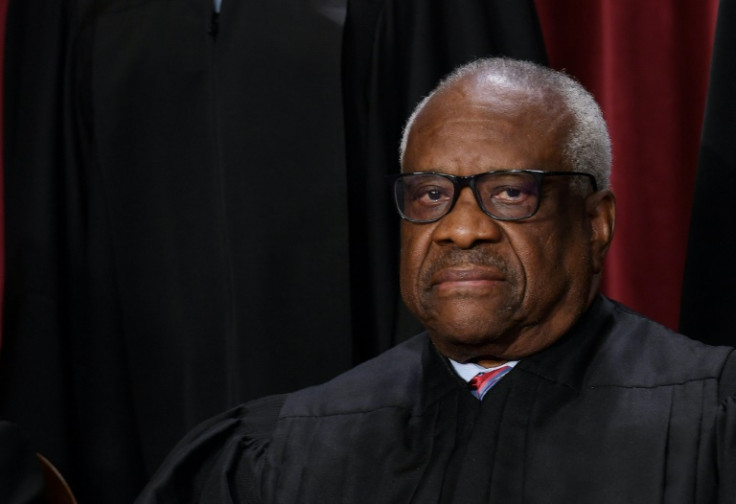
The post on Monday 7/7/2025 was about how Justice Clarence Thomas led the Supreme Court to kill DEI. Clarence Thomas has spent his professional life trying to return American law to the Declaration of Independence’s founding promise that individuals should be judged as individuals and not as members of (racial, gender or ethnic) groups. Based on many recent decisions by the Court, it seems his colleagues have been listening.
Thomas’ belief in individual rights long precedes his time on the court, to 1985 or earlier. See the post for one example from back then and his foreshadowing statement(s). He has also been pushing while on the Court. In 1995’s Missouri v. Jenkins, for instance, Thomas became the first Supreme Court justice to directly criticize Brown v. Board of Education (1954). What he said then is also in the post.
Justice Thomas has made similar pronouncements in many other judicial opinions, including his concurring opinion in 2007’s Parents Involved in Community Schools v. Seattle School District No. 1 (a quote is in the post) and, more recently, in a concurring opinion in the Supreme Court’s 2023 decisions holding that colleges and universities cannot consider race in admissions decisions (again, a quote in the post).
And now there is the Supreme Court decision in Ames signaling that proponents of diversity, equity, and inclusion programs should stop asserting that they are complying with the law. Because one of the most liberal members of the Court, Justice Ketanji Brown Jackson, wrote in the opinion for the unanimous Court that the rule imposed by several lower courts of appeal is inconsistent with the text of Title VII and the Supreme Court’s anti-discrimination precedents. Justice Jackson’s opinion might as well have been penned by Justice Thomas himself. Just look at what she quoted as bases for the decision – some are in the post. While Justice Thomas joined Justice Jackson’s opinion for the court “in full,” he also issued a concurring opinion staying his decades-long path. Most important, Thomas made clear in his concurrence that if proponents of DEI are hoping that Ames has nothing to do with their DEI programs, they are sorely mistaken. What he wrote to disabuse them of that notion is in the post.
When Justice Antonin Scalia died in 2016, court watchers openly speculated about who would replace him as the intellectual leader of the conservative legal movement. Clarence Thomas has unquestionably filled that role. Now, with Ames, even Justice Thomas’ liberal colleagues on the nation’s highest court have conceded that American law protects individual rather than group rights.
TAKEAWAY: The king is dead; the king is alive. In this case, both kings come from the same place: Title VII. The king that was DEI is now dead, and the king that is individual protection lives.

The post on Tuesday 7/8/2025 affirmed that condo owners scramble as crisis deepens: a perfect storm and what can be done. Condo owners and buyers in Florida (and around the US, but especially in FL) are currently facing a variety of powerful challenges, a perfect storm, consisting of rising homeowners’ insurance costs, declining home values, stricter lending policies, and reduced buyer confidence. Let’s dive deeper.
FL industry data show a decline in townhouse and condo sales in the first quarter of 2025 compared to the same time in 2024. New pending sales have fallen while active property listings rose. The actual percentages are in the post (as well as an explanation of what those statistics really mean).
Part of the storm stems from the Surfside condo disaster in 2021 (when a large part of a 12-story condominium building in the Miami suburbs collapsed). Ninety-eight people lost their lives in the collapse and FL saw new condo safety laws (detailed in the post). Other states are looking at those laws and some are taking their own actions.
Statistics also show that less than a quarter of the FL condo associations met the new standards, indicating a high-risk market to invest in (because failure means the properties don’t qualify for standard loans, forcing prospective buyers to seek alternative loan options with less favorable rates and terms). The other pieces of the storm are rising homeowner insurance and homeowner association costs due to increased climate risk, making homeownership in FL even less affordable. (Again, other states are going through their own versions of this storm as noted below.)
Why is rising homeowner insurance important? Multiple risks (some of which are identified in the post) have led to insurers exiting the condo market or considerably raising premiums, such that condo owners have two choices: pay up or leave (ok, there is a third choice, to retain ownership but without insurance coverage, but that only works if there is no mortgage and the owner is willing and able to carry the risk himself).
Homeowners in other states (listed in the post) have similarly experienced steep insurance hikes following more extreme weather in those states. So the question is what can owners do about rising insurance premiums?
There is no real control, but there are things owners can take to potentially reduce risk of liability (and therefore insurance premiums). Owners can conduct and pass structural tests on the condominium, ensuring that the property is safe to live in. Another big thing owners can do is described in the post.
TAKEAWAY: High-rise condominiums all share similar issues of structural integrity and more; associations must ensure that the buildings remain safe and that takes money – to test, make necessary repairs, and re-test in a continual cycle. Work with structural engineers and other professionals to keep your condominium safe.
The post on Wednesday 7/9/2025 noted that ex-Costco worker who took leave to care for wife with cancer may proceed with disability bias discrimination claim. Because cancer alone is not enough, this person had to deal with litigation too. Read on for this matter culminating in a June 5 court decision.
The plaintiff in Head v. Costco Wholesale Corp. took “continuous leave” between March 2021 and June 2022 to care for his wife as well as his own medical condition. He exhausted all leave available under the Family and Medical Leave Act, similar state law, and Costco’s own leave policies. He then asked that his leave be further extended to continue care for his wife, but Costco denied the request and ordered him to return to work in July 2022. Head ultimately resigned rather than return on the specified date. He sought reinstatement after his wife died but was denied. His suit included several claims against Costco but the court held that only some could survive summary judgment, including failure to accommodate, failure to engage in the interactive process, retaliation, and wrongful termination.
This case highlights the complexities involved when state and federal leave laws intersect with an employer’s own leave policies (which occurs more often than you might think). The court noted that Costco’s employee agreement with the plaintiff specified that the maximum continuous total amount of leave an employee may take — inclusive of both federal- and state-mandated leave, as well as Costco’s own personal medical leave policy — is 12 months, except as required by law. It then recounted the various leaves taken by Head from March 2021 – February 2022 (which are listed in the post). Then Costco reached out to him in February to inform him that his leave of absence was set to expire after one year. Head then requesting an extension of his return date to February 2023 so that he could take care of his wife. Costco said that he was not eligible for additional leave because he had not worked the required hours in the prior year to qualify for additional leave under either the FMLA or state leave statute.
The court found that no reasonable jury could find that a discriminatory animus motivated Costco’s termination decision nor its failure to rehire Head. But the court also determined that a jury could find that Head had proposed a reasonable accommodation by offering a return date from leave, meaning that a genuine dispute of material fact existed as to whether Costco failed to engage in a good faith interactive process as required by law. Some of the things pointed out by the court (i.e., what the evidence showed Costco did and what it did not do) are in the post. So the issue got kicked back for a jury (if the case does not settle prior to that).
Leave extension requests historically present thorny issues for employers, and the manner in which courts weigh on such decisions may be fact-specific. Two fairly recent examples from different federal appeals courts are described in the post.
TAKEAWAY: Employers must follow not only their own policies, but also applicable state and federal leave laws. Make sure to get advice from your employment lawyer.

In the post on Thursday 7/10/2025, we learned that company’s union wage comment was improper, US appeals court says. Just when the employer had it won …
A recent decision from a federal Court of Appeals took issue with how Garten Trucking dealt with employees seeking to form a union. The court ruled that a September 2022 post by Garten on an internal message board was acceptable under the law — except for a final sentence that read, “As a matter of fact if it wasn’t for them trying to steal money out of your paychecks you would already have your raises”. How that sentence killed the defense is noted in the post.
Businesses with similar cases should pay attention to this decision. The court weighed in on what it finds acceptable and unacceptable for businesses to discuss regarding a unionization effort. One quote from the court’s opinion is in the post. Garten had appealed a National Labor Relations Board order from May 2024 (which is both described and linked in the post). So while Garten’s rough response to a union flyer was permissible, that last line was not.
The case’s backstory is that employees lost an election to unionize Garten in August 2021 by a vote of 65-30. Unionizers said the process was tainted and alleged Garten violated labor law.
TAKEAWAY: Every employer must know something about the NLRA because certain provisions apply to all workplaces, unionized or not. Work with a labor & employment lawyer to stay on the right side of legal in your company.

The post on Friday 7/11/2025 was more about the condominium and homeowner association insurance crisis (in every state) – why such sharp increases and what to do about nonrenewal or unaffordable premiums.
This was a roundtable interview of sorts centering on Hawaii, but again this insurance storm affects associations in all states, so pay attention.
Q. It’s hurricane season and property insurance premiums are through the roof. What’s happening here?
A: Hawaii is facing a serious insurance affordability and availability crisis, especially in the property sector (is this sounding familiar FL and other states? See our post of Tues. 7/8/2025). Over the past 24 months, there have been unprecedented premium hikes and insurer retractions. The Lahaina wildfires in 2023 (for which the insured losses are noted in the post) underscored how vulnerable HI is to climate risks. The domino effect is that reinsurers, who provide backup coverage to insurance companies, have raised their prices globally, making primary insurance more expensive, particularly in catastrophe-prone areas.
Q. What’s happening to single-family homeowners?
A: This segment is now increasingly affected, particularly those in higher-risk wildfire zones or coastal areas prone to hurricanes or flooding. Premium increase amounts and more are detailed in the post.
Q. Why are condominium associations seeing such sharp increases?
A. Condo associations rely on commercial property insurance policies directly tied to the reinsurance market. The domino effect after the 2023 wildfires and other global climate disasters is detailed in the post. And the crisis is made worse by the fact that lenders like Fannie Mae and Freddie Mac require full coverage to issue or refinance mortgages, putting both property owners and the broader housing market at risk.
Some of the things HI has done, both legislatively and other, to respond to the insurance crisis there are discussed in the post (and might be things for other states to consider).
Q. What are homeowners and condo associations encouraged to do if they face a non-renewal or unaffordable premiums?
A. First, don’t panic, but also don’t wait until the last minute. If a non-renewal notice is received, do the following things:
- Immediately contact the insurance agent. What they might be able to do is noted in the post.
- For condos, consult the association’s risk manager or insurance broker. Again, how they might be able to help is in the post.
- Review your home or (condo) building’s risk factors (including those listed in the post), all of which are all red flags to insurers.
Some expected trends in the HI property insurance market, which probably hold true for most markets around the country, are detailed in the post.
Q. What’s the broader takeaway for consumers and policymakers in Hawaii (and for our purposes, throughout the country)?
A. The insurance crisis is a symptom of a larger issue: climate risk is here and it’s expensive. So what is the challenge? See the post.
TAKEAWAY: There are so many things that affect risk of loss; the more losses that are paid out, the higher premiums will go (and then more carriers likely will pull out of a market, further increasing premiums for remaining carriers …). Work with your association and its carrier to decrease risk (and premium increases).
Finally, in the post yesterday 7/12/2025, we (again) learned that ex-Costco worker who took leave to care for wife with cancer can proceed with disability bias claim. (We posted this again to hit more readers given the intricacies of leave laws and company policies.) Rather than repeating, just look at our post of Wed. 7/9/2025 and the summary above.
TAKEAWAY: As we noted, employers must know their rights and obligations relative to state and federal leave policies and their effect on or by internal policies – get your employment lawyer involved early and often.