
Below is a review of the posts on Facebook and LinkedIn from the past week. You can check out the full posts by clicking on the links.
NOTE: there is still some instability and fluctuation in federal labor and employment law, so check with us or another employment lawyer before taking action based on something in our posts.

The post on Sunday 9/7/2025 asked: Could worker glued to cell phone during FMLA leave sue for retaliation? As always, employers must know the law.
OK, So What Do You Think? A recent case involving a city worker who was seen socializing and making cell phone calls when she was supposed to be caring for her ailing father. The case has now made its way to a federal appellate court.
The employee worked as an Assistant Community Living Specialist for Chicago. She had received no discipline at work until 2020, when a new supervisor came into the picture to try and improve employee performance. Around that time, the Specialist took FMLA leave, which she was allowed to use in small increments, to help take care of her ailing father. During the period in which she was using authorized FMLA leave, she was suspended for five days for abusing that leave. The supervisor said she and another staffer saw the Specialist socializing and using her phone around City Hall during times she claimed to be using leave.
The Specialist admitted she was on the phone. Done, right? Well, no. See the post. So she sued the city, arguing that her suspension was retaliation for using her FMLA leave. The elements of a retaliation claim are laid out in the post.
What do you think, did the Specialist establish retaliation?
- A. Yes. The supervisor was wrong to assume that her phone calls were not part of her FMLA leave activities.
- B. No. The supervisor, though incorrect about the phone calls, genuinely believed they were not FMLA-related.
If you selected B, you agreed with the court in its August 12, 2025 decision in the city’s favor.
In cases involving disciplinary suspensions, an employer may defeat FMLA liability by showing that it had an “honest suspicion” that an employee was abusing her FMLA rights. How did that play out here? See the post.
The court acknowledged that at least some of the phone calls at issue were for the purpose of managing her father’s health. And to the extent that the supervisor and other staffer believed that those calls were outside the scope of the employee’s FMLA leave, they were mistaken. But that did not end the legal inquiry.
The court reminded that “an employer may establish its honest-belief defense to FMLA liability even if the employer was in fact mistaken in that belief.” The post shows how the court applied the facts to the standard in this case. And because the other employee had an honest belief that the Specialist was abusing her FMLA leave, the Specialist could not establish retaliation. The court therefore affirmed the ruling in the employer’s favor. Which leads to
Tips for Employers. (1) Train HR and supervisory staff on what constitutes FMLA-protected activity. (2) Train staff not to assume that a phone call or other activity is unrelated to a particular employee’s FMLA leave. And more as in the post.
TAKEAWAY: Training is always important, not the least so when it can prevent legal liability.

The post on Monday 9/8/2025 noted a majority of businesses and employers have no AI policy in place.
A poll of over 500 employers and HR professionals was conducted by employment law and HR specialists WorkNest. What did it find? More than half of businesses have no formal policy in place to govern the use of AI tools in the workplace, leaving them vulnerable to data risks, compliance issues and uncertainty over accountability. How many are in the process of developing an AI policy and the number who have a clear policy in place are noted in the post. What do these numbers seem to indicate? That businesses are struggling to keep up with rapid AI adoption – and possibly (probably) worse, many employees are already using tools such as ChatGPT despite their employer not having a policy in place to deal with boundaries or responsibilities. Ugh is right.
When polled about the biggest concerns surrounding AI use, 41% of respondents cited data protection and privacy risks as the number one issue. Other big issues are noted in the post. Just 3% of respondents said they had no major concerns about AI in the workplace.
OK, so we know there are worries about the use of AI. Don’t stop there. The survey also highlighted a lack of clarity over who should take ownership of AI governance. Almost half of respondents (47%) gave one answer (in the post), but over one in five (23%) made a major admission as to that (which is also in the post). Why is this lack of clear AI policies a huge problem for employers? Risk to data protection and more as listed in the post.
The pollster reminded us that: “Employers remain fully responsible for all workplace decisions influenced by AI, even when using third-party tools. This means that, should AI-driven decisions result in discrimination or other breaches, intentional or not, the business, not the technology provider, could face employment tribunal claims and substantial financial consequences.” More from them, including processes and procedures to minimize risk, is in the post. Can employers wait to get those processes and procedures in place? No! For the reasons noted in the post.
Finally, the poll included a look at current levels of access to AI in the workplace. Some organizations give restricted access, others allow fully open access, while a small minority said AI tools are completely banned. The percentages for those groups are in the post. And almost 45% of the respondents have one thing in common with regard to their AI policies – see the post.
TAKEAWAY: Don’t put your business at risk – make sure you have a flexible, legally-compliant AI policy in place – and enforce/apply it. Talk to an employment lawyer.
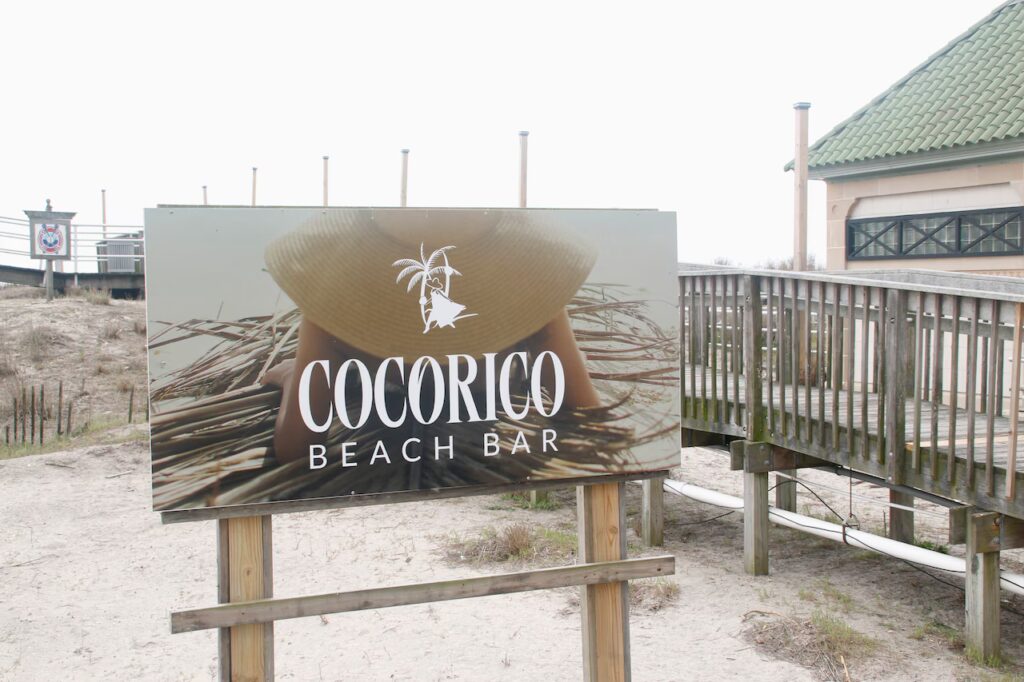
The post on Tuesday 9/9/2025 alerted us that Beach Bar’s move ‘likely’ to settle feud with neighboring condominium. Yep, the power of legal documents and law.
This beach bar in Atlantic City is “likely” to relocate to another area in the off-season to settle a dispute with residents of a luxury high rise, according to one of its owners. Steven Tabeek, an owner of Cocorico Beach Bar, said the bar reduced its operating hours this summer in an attempt to subdue complaints from the Ocean Club Condominiums. What those complaints involved is in the post. As the end of summer loomed, the bar and city officials appeared in agreement. The city started looking at that resolution months ago – see the post.
But it’s not a done deal; certain conditions need to be met or occur. The bar would likely be rebuilt instead of having the current structure moved, helping to minimize costs (which could reach the number noted in the post).
Since it opened in 2015 as the Chelsea Beach Bar, the bar had been open seven days per week said Tabeek. But that changed this summer; see the post. They did that as a way to coexist with the condo neighbors, he said. But that had a negative effect on the bar’s business – see the post.
Apparently the city is heavily involved in the possible move. More details are in the post. The mayor was expected to make an announcement about the move in early September.
In the meantime, the condominium association has said that residents have observed the bar open late into the night, playing amplified music as late as 4 a.m.. The potential settlement would not allow for that – the post notes the days and hours being considered under the settlement.
Oh, and a biggie: the association also claims that proof that the bar carries insurance has not been provided.
This is not the first go-round for the condo association and beach bar. Months before the beach festival’s announcement, the association fought to stop the bar from adding a swimming pool. And how did that turn out? See the post.
TAKEAWAY: Condominium (and homeowner) associations may face issues from outside the community that affect residents – and they may need to take action. Engage a community association lawyer.

The post on Wednesday 9/10/2025 noted that manager’s ‘single ethnic slur’ insufficient to grant worker win in discrimination case. Cat’s pay theory out the door.
Let first look at the facts underlying this August 28 ruling. Hackney, an Arab American, alleged in his 2022 suit that he was fired by a car dealership shortly after complaining about his manager’s conduct. He claimed that in conversation with him, the manager used a slur that disparaged another Arab American employee. He alleged retaliation in violation of Title VII and state law.
The court granted summary judgment to the car dealership because Hackney had insufficient proof to carry his initial burden under the cat’s paw theory of liability. He filed a motion for reconsideration (on the basis noted in the post), but the court affirmed the prior ruling and denied the motion.
The cat’s paw theory comes into many employment discrimination challenges. What is it? See the post. Here the car dealership claimed that the manager who allegedly used the ethnic slur was not the ultimate decision-maker on whether to fire the plaintiff. And the court said that Hackney did not connect the dots – see the post. There was also evidence supporting a termination for cause (poor performance); that too is in the post.
Hackney’s motion for reconsideration claimed that the court erred in applying the cat’s paw theory because (he alleged) the manager was the decision-maker who initiated his firing. While the court agreed it did not really consider that at first, it did on reconsideration – but still said the evidence came up short for Hackney. See the post for the analysis.
And also important (there and for other employers), the court also held that Hackney’s “isolated complaint” about the manager’s single racist remark did not constitute protected activity. The court’s statement on that is in the post.
The same appellate court had prior cat’s paw rulings. In one 2024 case a former paralegal alleged that she was terminated years after a lawyer with whom she worked threw her an office party for her 50th birthday which featured items such as adult diapers. How she brought in the cat’s paw theory is in the post. The court found there (as it did for Hackney) that the plaintiff failed to show an intent to cause her to suffer an adverse action.
And in a more recent case, the split court determined that a former insurance claims specialist did meet her initial burden under the cat’s paw theory – see the post for more on that.
TAKEAWAY: Who was the decisionmaker, ultimately or even in part, can make a difference as to liability in a case alleging discrimination or retaliation. Know the law.

In the post on Thursday 9/11/2025, we learned that US Dept. of Justice calls for tips on employers favoring foreign workers in hiring practices. This may further overwhelm already overworked DOJ employees and make them run down “inquiries” on legal actions.
So what’s happening here? DOJ is asking people to report illegal visa practices that could come at the expense of American workers. People are being urged to flag “discriminatory” advertisements for jobs, especially ones that state that the employer prefers people on a seasonal or H-1B visa. How an assistant attorney general framed it on socmedia is in the post.
H-1B visas were the subject of debate earlier this year. What opponents and supporters argue is in the post. Even Sen. Bernie Sanders, I-VT, chimed in on soc media – see the post. H-1B visas for fiscal year 2026 have already hit the legal petition limit with 65,000 that are standard, and an additional 20,000 for those with advanced degrees, according to U.S. Citizenship and Immigration Services. Who the visas are primarily meant for is listed in the post.
It should not come as a surprise that major visa reform is already underway in the US, and the Trump administration is reviewing all 55 million visas to make sure people who are in the country are following the law. Bases on which a visa could be pulled are listed in the post.
TAKEAWAY: To aid its expressed priorities, the Administration now wants people to contact a tipline and help expose visa issues. This author can see lots of space for workers who have been legally fired to try and get their former employers in legal hot water.

The post on Friday 9/12/2025 told us Orthodox Jewish family’s suit against HOA hits snag (but may not be over). Yep, process matters too.
The family’s federal discrimination lawsuit against their FL homeowner association suffered a setback recently, but the family says it’s determined to continue its fight. At the same time, the creator of a popular online video (linked in the post) that sparked the suit says he doubts he would ever return there to make a follow-up video. Jake Adams, an Instagram content producer, made a short video in March poking fun at the HOA’s Jewish-friendly attributes. In turn, that prompted the board to suspend amenity use for Issac Scharf, who had invited Adams to the club, and six members of Scharf’s family. Scharf, owner of a bedding supply company (named in the post) struck back on May 30 by filing a $50 million federal lawsuit. The legal basis of the suit is detailed in the post.
The Scharfs’ lawsuit argued that Adams’ video brought attention to Orthodox Jewish life in the community (by referring to a special rite described in the post), making it look inviting and welcoming. But that was allegedly a problem for the community’s (alleged) ultimate goal – see the post.
On Aug. 22, a federal judge dismissed the Scharfs’ lawsuit in response to a motion by the association stating that the family failed to first request pre-suit mediation as required by state law. How do the Scharfs plan to proceed now? See the post. They have not revealed what relief they seek by mediation.
On the other hand, the association’s president sent an email to its members after the judge’s Aug. 22 and told them the case is closed. (While technically true, the underlying matter might not be ….) What the association said about the Scharfs’ intention to pursue pre-suit mediation and another lawsuit if necessary is in the post.
Scharf has said that the 90-day suspension traumatized his wife and five children. They lost many benefits and amenity access (as detailed in the post) including auto transponders that enabled them to enter the development without stopping at the guard shack.
In June, the association told the media that suspension of the Scharfs’ rights to use association amenities was “not about the suppression of religious practice.” What they attributed it to (which, to this author, still seems rooted in religious belief and practice) is in the post.
Adams’ video, like about 20 others he said he has made at so-called Jewish country clubs around the world, poked fun at Jewish tropes. Some of the content is described in the post (and paints a vivid mental picture). How the Scharfs’ lawsuit characterized Adams, who is not Orthodox, is also in the post.
In an interview, Adams said he was surprised by the Scharfs’ suspension because he thought that managers of the country club were aware of what he does and approved of his visit. Where did he get that idea? See the post. Adams also said that the clubs he’s “parodied” have benefitted by an increase in membership and more – see more on that in the post.
TAKEAWAY: Is religious discrimination in the eye of the beholder? Perhaps. But that does not mean that parties can ignore legal procedure.

Finally, in the post yesterday 9/13/2025, we noted discrimination suit filed against Horizon Media … look at the facts …
A current and former employee have filed a 60-plus-page suit in federal court against Horizon Media Holdings and Horizon Media alleging discrimination, retaliation and a hostile work environment perpetuated by senior executives. The plaintiffs are Latraviette Smith-Wilson, Horizon Media’s former EVP and chief marketing and equity officer, and Charisma Deberry, Horizon Media Holdings’ VP of strategic comms and engagement.
Smith-Wilson left her role in May. Soon after, the company named Crystal Park as chief marketing officer.
The suit alleges that while Horizon claimed to be an industry-leading example of opportunity and inclusivity, behind closed doors it was not. The complaint says Horizon CEO Bill Koenigsberg, president Bob Lord, and EVP of HR Nancy Galanty engaged in a sustained campaign of bias and retaliation that culminated in Smith-Wilson’s abrupt firing under a “restructuring” pretext and continued escalations of retaliation against Deberry, who remains employed there. Specifically related to Smith-Wilson, the post recounts what Koenigsberg allegedly told her. And what Horizon’s leadership told Deberry. When Smith-Wilson tried to cite facts in response to accusations, what the company did and said is in the post.
Oh and there’s more. At one point Deberry corroborated a departing employee’s report of mistreatment of Black women leaders at Horizon and Galanty promised confidentiality. But then Galanty reneged and what happened is in the post.
Then an internal email subsequently sent to Smith-Wilson, which is cited in the suit, acknowledged “gaps in Horizon’s exit interview process” and much much more detailed in the post.
And then there’s the pretext claim. The complaint says Smith-Wilson was fired without warning as part of a “restructuring.” But less than two weeks later, Horizon announced Park as its new CMO. And what was Horizon going to do relative to Smith-Wilson’s position? See the post.
The suit seeks relief under various federal and state laws that are listed in the post. What they seek is also in the post.
Horizon Media provided a statement to the media in response to the suit. That is in the post. And yet not all of the alleged actions stopped when the Horizon was notified of the allegations; rather, after Horizon was notified, Deberry was removed from attending major events and more adverse action taken against her (as in the post).
Detailed background information on Smith-Wilson is in the post, including some honors. Similarly, information about Horizon Media, with more than 2,400 staffers and media investments of more than $8.5 billion, is also in the post.
TAKEAWAY: While companies have great latitude in hiring and firing employees, adverse actions can still subject them to liability if based on a protected characteristic or otherwise contrary to law. An employment