
Below is a review of the posts on Facebook and LinkedIn from the past week. You can check out the full posts by clicking on the links.
NOTE: starting this week we will be posting every other day.

The post on Sunday 11/23/2025 told us federal workers sue the US Dept. of Education over partisan shutdown emails. It is actually the federal workers union that is suing the administration. The basis of the suit is the language inserted into DoE employees’ out-of-office email messages blaming Democrats for the government shutdown. A quote from the complaint filed in federal district court in Washington, D.C., is in the post. The lawsuit is the first to challenge the administration’s unusual use of partisan messaging in government communications during the shutdown. Does that violate federal ethics laws? See the post.
You may recall that the White House began pointing the finger at Democrats when the government shut down on Oct. 1 (after Congress failed to pass legislation to fund operations). Messages posted by the administration on multiple agency websites and in emails to federal workers across multiple Cabinet departments blamed congressional Democrats and, in some cases, the “Radical Left” for the shutdown and its impacts. (NOTE: also recall that while Republicans control both chambers of Congress, they needed Democrats in the Senate to approve any government funding deal.)
Did the DoE employees who were furloughed due to the shutdown put the message into their email systems? Or authorize it? No. They were surprised to see the message (which is quoted verbatim in the post) inserted into their out-of-office replies.
Also, the language differed from the model language that had been provided to staffers as they prepared for the shutdown. What they did when they found out about the message, and what then happened, is all in the post.
The lawsuit, filed against the DoE and Secretary Linda McMahon as defendants, argues that the messages violate the First Amendment, which prohibits the government from compelling speech. More from the complaint is in the post.
And how did the DoE’s deputy assistant secretary for communications respond to the allegations in the complaint? See the post.
Government ethics experts not only disagree with that position but have said that inclusion of overtly political messages in federal agency communications could violate the Hatch Act (whose prohibitions are in the post). How the email messages at issue might fall under the Hatch Act is also in the post.
Rep. Robert Garcia of California, the ranking Democrat on the House Committee on Oversight and Government Reform, asked the U.S. Office of Special Counsel (OSC), an independent federal agency that enforces the Hatch Act, to investigate the Trump administration’s use of agency websites and official government emails “to promote a false, partisan Republican political agenda.” (That itself might be a separate issue due to the status of OSC now – see the post.)
The message was not limited to the DoE but spanned multiple agencies. And those agencies’ workers were just as unhappy with the messaging – see the post for some comments. One agency noted as having been politicized over the shutdown was the Department of Veterans Affairs. The post contains information sent out in a weekly newsletter to veterans, their families, caregivers, and survivors. Were veterans ok with that use of the newsletter? See the post.
How did the statement from the VA’s press secretary compare to that from the DoE? Yep, see the post.
TAKEAWAY: the administration appears to believe in acting first and seeking judicial approval (or legitimization) after the fact. Time will tell as this suit winds its way through the legal system.

The posts on Monday 11/24/2025, here and here, noted that staffing firm faces EEOC ire over male-only hiring.
Staffing firm WorkSmart, which is headquartered in Greenville, South Carolina, now faces a lawsuit for alleged sex-based discrimination in its staffing practice in violation of Title VII. The suit was filed Sept. 29. In the complaint the EEOC alleges that one of WorkSmart’s clients (identified in the post) requested that only male laborers work at the facility — and that WorkSmart allegedly complied with that request. How the EEOC’s regional attorney characterized what happened is in the post.
This is not the first time that the EEOC has sought to crack down on a staffing agency allegedly engaging in sex-based discrimination. SmartTalent agreed to pay $875,000 last year following allegations similar to that of WorkSmart. What the EEOC alleged in that case is in the post.
And alleged male-only hiring led to Security Engineers agreeing to pay $1.6M to settle a sex discrimination lawsuit this past March. Again, what the EEOC alleged in that case is in the post.
Is WorkSmart different? Its media statement is in the post. WorkSmart also said that it made “repeated good-faith efforts” to resolve the issue and that the EEOC had “rejected [WorkSmart’s] efforts to meet and has failed to provide clarity on its concerns.” The EEOC said it filed the case in federal court after conciliation failed.
The government shutdown affected this case as the court ordered the case stayed until EEOC’s funding is restored.
TAKEAWAY: It should be clear that employers cannot look to hire workers of only one gender. Whether WorkSmart violated that principle is yet to be seen …

The posts on Wednesday 11/26/2025, here and here, explained that HOA community reaches $425K settlement with DOJ amid PPP loan probe. Since many condo and homeowner associations around the country may have applied for and received PPP loans during the COVID-19 pandemic, this should be of interest (and be scary financially).
(If the link in the post did not work for you, try this one: https://ow.ly/RVj150XyM4y ).
The Heritage Hunt Homeowners Association Board told residents in mid-October that it had agreed to the settlement in exchange for closure of DOJ’s investigation into the HOA’s April 2020 Paycheck Protection Program loan that allegedly violated the False Claims Act. There was no admission of fault by the HOA; it agreed to effectively reimburse slightly more than the amount of the initial loan. The amount of the loan at issuance and the amount forgiven in June 2021 with interest are in the post. The settlement was signed Oct. 1, and repayment will start Jan. 1, 2026.
What did the U.S. Attorney’s Office that was prosecuting the case and the HOA have to say? See the post.
So how will the HOA repay $425K? According to the Oct. 14 letter from the Board, there will be a one-time special assessment (the specifics of which are in the post). What the $425K itself covers is also detailed in the post.
Ok, now let’s take a step back and look at the HOA and what led it to this point. Heritage Hunt is a 55-and-over community that has no paid employees. As is most common in community associations, the Board as well as its standing committee chairs and members are unpaid volunteers
In 2020 (yes, when the pandemic hit) the HOA paid outside contractor UptoPar and its 45 employees for the operation of food, beverage and golf amenities. According to documents provided to the media, the ball was kickstarted by UptoPar – see the post for details. Since the PPP loan was dependent on the HOA having employees on its payroll, the HOA allegedly violated the False Claims Act (and more) in applying for the loan.
The Oct. 14 letter from the Board detailed the legal fees it faced if the litigation proceeded and it was not successful (see the post). The Board’s stated rationale behind the settlement is also in the post.
TAKEAWAY: What we don’t know is why the HOA agreed to apply for the PPP loan (presuming it understood the prerequisite of having employees). Condo or homeowner associations should always consult a community association lawyer in legal matters, especially those with large price tags (hint: the PPP loan) attached.

In the posts on Thursday 11/27/2025, here and here, were Happy Thanksgiving wishes for you and yours. That’s it.
TAKEAWAY: Sometimes simple is best.
The posts on Friday 11/28/2025, here and here, told us the EEOC’s last year marked by record-low litigation, shifting priorities.
Remember that the federal fiscal year ends September 30, so we are here talking about October 1 2024 – September 30, 2025 (i.e., 2/3 of the time of which was under the new administration). At the time of the post, the government was shut down and the EEOC was mostly closed — one might say that was a symbolic cap to a year that saw the lowest litigation rate in 10 years.
The prior fiscal year (October 2023 – September 2024) was also sluggish. The lookout for the 2025 fiscal year was better given that the EEOC had a budgetary increase, there was a Democratic majority, and a full pipeline of charges. But then came the change in administration in January 2025. The chair and general counsel were replaced, as expected, but the President also fired 2 Democratic commissioners (leaving the EEOC with only two commissioners and no quorum).
Fiscal Year (FY) 2025 saw only 93 lawsuits filed — compared to the numbers (in the post) for FY24 and FY23, but those suits still provide useful insight into the agency’s probable focus with a new, Republican-led quorum.
Pregnancy, religion take center stage. The Pregnant Workers Fairness Act (PWFA), which took effect in June 2023, became a major priority for the EEOC in FY25. How many suits the EEOC filed under the PWFA or Pregnancy Discriminantion Act is in the post, along with the number when sex discrimination is added into the mix.
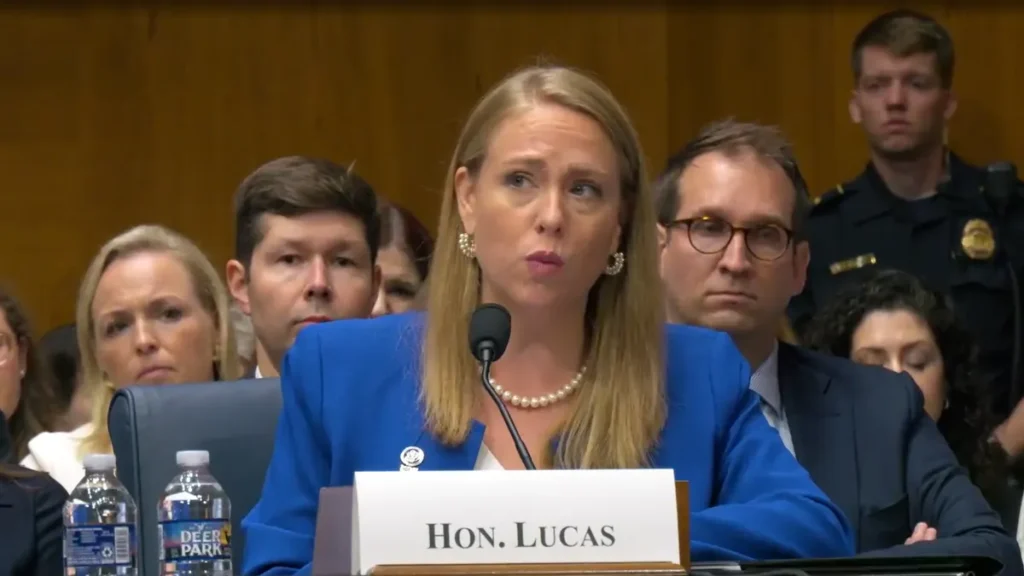
The thought by one person as to why pregnancy figured into about one-third of the suits is detailed in the post (and makes sense). The focus also aligns with now Chair Andrea Lucas’s stated priorities (and her personal situation – see the post).
What got lost (abandoned) in the literal shuffle? Gender identity cases – which had been increasing after the Supreme Court’s Bostock decision. But the EEOC’s failure to file any new cases on this basis was coupled with other action involving gender identity – see the post. And now the EEOC finds itself embroiled in at least one suit because of this.
On the other/third hand, suits dealing with religious discrimination picked up in FY25. The EEOC filed 11 such complaints, up from just four in FY24. Is it just timing (given the background noted in the post)?
And what about racial and national origin discrimination? See the post.
District offices stay in line. Beyond lawsuit type, an analysis of FY25 shows that the district offices mostly mirrored the EEOC in general. See the post for more specifics (including why this is or is not really surprising in this environment).
Small employers in the spotlight. The types of employers the EEOC chose to make an example of over the past year also provided some insight into the EEOC process. While the EEOC has historically targeted large, household-name companies to maximize the deterrent effect of its cases, in FY25 the EEOC pivoted to a mix of employer shapes and sizes – including those that met the bare minimum definition of an employer under Title VII. What does that tell employers? See the post.
There has also been another change: the EEOC announcing pre-litigation conciliation settlements (along with its traditional announcements of lawsuits and lawsuit settlements). Why this change may be a good indicator or, to the contrary, an indicator of illegal activity, is discussed in the post.
With a quorum, expect controversy. Well, sort of. The controversy that surrounded or involved the EEOC in FY25 has been unrelated to the suits it filed. And while the EEOC stopped other actions (see above), few suits raised eyebrows. But that soon may change now that Brittany Panuccio has been confirmed as a commission and a quorum is restored. Some have predicted at least one case that is expected to be filed – see the post.
TAKEAWAY: the EEOC may have been quieter in FY25 as far as filing suits, but employers should expect more enforcement (possibly including suits) in the areas of stated priority.