
Below is a review of the posts on Facebook and LinkedIn from the past week. You can check out the full posts by clicking on the links.
NOTE: remember that we now post every other day.

The posts on Sunday 4/5/2026, here and here, told us EEOC alleges restaurant fired worker who had seizure to allow her to ‘focus on’ her health. Hmmm.
THE EEOC recently filed suit against a steakhouse alleging violation of the Americans with Disabilities Act (ADA). The agency alleged that Diamond Jim’s and Mrs. Donna’s Ole Farm Beef LLC terminated the plaintiff so that she could “focus more on [her] health.” When the plaintiff had informed the business of her seizure condition is in the post.
EEOC claimed the restaurant fired the plaintiff the following February, shortly after it learned that she had had a seizure in January. More on the plaintiff’s seizure history, as well as the relief sought by the EEOC in the suit asking for a jury trial is all in the post.
Employers should know that the ADA is violated by terminating employees who have an actual disability or those who have a record of, or who are perceived to have, a disability. The latter category is classified under the “regarded as” framework (which is linked and explained a bit ore in the post).
The EEOC has previously sued employers for termination of employees because of a disability or perceived disability. In a 2020 lawsuit (linked in the post), EEOC sued a car dealership that allegedly fired an employee after learning that she had undergone cancer tests and was hospitalized due to illness. Coincidentally, EEOC alleged in that case that the dealership told the employee it was terminating her so that she could “focus on her health.” That case settled in 2022 (with more details on the settlement linked in the post).
The EEOC filed a similar lawsuit in 2021 against an employer for allegedly firing an employee with cancer over concerns about the employee’s health shortly after the onset of the COVID-19 pandemic. The post notes how that case turned out.
Keep in mind that the ADA requires employers to provide workers with disabilities a reasonable accommodation that would allow them to perform the essential job functions. This is normally accomplished through an interactive process with both employer and worker participating.
There are several potential reasonable accommodations for employees who have epilepsy or experience some form of seizure disorder, according to the Job Accommodation Network. These can include having a thorough plan of action in the event that an employee experiences a seizure or similar medical emergency and the other things noted or linked in the post.
TAKEAWAY: Employers must not take adverse action, including terminating, an employee based on a disability or the employee being regarded as having a disability. Work with an employment lawyer aa soon as you start the accommodation process.
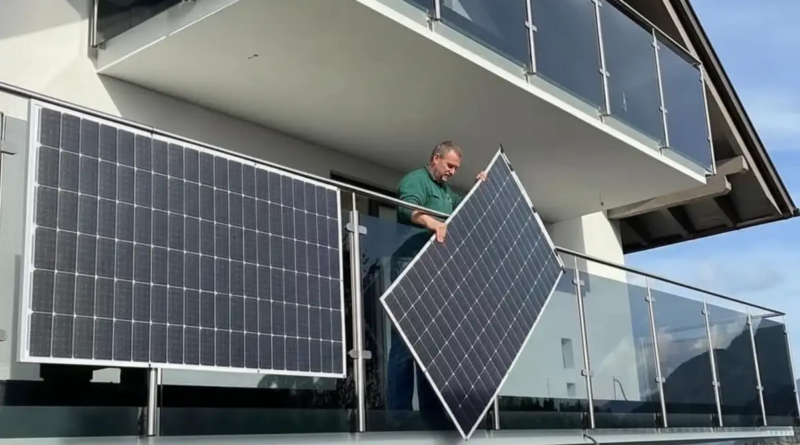
The posts on Tuesday 4/7/2026, here and here, explained balcony solar is spreading across the US. Will it come to PA? How will it affect units in condominiums, cooperatives and HOAs? Let’s take a closer look.
The balcony solar movement is running hot in Germany and now it is spreading to the US like gangbusters (just in time for the war in Iran to send the cost of coal through the roof alongside oil and natural gas).
First, what is it? Balcony solar systems are hangable solar panels that plug into a household outlet, enabling the resident to offset some electricity costs. When the person moves, the solar panel go es with them, just like any other transportable appliance. Look at the picture.
The balcony solar movement began taking noticeable form about four years ago when households in Ukraine started using them to work around Russia’s attacks on their power plants. The idea quickly spread to Germany, where people rushed to take advantage of government subsidies. The astounding and documented growth of balcony solar in Germany over the last 3 years is in the post.
The German market growth has attracted interest from US solar stakeholders, including the California firm Enphase. Last year, Enphase launched a product for German households. Information from its May 2025 press release is in the post (and just gives a bit more background on balcony solar).
But what about here in the US? Balcony solar has faced two significant hurdles. The first is the absence of state-based enabling legislation for devices that inject electricity into a household system without the need for authorization from their utility company. The other is restrictions on tenants and community restrictions on members.
Both of those obstacles are beginning to crumble, with Illinois providing the latest example. The state legislature is currently considering a proposal to remove the state’s existing pre-authorization requirement and replace it with a simple form notifying the utility company of the installation. The bill would also prohibit any other fees or installation expenses and it would prevent property owners and homeowner associations from raising unreasonable obstacles of their own. Quotes from the bill’s sponsors in both the IL state House and Senate are in the post. They highlight what many see as literal and figurative selling points.
The proposed IL legislation would establish the most relaxed rules for small balcony solar systems, generally covering those in the 300–400 watt category and additional restrictions on larger systems of up to 1,200 watts. More about what is required for balcony solar installation under the proposed legislation is in the post. As if hand in hand, the globally oriented certification laboratory UL Solutions just launched a new certification program focusing on balcony solar systems. How/why it works is explained in the post.
About 2 months after UL announced the new program, solar power is taking on a bigger role as a result of the war against Iran (due to the increased price of oil and diesel fuel, both of which also significantly affect the cost of transporting coal and therefore the price for the end user). So far, though, Utah is the only state to have passed a comprehensive balcony solar law for systems up to 1200 watts. UL notes that other stated (listed in the post and including Pennsylvania) are considering legislation.
TAKEAWAY: Owners are advised to check with their community association prior to installing balcony solar to ensure that they comply with any restrictions that are in place.

The posts on Thursday 4/9/2026, here and here, noted Duke University employee misconduct probe’s timing may show retaliation, judge rules. Timing can be everything … or nothing. Read on.
In a January decision, a federal district court allowed a former employee’s retaliation claims (linked in the post if you want more detail) to proceed, holding that a jury could conclude that the timing between the plaintiff’s dismissal and her sexual harassment report — along with a university’s separate investigation into her work — supported an inference of causation.
Mulugu, a researcher, reported harassment by her supervisor days before university officials began an investigation of both she and the supervisor regarding their handling of research data. What Duke ultimately did is in the post.
Now Due faces an approximate trial date of June 2026 on the retaliation claims. Duke did not immediately respond to a request for comment.
When they file charges or suits, employees alleging retaliation may point to numerous types of evidence to support their claims, including suspiciously close timing between an employee’s protected activity and a materially adverse action. The post contains a link to EEOC guidance on this.
In Mulugu, that judge noted that she filed her harassment complaint on Feb. 28, 2020, and Duke opened its misconduct investigation on March 9, 2020, purportedly in response to concerns raised on Feb. 26. The judge held that the close proximity of these dates pointed to an issue of material fact (such that Duke was not entitled to summary judgment).
But that was not all. The judge also appeared skeptical of steps taken by Duke during the misconduct investigation as noted in the post. The judge also noted that an internal investigation of Mulugu’s supervisor substantiated her harassment complaint and the supervisor was subsequently relieved of his duties.
Employers must be aware of any proximity between adverse actions and protected activity by the subject employee. Employers in that situation should be prepared to show documentation of any issues or infractions (to negate the potential charge of retaliation).
Duke is not the first defendant in this type of suit. In 2022, the EEOC alleged that a dental supply company unlawfully fired an employee one day after she reported a manager’s discriminatory conduct (the post contains a link to more details on that case). In another case (also linked in the post), the 5th US Circuit Court of Appeals held that an HR manager’s firing seven days after returning from leave was not retaliatory; the reasoning there is in the post.
TAKEAWAY: Employers may certainly take adverse action against employees – but be aware of the timing if the employee has engaged in any protected activity. Get an employment lawyer involved.

The posts on Saturday 4/11/2026, here and here, invoked Dear Abby: whose side of the property is the spiky hedge on? HOA issue or just between neighboring owners? First the question, then the answer.
DEAR ABBY: We just moved back to Southern California and into a gated community. My neighbor’s property is higher than mine, and she has a spiky, thorny hedge that’s growing over into my property and staining the side of my house. I went over and introduced myself, wanting to discuss the issue. My neighbor’s reply was, “That’s YOUR hedge!” The next thing I know, she has a person trim it and throw all of the clippings into my backyard for me to clean up. How do I deal with a neighbor like this? — THORNY RELATIONSHIP
DEAR THORNY: Contact the homeowner’s association (on the bases noted in the post). It is important that you establish where your property line ends and hers begins. If the plant really is on your land, you may have the right to remove it entirely.
TAKEAWAY: Whether in a community association or not, issues commonly arise over trees/hedges on property lines, especially growing over or into (and damaging) fences. It is imperative to know who owns the item, who has what legal rights or obligations, and what if any HOA rules or restrictions might apply. A community association lawyer can be helpful in this situation.