
Below is a review of the posts on Facebook and LinkedIn from the past week. You can check out the full posts by clicking on the links.
NOTE: there is still a bit of instability and fluctuation in federal labor and employment law – with more to come – so check with us or another employment lawyer before taking action based on something in our posts.

The post on Sunday 9/21/2025 noted Union, employers settle bias and harassment charges by EEOC. Monetary and non-monetary pieces – the EEOC has separately announced three settlements resolving allegations of workplace discrimination under Title VII. The employers are a Michigan manufacturer, a Virginia-based fast-food operator, and an Illinois labor union. The total they will pay is in the post. They will also adopt remedial measures including training and the other things noted in the post. The cases involve allegations of sexual harassment and race discrimination across diverse workplace settings. Let’s take a closer look
Union liability for blocking promotion. Sunnybrook Union, which represents teachers and support staff in Illinois, agreed to a monetary settlement (in the amount noted in the post) to resolve claims that it unlawfully interfered with the promotion of a Black custodian. The EEOC’s suit alleges that the school district attempted to promote the worker to head custodian outside of the strict terms of the collective bargaining agreement. What the union allegedly did after that is in the post. The EEOC stressed that Title VII’s prohibition of race discrimination applies to labor organizations as well as employers. The matter was resolved by consent decree lasting until the close of the 2026—2027 school year. The specific non-monetary relief to be provided by the union is detailed in the post.
Harassment allegations at Michigan manufacturer. East Jordan Plastics, Inc., which manufactures horticultural containers in Michigan, will pay the amount noted in the post to resolve a sexual harassment suit brought by the EEOC. The agency alleged that a male co-worker subjected female employees to repeated sexual comments and inappropriate touching. What the company did prior to conducting an investigation, and then what it did after that, is all in the post. The case charged the company with violating Title VII’s prohibition on sexual harassment. In addition to monetary relief, the three-year consent decree requires the company to provide the non-monetary relief specified in the post.
Fast-food operator resolves teen harassment claims. Mid Atlantic Dairy Queen, LLC, a Virginia-based operator of Dairy Queen restaurants, entered a conciliation agreement with the EEOC to resolve charges of sexual harassment at two of its locations. The agency found reasonable cause to believe that two former employees harassed multiple female workers, including teenagers, between July 2022 and February 2023. What the conduct included is detailed in the post. The EEOC determined that the company knew or should have known about the harassment but failed to take timely corrective action. The agreements provide for monetary relief (in the amounts in the post) for the two employees who filed charges and for five additional women who were subjected to the hostile work environment. The employer also agreed to the non-monetary relief detailed in the post. This matter was resolved without litigation.
TAKEAWAY: Harassment of any type will not be tolerated. Don’t make the EEOC come knocking on your door – stay legally compliant.
The post on Monday 9/22/2025 told us federal court uses prior comments by non-decision maker to reverse dismissal of discrimination claim – cat’s paw theory in action.
As you may (do?) know, as part of litigation in employment discrimination cases, plaintiffs frequently bolster their case with alleged disparaging comments made by a member of the employer company’s management. When the manager was the person who made a decision resulting in an adverse employment action, the comments can be considered direct evidence of discrimination. But what if the manager accused of making discriminatory comments was not the decisionmaker in the action that forms the basis of the lawsuit? We now have one federal appellate court’s answer to that question.
Recently in Hollis v. Morgan State Univ., the Fourth Circuit Court of Appeals (whose territory is noted in the post) reversed a grant of summary judgment for an employer based at least in part on disparaging comments allegedly made two years earlier by a department head who did not make the decision to deny the plaintiff a promotion. The plaintiff’s allegations and proof she set forth in support (by way of a manager’s comments) are all in the post.
The federal trial court dismissed the claims based on the time between the comments and the adverse action and because the department head was not the decision-maker relative to tenure denial. The Circuit Court reversed, concluding that the comments were circumstantial evidence (the effect of which was explained by the court and is in the post).
Even if a manager is not directly involved in a decision affecting an employee, that person’s behavior and comments can be used as evidence of a discriminatory influence on the ultimate decision. As the post explains, they can be the cat’s paw that tips the scales enough for a plaintiff to avoid dismissal and have their claims heard by a jury.
TAKEAWAY: Train your managers not take discriminatory actions or make discriminatory comments, even if they are not the decision-maker in a particular instance. Help your defense in case it is needed at a later date.

The post on Tuesday 9/23/2025 explained $1M lake home dispute escalates as restaurateur homeowner accused of flouting court orders stemming from HOA assessments.
It started out as an $1,100 jury verdict in a state court case. That was the verdict in the case between the homeowner and his HOA. Now the judge has ordered Joe Romare to pay an additional $700,000 (not a typo) to the association for its attorneys’ fees. That is on top of what Romare has spent on his own attorney – see the post. The jury verdict pales in comparison.
Romare owns several bars. He has argued that his home is not part of the association and therefore not subject to its rules or dues. Several judges rejected his argument – and then a jury did the same. Then the HOA attorneys filed their fee request. The basis of the fees request – and the reason it is so high – is in the post. So let’s go back and look …
Romare bought his land in 2020 and built a house and dock that the county values at more than $1M. The lake and surrounding properties are managed by the association, which charges dues to fund its operations. It also has rules, including for boating; it says Romare began violating the rules in 2023, the same year he did not pay his assessment. Fines were assessed. When Romare did not pay and continued the violations, the association asked a court to bar him from using the lake until he came into compliance (as to his actions and financially). Romare did not agree and the case went to trial. In October 2024, a jury found that Romare owed the assessments (but not the violation fines). Romare tried to appeal. In May 2025, the judge entered an order barring him from using the lake until 18 months elapse after he pays the bills – including the attorney fee award.
What was posed as the decisive issue in the case seems simple – whether the lake is private or public – but certainly generated lengthy litigation. What each side argued is in the post. And in the end it didn’t matter based on the judge’s decision (which is also in the post). Some of the things that ran up the attorneys’ fees were that Romare filed 8 motions for summary judgment (each of which had to be opposed), required unnecessary in-person hearings, and the other things detailed in the post.
From the HOA’s perspective, the small amount of dues at issue was not the real problem. Rather, it needed to establish its authority to enforce rules as against all owners. Despite this latest order (for the fee award), the case is not over. The post explains what is still going on.
That is not Romare’s only mess with the law. At least one of his bars is in a building that is subject to an association that levies assessments to fund upkeep and more. How much is at issue there, and the juncture at which that case sits, is all in the post. And beginning to sound familiar …
TAKEAWAY: associations, whether residential or commercial, are governed by various rules and restrictions and fund their operations through assessments. Owners of property in the association are subject to those rules and restrictions. Contact a community association lawyer in any of these circumstances.

The post on Wednesday 9/24/2025 told us Judge tosses EEOC long COVID lawsuit, finding worker never made disability clear. So important. Let’s take a closer look for that roadmap.
A federal trial court granted summary judgment for the Appliance Factory, dismissing a suit (linked in the post) brought by the EEOC that accused the store of discriminating against a worker with long COVID. The worker requested leave from work to care for her son in March 2020. In April, she said she suspected she had contracted COVID-19 and requested FMLA leave. The store granted the leave through early June. The suit alleges that at the end of her FMLA leave, she inquired about extending her absence, did not respond to a request for a phone call to discuss her situation, and then was terminated the following day.
In ruling on summary judgment, the court noted the how the facts in the three-month timeline (which are detailed in the post) played into its ruling that the Appliance Factory was not on notice that she had a disability that required accommodation under the ADA. Based on what the employer was given, the court said it was unclear if the disability was COVID-19 or something else.
But the court went one step farther, finding that even had the disability been clear, the worker never made an “explicit request” for an accommodation until after her FMLA leave expired and her other actions (noted in the post), coupled with a failure to provide certain required information, were not sufficient to form a recognized request for accommodation.
This case was at the crossroads of the FMLA and ADA, a place where employers often find themselves thanks to EEOC guidance that additional leave beyond that provided by the FMLA may be a reasonable accommodation under the ADA. In a 2024 case, the agency alleged that a Michigan employer violated the ADA when it treated the failure of workers with disabilities to return after exhausting FMLA leave as a “voluntary resignation” rather than granting them extended leave. How that case ended up is in the post. But there are also cases going the other way. For example, in July 2025, another federal appellate court rejected a worker’s June 2022 request for disability leave (which is noted in the post) as not being specific enough to warrant a failure-to-accommodate claim against an employer.
TAKEAWAY: While no specific words are necessary to request an accommodation under the ADA, the words used must still be sufficient to put the employer on notice that an accommodation is indeed being requested. Get an employment lawyer involved early to make sure you fulfil your legal obligations.

In the post on Thursday 9/25/2025, we learned that 3M successfully showed undue hardship in religious bias vaccination suit. This case provides an employer roadmap under the recent Groff v DeJoy standard so pay attention. Let’s look at how 3M met this new standard (that is more favorable to employers).
The Pennsylvania federal court granted summary judgment to 3M in early September on a religious accommodation claim because “ample, undisputed evidence” showed it would suffer an undue hardship if it exempted a patient support employee from its COVID-19 vaccination requirement. The court in Cleckner v. 3M Company said that 3M established that for it to stay competitive, patient support employees had to work in-person at healthcare facilities (with the side effects noted in the post) and the facilities wouldn’t let them on the premises if they weren’t vaccinated against COVID, even if they had an exemption. The court also discussed an expert’s report and how that played in 3M’s burden – see the post.
The subject employee’s main job was to promote a medical device that treated patient wounds while they recovered from surgery, injury or disease. What her tasks involved is detailed in the post. 3M argued that employees from competitors were also at healthcare facilities trying to convince patients and providers to use their similar devices, such that 3M would become less competitive if its employees weren’t there advocating for 3M products.
The post reviews how the employee worked at the outset of the pandemic and after a federal COVID vaccination mandate took effect. The employee submitted two requests from a religious exemption. 3M rejected the first request, and its system automatically appended the second request (which included different information) to the denied first request. 3M fired the employee after she failed to comply with its COVID vaccination requirement. She sued for religious discrimination in violation of Title VII and Pennsylvania law.
The employee’s legal burden was to show that she had a sincerely held religious belief that conflicted with 3M’s vaccination requirement and that she informed 3M of her belief. She met that burden, which then shifted the burden to 3M to show that accommodating would be an undue hardship (under the new standard announced by the US Supreme Court in Groff v DeJoy). The court explained how 3M showed undue hardship – see the post.
This case was an exception in a long line of religious vaccine exemption cases brought against employers. As but one example, a jury recently found in favor of a former Chicago Transit Authority electrician, a practicing Catholic, who said he was denied an exemption from CTA’s vaccine requirement. A link to that ruling, as well as a bit more of the background (which is important to accommodation and the existence of undue hardship), is in the post.
TAKEAWAY: COVID vaccine exemption cases are still winding their way through the court system; similar cases will be brought in the future. Employers must either accommodate or know how to prove that accommodation would be an undue hardship. An employment lawyer can help.
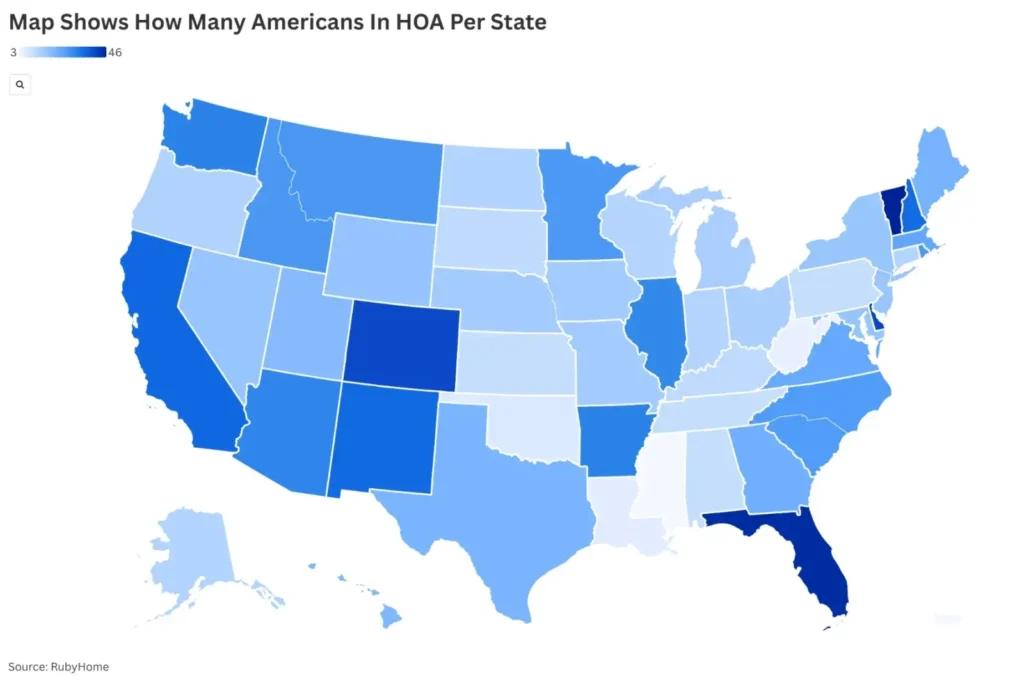
The post on Friday 9/26/2025 was about a map that shows how many American live in HOAs per state. Where is Pennsylvania?
We learned that Florida, Delaware and Vermont are the states where the largest proportions of people live in a homeowner’s association (HOA). According to data by the Foundation for Community Association Research, over 40% of the population of these states lives in an HOA. The states with the lowest proportion of the population who live in HOAs are also listed in the post. Newsweek created a map (embedded in the post) to show each American state and the proportion of people in each state who live in an HOA.
Why do or should you care? HOAs are managed by a group (usually of residents) elected to a board which creates and enforces community rules, maintains common areas, and collects funds for its operations.
HOAs are disliked by some residents. A September 2024 survey had some results that are noted in the post. And negative Association issues are widely reported in the press. In 2024, one woman shared how she spent hundreds of dollars on a front yard makeover, only to be told that the white rocks she used were in violation of the HOA regulations. (In fairness, did she check before doing the work?) And anther HOA faced a potential accommodation issue – see the post.
But since US Census data shows the proportion of single-family homes built within HOAs has increased from 49 percent in 2009 to 65 percent in 2023, you must pay attention. That means that about 30 percent of the US population – over 75 million people – lives in approximately 365,000 HOA communities. The average monthly assessment is noted in the post.
Which state has the highest proportion of HOA-dwellers? See the post. Forty-six percent of people live in an HOA in that state. The second and third-place states, and their HOA resident populations, are also in the post.
And then there are the states at the other end of the spectrum. In West Virginia, only five percent of people live in these types of community. Two others have even lower HOA-resident populations (see the post).
Most states are in the middle – Pennsylvania is one. Its proportion of HOA residents is in the map embedded in the post.
TAKEAWAY: As a higher percentage of new construction results in more community associations, more people will live in those communities. Community association lawyers can be a great help to owners and boards.
Finally, in the post yesterday 9/27/2025, we saw a former EEOC employee files charge alleging transgender bias at the agency. The employee said he was allegedly forced to “create business processes and technical tools that were being weaponized to facilitate discrimination against transgender employees” like himself. Note that for most of this year it’s been the administration and agencies that have made allegations of weaponization; this suit turns the tables on the EEOC.
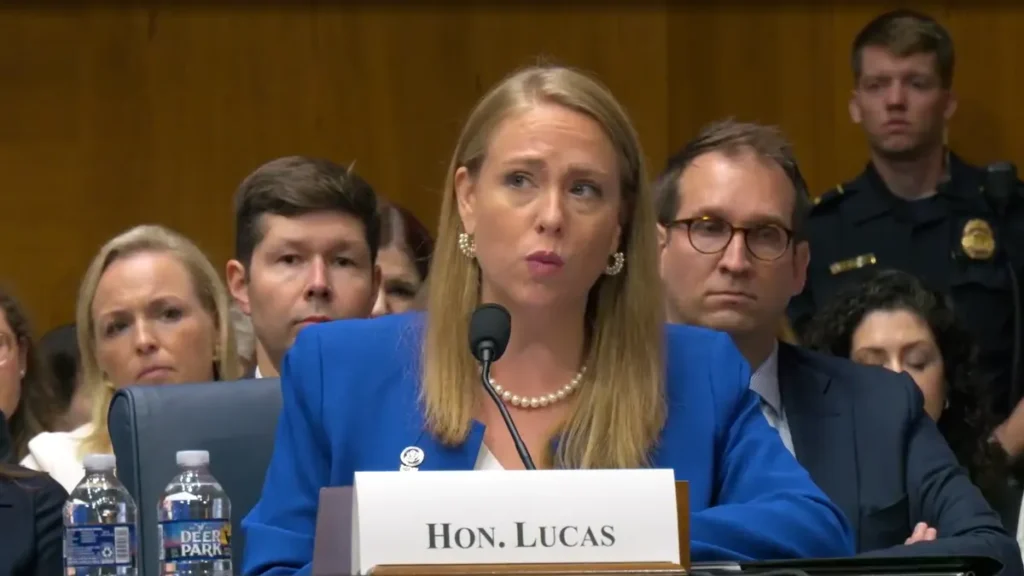
A transgender former director of information governance and strategy for the EEOC filed an EEO complaint with the agency that alleged discrimination and a hostile work environment at the EEOC under Acting Chair Andrea Lucas. The worker alleged that EEOC disbanded an LGBTQ+ employee group and took other action (or, in this case, stopped acting) in violation of federal law. A statement by the worker’s attorney is in the post, as is that of the EEOC.
The complaint comes a month after an LGBTQ+ advocacy organization sued the EEOC and Lucas, alleging they unlawfully refused to enforce federal workplace protections for transgender workers. Moe details on that suit are in the post.
Since being named acting chair earlier this year, Lucas has said EEOC will prioritize “rolling back the Biden administration’ gender identity agenda.” The new EEOC complaint alleges that part of that priority has involved scrubbing “any recognition of transgender and non-binary people … from EEOC’s public materials, outreach efforts, and workplace protections.” What the former EEOC worker said he was required by the director of National Engagement and Field Management Programs to do is also in the post – as well as how the action was later used by the agency. So what was the problem with what he was told to do? His words are in the post.
In his EEO charge, the former employee requested that the EEOC stop its allegedly discriminatory practices and more as listed in the post. What if the agency either does nothing (because how can it really properly investigate itself?) or dismisses (finds no cause for) the charge? The worker said he plans to file a lawsuit in those scenarios.
TAKEAWAY: The EEOC is charged with enforcing anti-discrimination laws, but what if it is the one doing the discriminating? Keep an eye on this charge …