
Below is a review of the posts on Facebook and LinkedIn from the past week. You can check out the full posts by clicking on the links.
NOTE: remember that we now post every other day.

The posts on Sunday 2/22/2026, here and here, noted EEOC warns agencies against ‘blanket approach’ to telework denial – and how this guidance applies to private employers.
For decades and especially as of March 2020 (remember that: the start of the COV lockdown?), workplace experts were expounding on the value of remote work especially for those with disabilities. For federal workers with disabilities, President Trump’s January 2025 “Return to In-Person Work” memorandum (linked in the post) could have been troublesome if telework was a part of any accommodations. Now, more than a year later, the EEOC and Office of Personnel Management (OPM) jointly issued a guidance document to help federal agencies comply. Private employers can take some tips from it too.
The Feb. 11 technical assistance document says “Agencies should not take a blanket approach to rescind and deny all recurring or full-time telework accommodations.,” The document is in a Q&A format (and is linked in the post). It refers to the presidential memo itself which says that telework decisions must be “consistent with applicable law.” So let’s take a closer look at what applicable law is and provides.
What the Rehabilitation Act requires and how it applies
Like the Americans with Disabilities Act (ADA), the Rehabilitation Act — which applies to applicants and employees of the federal government’s executive branch — makes it unlawful to discriminate against a qualified individual with a disability and provides that the individual must be able to perform the essential functions of the job, with or without reasonable accommodations. The EEOC notes that similar to the ADA, the Rehabilitation Act does not define “reasonable accommodation.” But some things the EEOC has previously suggested as being reasonable accommodations under the ADA are those linked and listed in the post. In this latest guidance the EEOC says that full-time telework, recurring or routine telework, and situational telework could be worthwhile approaches to disability accommodations, but that a federal agency’s disability accommodations should always be fact-specific. Things for the federal agency to take into account when considering telework as an accommodation (which also hold true in the private sector under the ADA) are noted in the post.
How disability violations have looked in the private sector
Remote work has continually been a topic of lawsuits alleging ADA violations. The EEOC brought a case in September 2024 against an employer, alleging it violated the law when it refused to approve remote work for a worker who had experienced a stroke (see the link in the post for the employee’s role, her accommodation request after having a stroke, and the basis for that request). The EEOC said the company’s refusal was a violation of the ADA – for the reason noted in the post – and the case remains in litigation.
But a different worker’s lawsuit alleging an ADA violation around remote work did not ultimately succeed. The plaintiff in that case took leave after a PTSD diagnosis and returned with a temporary agreement from the trucking company employer to work partially on-site and partially from home. After a few extensions, the employer fired the worker. A federal district court ruled in the company’s favor and that was upheld on appeal on the basis noted in the post (proving once again that facts matter).
What HR can learn from the EEOC about telework
Yes, private-sector employers may find some lessons in EEOC’s recent document. For example, in her statement the EEOC Chair highlighted the “the importance of engaging in the interactive accommodation process” (which is linked in the post. And, in what could be key in many situations, the EEOC’s document notes that employers don’t always need to grant telework when other options exist but also cautioned against rescinding previously granted telework amid top-down RTO mandates. The EEOC’s statement on this is in the post. Again, facts matter.
How the EEOC suggests that agencies deal with this in the federal government is detailed in the post (and also translates to the private sector).
As background, a SHRM report from last fall reaffirmed that remote work has helped people with disabilities participate more fully in the workforce – see the link in the post. Report data showed that the labor force of workers with disabilities increased by more than 30% since the beginning of the COVID-19 pandemic, along with what is pointed to as (a/the) reason – see the linked report.
And not to be upstages by the EEOC, OPM participated in the joint press release, noting how this could play out in the federal workplace – see the post. And again, the same holds true in the private sector.
TAKEAWAY: Let’s say it a third time: facts matter. Employers, whether public or private, must know an individual worker’s condition and what is being requested by way of accommodation in order that the interactive process can proceed the way it is legally supposed to (under the Rehabilitation Act or ADA). Telework might end up being the accommodation offered, especially if it is an existing accommodation, but facts matter. Consult an employment lawyer.
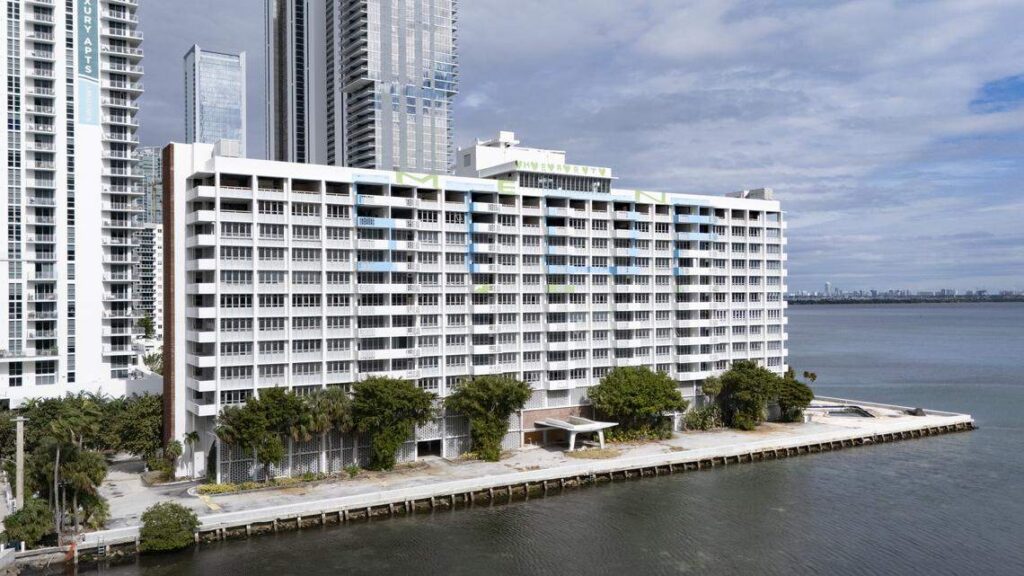
The posts on Tuesday 2/24/2026, here and here, told us developer strikes back against residents in a condo takeover attempt. Sounds like a soap opera, but it’s real life for about a dozen owners.
A judge ruled that a developer that tried to buy out a Miami condo tower was on the hook for millions of dollars in repairs. But wait … in another twist to the legal saga surrounding the waterfront property, the developer has filed a lawsuit against the residents who sued to stop the takeover. Yes, you read that right. If the suit is successful, the developer could not only escape paying the repair bills but demolish the tower and build its planned luxury condos. Let’s get more details.
While the first suit was still proceeding, the developer began demolishing the building, Biscayne 21, which is more than 60 years old. The current condition of the building, and the estimated amount it will cost for repairs, is in the post. The attorney representing the condo residents who sued the developer called the new lawsuit a “last-ditch effort” by the developer to get out of repairing the building.
The developer filed the suit in state court on Jan. 30. The complaint asks for termination of the condo association on the basis noted in the post. In a statement to the press, the developer cited “longstanding issues” with the building before it began its takeover attempt. After a recent court ruling that the developer was responsible for repairing the building, it said that it has complied with the order. The owners who filed suit denied the developer’s claim; what they said about the condition of the building is in the post.
Terminating a condo association is a legal process that affects how title is held and/or the rights (and obligations) that go with ownership. Often, a developer will buy out and terminate a condo (to remove any restrictions from the property) before tearing the building down and redeveloping the site.
Currently the developer owns 183 of the 192 units in the building. The others are owned by the holdout residents who refused to sell their units and filed suit in May 2023. What would happen if a judge approves the condo termination is in the post. A statement by Robert Murphy, one of the residents who sued, is also in the post. Murphy also said he’s looking forward to moving back into his condo once the repairs are completed, which he’s been told will take about two years.
The route being taken by the developer is “economic termination” under Florida condo law. That is explained in the post (and is not necessarily the same under other states’ condo law). This process allows for a termination to happen even with significant opposition from residents. But there’s a catch here that may stymie the developer’s argument – see the post.
The holdout residents submitted a new complaint in their lawsuit asking for at least $100 million in damages from a longer list of defendants, including those listed in the post. The developer had planned to take over the condo, terminate the association, demolish the building and redevelop the site with luxury condos. But the holdout residents put the kibosh on that plan. Biscayne 21’s condo declaration, the legal document that establishes the condominium, requires approval by 100% of unit owners for termination of the association. To try to get around that requirement, however, the developer, which by then owned a majority of the building’s units, amended the declaration to lower the threshold for termination. But the holdout residents sued the developer over that amendment and in July 2025 a judge ruled in their favor. In October, the Florida Supreme Court declined to hear the case, finalizing the residents’ victory (and leaving in place the required 100% approval for termination).
Then in January 2026 the trial court ruled that the developer was responsible for repairing the building – which it had begun to demolish while the lawsuit was proceeding (not sure of itself, was it?!?). Murphy, one of the holdout residents, talked a bit about the timing and what has happened; see the post. And what did an attorney not involved in these suits but who has been involved in other condo terminations have to say about what the developer did here? See the post.
TAKEAWAY: Condo (and homeowner) association are responsible for operations, including maintaining common elements/property. Sometimes that comes with a huge price tag and in some areas of the country leads to a large company buying all units (or enough to terminate the association) and redeveloping the land into something new (that normally ends up pushing out the former owners and residents). Contact a community association lawyer if you are involved in this type of process.

The posts on Thursday 2/26/2026, here and here, were about EEOC allegations cemetery locked out Black employees from restroom open to White workers. Really?!? Let’s look more closely …
This is all in the EEOC’s Feb. 6 suit in federal court (the caption and jurisdiction for which is in the post). Allegedly Black employees had no access to an interior restroom or break room for a 10-day period but had to use a neighboring gas station’s restroom. After the employees complained to management, the employer provided access to a restroom and adjoining break room that the plaintiffs alleged was “inhospitable and unhygienic.” What the employer allegedly did NOT do was allow the Black workers access to a “preferred restroom” open to White employees. But that’s not all: see the post for more allegations by the EEOC. The employer did not immediately respond to a request for comment.
EEOC’s complaint alleges that the conduct complained of was an unlawful denial of equal status in the workplace that violates Title VII of the 1964 Civil Rights Act. A statement by EEOC Acting General Counsel is referenced and partially quoted in the post.
Much of the EEOC complaint centers on three Black groundskeeping employees who were the nonmanagerial staff at that facility. The employer allegedly restricted access to the preferred restroom and break room with a combination code lock. The restroom restriction was not limited to the plaintiffs; see the post. In contrast, at the same time as that restriction for Black workers, members of the facility’s executive management, all of whom were White, and professional-level White employees were granted access to the preferred restroom and break room.
The three plaintiff employees repeatedly complained about the restrictions as well as the conditions of the alternate break room to which they were given access. The employer’s reaction is in the post.
Retaliation has been a focus in several recent race discrimination cases pursued by EEOC. For example, the agency announced last July a settlement with a retirement community it alleged had refused to promote and later fired a Black manager who expressed her desire to file a discrimination charge.
TAKEAWAY: The EEOC is charged with combating race discrimination, including litigation. If the facts alleged are true, the employer should have known better – it seems there is no legal defense. Do not treat workers differently based on race (or any other protected category) – at least without first discussing any potential legal basis with an employment lawyer.
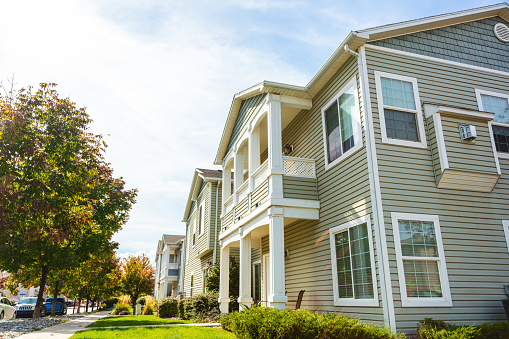
The posts on Saturday 2/28/2026, here and here, taught us What Homebuyers Should Know Before Purchasing in a Community (Condominium or Homeowners) Association.
Buying a home in a community association, which can include homeowners associations (HOAs), condominiums, and housing cooperatives (most of which in PA are found in the Philadelphia and Pittsburgh areas), offers many benefits including well-maintained common areas, shared amenities, and rules that help protect property values. Prospective buyers can maximize these advantages by learning how the community association operates before moving in. That underlined language is key because once the purchase is complete, it’s too late to decide one does not want to comply with one or more restrictions that apply in that community.
Dawn M. Bauman, CAE, chief executive officer of Community Associations Institute (linked in the post and a fabulous resource for current or potential owners, volunteer leaders, and professionals serving or working in the community association arena), said, “For first-time buyers, understanding the community’s rules, assessments, and responsibilities ensures a smooth transition and a positive homeownership experience.”
Community associations are one of the fastest-growing segments of the US housing market. The latest statistic on the percentage of homeowners living in a community association is in the post (and may make your mouth gape in awe). And that number will most likely only increase.
Community associations offer a variety of benefits that enhance residents’ quality of life including:
• Well-maintained neighborhoods. Rules and guidelines protect property values. Shared spaces like parks, pools, and landscaping are professionally maintained;
• Shared amenities and services. Residents enjoy pools, playgrounds, walking trails, fitness facilities, and services like trash collection, snow removal, and security that would be costly to manage individually;
• and more as detailed in the post.
The benefits of living in a community association are reinforced by research. A 2024 survey (identified in the post) found that 86% of residents rate their community association experience as very good, good, or neutral, demonstrating broad satisfaction with governance, amenities, and community management.
Once the decision is made to consider purchasing a home in a community association, the potential buyers should review certain key documents and ask questions to understand rules, finances, and governance including:
- Bylaws and rules. These outline association governance, elections, daily expectations, and community standards;
- Declaration of Covenants, conditions, and restrictions (often referred to as the Declaration or the CC&Rs). This is a legal agreement or contract setting maintenance, architectural, and use standards, among other things; and
- The other documents listed and described in the post.
Some key questions to ask prior to purchasing include:
• What are the assessments? What do they cover? Are there planned increases?
• Are there rental or age restrictions?
• What are the rules for pets, flags, solar panels, electric vehicles, fences, patios, parking, and home businesses?
There are others detailed in the post. Bauman noted that information is imperative, but what about after the purchase is made and the person moves in? See the post.
As a relevant aside, Community Associations Institute is the leading international authority supporting condominium associations, homeowners associations, and housing cooperatives. CAI offers a first-time homebuyers checklist with guidance on assessments, budgets, amenities, and governance to help prospective homeowners make informed decisions. The link to the free guide is in the post.
TAKEAWAY: While community associations offer a way of life that many enjoy, a potential buyer is advised to review the restrictions and benefits of living in that community prior to purchase. Consulting with a community association lawyer might also be a good idea if there are questions.