
Below is a review of the posts on Facebook and LinkedIn from the past week. You can check out the full posts by clicking on the links.
NOTE: there is still some instability and fluctuation in federal labor and employment law, so check with us or another employment lawyer before taking action based on something in our posts.

The post on Sunday 8/24/2025 noted EEOC settlement emphasizes employees’ right to discuss salaries. Employers might want to update policies.
Reports of the demise of EEOC enforcement of traditional discrimination claims may have been exaggerated. Recently the EEOC announced settlement of claims against Sinclair Broadcast Group (yes, the huge media conglomerate!) alleging race discrimination involving pay disparities with a Black female employee. The settlement involved both a 6-figure monetary payment plus additional non-monetary relief – see the post.
In the past, employers frequently put in place and enforced policies prohibiting workers from discussing or comparing salaries. In recent years, however, both the EEOC and National Labor Relations Board (NLRB) have taken the position that federal labor laws prohibit policies that restrict employees’ ability to compare their pay or disclose that information to third parties. The NLRB stated that such information is a form of protected concerted activity (which would apply to all employees and employers, whether or not unionized); the EEOC’s position is noted in the post.
While both NLRB and EEOC enforcement priorities have shifted under the current administration, the EEOC shows few signs of changing its position with regard to pay disclosure policies. Which leads to our …
TAKEAWAY: To be safe, employers with prohibitions against salary/pay disclosure should discuss with an employment lawyer and consider revising the policy.

The post on Monday 8/25/2025 talked of home healthcare companionship exemption – is it back? Know who is or is not exempt from overtime pay.
Yes, home healthcare employers should take note. The US Department of Labor’s Wage and Hour Division (WHD) issued Field Assistance Bulletin No. 2025-4 on July 25, 2025 (the “FAB”), which said WHD will immediately stop enforcing the 2013 regulations that dramatically restricted use of the Fair Labor Standards Act (FLSA) companionship and live-in domestic service exemptions (the Companionship Exemption). So that might make things easier in some cases including for live-in domestic service employees – see the post. Let’s look at the background here in case you are unfamiliar with it.
Congress first extended federal wage-hour protections to “domestic service” employees in 1974 and, at the same time, carved out two key exceptions: (1) a complete exemption from minimum wage and overtime for employees providing “companionship services” to individuals who cannot care for themselves, and (2) an overtime-only exemption for “live-in” domestic service workers. The 1975 regulations allowed third-party employers (such as staffing agencies) to rely on both of those exemptions.
But then in 2013, DOL dramatically narrowed the rules. The final rule (a) barred third-party employers from using either exemption, and (b) redefined “companionship services” to sharply limit the amount of “care” work an exempt companion could perform. When those changes became effective is noted I the post; that has governed WHD enforcement ever since, until now that is.
So after a decade under the old rule, the new FAB now returns the companionship services and live-in exemptions to the 1975 standards. The FAB immediately requires that WHF investigators:
- Must immediately stop enforcement of the 2013 final rule, including open cases that predate the FAB; and
- Must not investigate or take enforcement action against third-party employers, including home care agencies, that claim the exemption.
Is this a statutory change? No. The FAB is merely internal guidance for WHD personnel and notice to the public of WHD’s current enforcement position. But it is therefore something on which employers can rely at this time. The steps home healthcare employers should consider taking are listed in the post.
TAKEAWAY: Employers must properly pay all workers; knowing who is and is not exempt from overtime or minimum wage requirements is part of that.
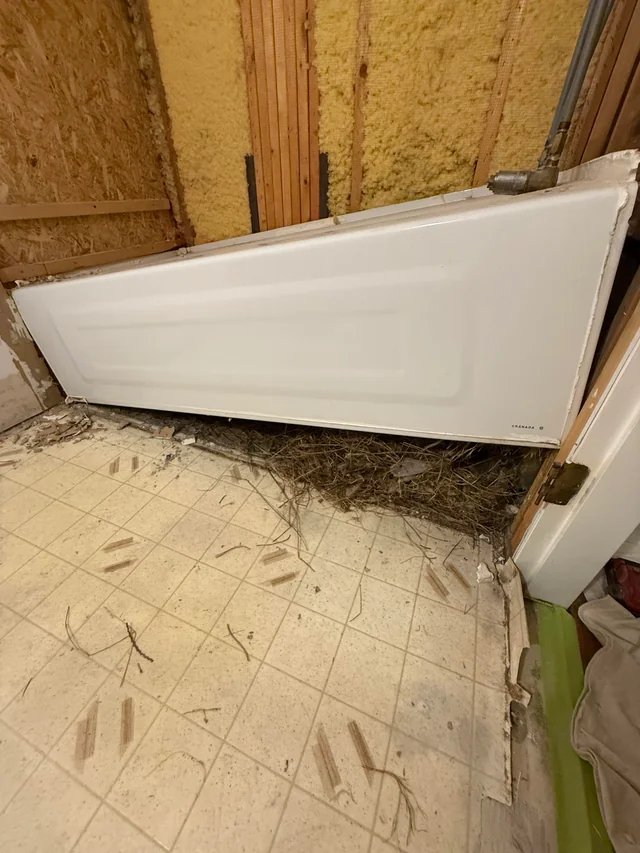
The post on Tuesday 8/26/2025 told us homeowner remodels bathroom in condominium — shock at what’s been there all along.
This happened in Canada but just as easily could have been in the US, so let’s take a look. A renovation project took a shocking turn when decades’ worth of bird nests were found hidden beneath a bathtub.
Brian Figel, a 31-year-old student, shared photos of his discovery on Reddit (the username and subreddit are noted in the post) on August 13.
The title of the post reads: “I live on the first floor above a parking garage. After thousands of dollars in plumbers trying to find out why my tub would leak occasionally, we decided to gut the bathroom and remodel. We found 30 years of bird nests.” Figel is also a music producer and sound engineer. He noted that on several occasions he tried to pin down where the leak was coming from and decided it wasn’t worth trying more temporary solutions. Instead, he started remodeling the whole bathroom and found the nets when he pulled up the tub. (A photo is part of the post – imagine if you found this in your house!).
Figel said the building was built in 1995 and the tub had never been replaced. How long the nests were there, and how long the tub leaked, is all in the post. He said they knew birds were in there because they heard chirping all the time; where they thought the birds were nesting is in the post. He also asked if the condo association should pay based on the nests’ location.
Figel’s discovery raises both legal and public health concerns, particularly in shared buildings like condominiums. An expert noted the potential serious health issues with bird nests and how they can be removed – see the post. And what if the nests’ location is in a condo? Does that tell you who is responsible and what should be done? The answers to those questions are “it depends” and “yes”. See the post.
Figel said that here the birds entered by burrowing through the insulation in the ceiling of the garage, which is open-air and completely accessible to the birds. When Figel is done with renovations, he intends to fully seal off the inside of the new bathtub.
TAKEAWAY: responsibility for both the actual removal and the cost in a situation like this depends on the Governing Documents and applicable law – talk to a community association lawyer.

The post on Wednesday 8/27/2025 told us Criswell Chevrolet to pay $30,000 in EEOC (failure to accommodate) disability discrimination suit.
This occurred close to home in Gaithersburg, Md., so pay a bit more attention. Criswell Chevrolet, Inc. is an automobile dealership. In addition to the noted monetary relief, Criswell also will provide other non-monetary relief (described later in the post) as part of the settlement.
The EEOC charged Criswell with violating federal law by refusing to allow a worker with post-traumatic stress disorder (PTSD) to have a service dog with him at work, leaving him no choice but to quit. The EEOC said that conduct violates the Americans with Disabilities Act (ADA). When no pre-litigation resolution through conciliation was possible, the EEOC filed suit in federal court.
EEOC’s Philadelphia Regional office handled the case; what they said after the settlement is in the post. More details on EEOC district offices, what the EEOC investigates and litigates, and with which other agencies it shares jurisdiction is all in the post.
TAKEAWAY: Employers must know when they have a duty to accommodate and what that means – talk to an employment lawyer to stay on the right side of legal.

In the post on Thursday 8/28/2025, we read that employer to pay $40K for alleged harassment of neurodivergent cashier. Ugh. Let’s look at more details.
Sarafina Network is a management company for gas station convenience stores in Alabama. It recently agreed to pay $40K to settle allegations by the EEOC that a store manager, employees and customers routinely mocked a neurodivergent cashier with multiple disabilities, including autism, vision difficulties, anxiety and seizure disorders.
The complaint in the lawsuit alleges that the cashier worked at the Double Springs store. When a management position became available at another location, the cashier noted his interest to his manager. The manager allegedly threw away the application and told him he was “too disabled to qualify” and that the company didn’t need any more disabled people around. Then, after some issues that required medical clearance to return to work, the district manager fired the person. More details, including the basis given for termination, are in the post.
After all of that the EEOC sued Sarafina for violating the Americans with Disabilities Act by subjecting the cashier to a hostile work environment and firing him on the basis of his disabilities. There was also a claim of retaliation (as a result of the multiple actions alleged in the complaint and noted in the post, including sneaking up on the cashier and making loud noises to trigger his anxiety).
While the term “neurodivergent” is not a medical term, it describes people whose brain differences affect how their brain works. How this both helps and hurts neurodivergent workers is detailed in the post (and important for employers to keep in mind, especially fields in which they may outperform other workers).
Here the EEOC alleged that Sarafina failed to maintain any anti-harassment or anti-discrimination policies or train employees about their obligations under federal anti-discrimination law.
What Serafina agreed to provide in addition to the monetary payment is listed int he post.
TAKEAWAY: Employers must have in place an anti-harassment policy, train employees – especially managers – on that policy, and enforce the policy across the board.

The post on Friday 8/29/2025 noted homeowner disturbed by troubling proposal from HOA board, asked if any recourse to stop it from happening. Yep, life in a planned community …
One homeowner’s association board member was disturbed when the HOA proposed destroying a beautiful natural feature of the community (see the post) to avoid the expense of upkeep. The person sought help with the situation on Reddit. Basically, a small pond in a common area of the association had become overrun with vegetation (lily pads). The pond vendor said the only option was to have the pond dredged and the one quote received was for nearly $20k. The person said that the HOA has the money. They also opined why they think the pond is worth saving – see the post.
The person also noted the three basic courses of action that have been proposed: leaving the pond as is and letting it “go wild,” dredging it as recommended by the expert, and the third noted in the post.
The person finally noted how the board intended to be leaning, asked if it could vote for the third option, and if the person could do anything to stop the board from so acting.
The answer is that HOAs aren’t in the business of making one homeowner happy (and often don’t have to worry about any environmental effect). What (homeowner and condominium) associations are normally concerned with is noted in the post.
But owners can sometimes get rules or restrictions changed. Here the questioning board member was literally at the table.
TAKEAWAY: Water (ponds, rivers, detention and retention basins, and more) are of special concern to associations in Pennsylvania – contact a community association lawyer to discuss the background, issue, possible legal ramifications, and options to move forward.

Finally, in the post yesterday 8/30/2025, we learned the EEOC doubles down on religious rights in 2 accommodation decisions. Employers must know the law and current enforcement priorities. Let’s take a closer look here at the two federal sector appellate decisions the EEOC’s Office of Federal Operations recently issued that it said clarified employers’ obligations toward religious rights in the workplace.
The first complaint (Augustine V. v. Department of Veterans Affairs, link embedded in the post) alleged that the DVA failed to accommodate a devout Muslim physician’s request to attend weekly prayer service. The second complaint (Andy B. v. Federal Reserve Board of Governors, also with a link embedded in the post) alleged that the Federal Reserve Board failed to accommodate a Christian law enforcement officer’s request to be exempt from the COVID-19 vaccine.
EEOC Acting Chair Andrea Lucas’s (unsurprising) statement on the charges is in the post. Further, religious bias and employers’ failure to provide religious accommodations have been focal points for the current administration. In early February a related Executive Order was issued (linked in the post) and in early March Lucas said that the EEOC would be holding universities and colleges accountable for creating a hostile working environment for Jewish employees.
Then in April, Lucas tapped Shannon Royce to be the EEOC’s chief of staff (see our post of Sunday, May 4, 2025 for more on Royce). Then the US Office of Personnel Management (OPM) issued a memo in July regarding enforcement of Title VII.
But that’s not all: on July 30 the EEOC filed suit alleging that the Mayo Clinic violated Title VII when it refused a religious accommodation. More on that is in our post of Wed. August 13, 2025.
And in August, a dental company agreed to pay $61,000 to settle an EEOC lawsuit in which it was claimed that the employer failed to provide the worker with a religious dress code exemption (a link to the request is in the post). And also in August, an animal hospital agreed to pay $20,000 for allegedly firing a worker who objected to religious training materials (again, a link for more details is in the post).
The Groff v. DeJoy decision has spurred much of the recent enforcement – what the EEOC said about that in its August 13 announcement of the Augustine V. and Andy B. settlements is in the past.
TAKEAWAY: Employers must take religious accommodation requests seriously, especially under the higher standard espoused by the Supreme Court in Groff v. DeJoy – get your employment lawyer involved.