
Below is a review of the posts on Facebook and LinkedIn from the past week. You can check out the full posts by clicking on the links.
NOTE: there is continued instability and fluctuation with the (attempted) changes in federal labor and employment law resulting from executive orders (EOs) and court decisions, so check with us or another employment lawyer before taking any action based on something in our posts.

The post on Sunday 6/15/2025 told us Federal consumer watchdog Consumer Financial Protection Bureau (CFPB) drops lawsuit against Walmart and Branch Messenger. Not surprising …
You may recall (from our prior post) that the CFPB filed suit at the end of last year, claiming the companies illegally opened accounts for Spark drivers and then deposited their pay into them without consent. Well, now the CFPB has dropped that delivery driver payment lawsuit. The case was dismissed recently in a federal court “with prejudice” (meaning it cannot be re-filed).
In the suit that was filed in late December 2024, the CFPB claimed Walmart told Spark drivers that they were required to use Branch to get paid and faced termination if they did not use these accounts. And there was ore – see the post. The suit alleged that the actions of Walmart and Branch Messenger led to workers paying more than $10 million in fees to transfer their wages to an account of their choice.
What did a Walmart spokesperson say about the dismissal? See the post. And Branch? Yep, see the post. On the other hand, the CFPB did not respond to a request for comment by press time.
TAKEAWAY: Not only is the world of employment law ever changing now, but so too is the direction of the current administration relative to legal enforcement.
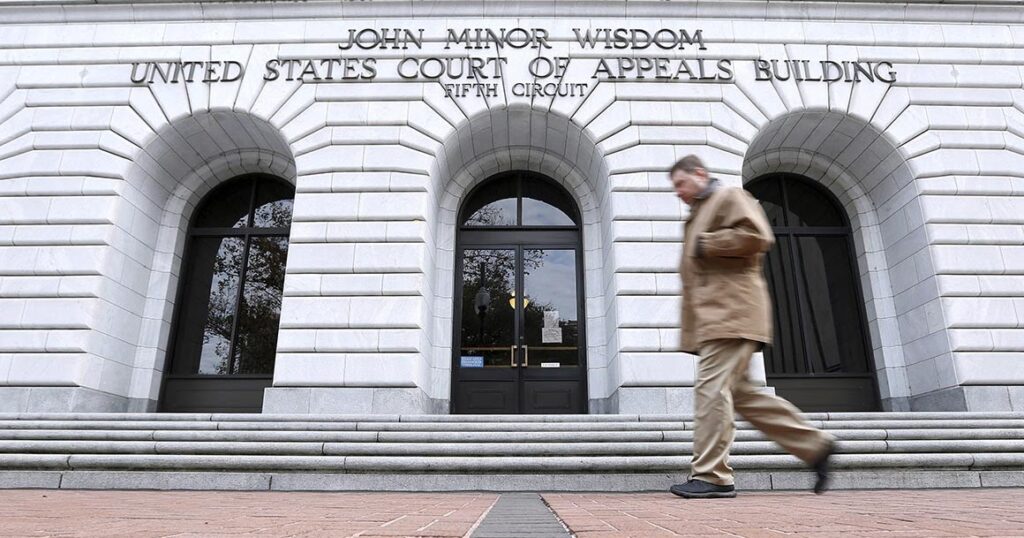
The post on Monday 6/16/2025 told us Court grants stay of appeal regarding overtime final rule. (Again, not surprising …). What were we just saying about the ever-changing world and varying enforcement?
You know (from our prior post) that the Department of Labor is still reconsidering the Biden-era effort to expand overtime pay eligibility, according to court documents. And that on April 24 DOJ attorneys asked the 5th U.S. Circuit Court of Appeals to temporarily suspend the Labor Department’s appeals in two cases challenging its 2024 Fair Labor Standards Act (FLSA) overtime rule. What is subject to the appeals from two Texas district court decisions is noted in the post. The government asked the appellate court to stay the appeals while the rule is being reconsidered. Was the stay opposed? See the post.
What is the rule that is at issue? The prior administration’s effort was to expand overtime eligibility by increasing the annual minimum threshold under the FLSA to $58,656 in 2025 with automatic, additional increases every three years beginning in July 2027. An initial increase to $43,888 per year took effect before one of the Texas federal judges blocked it.
Now as of May 13, 2025, the appellate court granted the stay. And what is the general expectation as to the entire rule? See the post.
TAKEAWAY: Employers need to know when workers are entitled to overtime pay – keep apprised of statutes and suits and talk to your employment lawyer.

The post on Tuesday 6/17/2025 noted Chuck E. Cheese sued by workers over sexual harassment, retaliation. It was an assistant manager who complained. Let’s dive deeper.
Chuck E. Cheese is facing four (count them, 4!) lawsuits over alleged sexual harassment and retaliation. Three former workers are suing; they allege that a manager sexually harassed them while two of them were minors. And a former assistant manager alleges that he was retaliated against for bringing workers’ concerns to upper management.
All of the suits pertain to alleged conduct by general manager Ryan Slade. Two of the four plaintiffs, Mary Smith and Kyie Wright, were younger than 18 when employed by the chain. Both allege that Slade engaged in grooming and more as detailed in the post. Wright filed suit in late 2024 after reporting the harassment. Lelsie Vasquez, who was not a minor when employed by Chuck E. Cheese, alleged that she likewise experienced sexual harassment from Slade.
The remaining plaintiff is Ian Cooper, an assistant manager. What he alleged in his complaint is in the post (including the actions and inactions that resulted in his termination. The suit further alleges that Chuck E. Cheese knew about for a long time (how long? See the post) but corporate management failed to act. CEC Entertainment, the parent company of Chuck E. Cheese, declined to comment.
Chuck E. Cheese is not the only one under the gun of harassment suits. Taco Bell, Subway, and a McDonald’s franchisee are also on the wrong side – see the post for those details and the big (huge) dollars at stake.
TAKEAWAY: Harassment will come to light and be costly (to the victims and to you as the employer) – make sure it does not happen in your workplace.

The post on Wednesday 6/18/2025 talked of hanging Hindu torans and Jewish mezuzah as door decorations is legal. But was it really necessary to enact a new state law?
The Nevada Governor recently signed a bill into law allowing Nevada residents to hang religious door displays including Hindu torans and Jewish mezuzah. The bill was a joint initiative by the Hindu American Foundation (HAF) and the Anti-Defamation League (ADL). What the bill permits and requires is in the post. A statement from the HAF is in the post. The law is effective October 1, 2025.
Why do you care (or more relevant, why did we post this)? Because the statute will override any homeowner association (HOA) or other residential restrictions that might prohibit such displays.
The Hindu toran is a traditional decorative item often hung above doorways that holds cultural and religious significance in Hindu households. More details about the toran are in the post.
Similarly, the Jewish mezuzah is a small case containing a piece of parchment inscribed with specific Hebrew verses from the Torah that is affixed to the doorposts of Jewish homes More details are in the post.
Statements from the HAF and ADL relative to the new law are in the post.
TAKEAWAY: Nevada wanted to make sure that religious observance is statutorily guaranteed. Butquery whether the law was really needed given existing federal religious protections (that are only being strengthened by the courts during the current administration).

In the post on Thursday 6/19/2025, we learned that rude neighbor kept taking woman’s pre-paid parking spot in condo association — she responded by teaching him a lesson. Would the person have been as angry had it been the association?
This woman faced a lot of inconvenience with the neighbor parking in her spot despite warnings, so she finally took matters into her own hands.
We all know that many homeowners’ and condo associations have rules and regulations that must be followed. So when someone repeatedly refused to do so, a resident had a tit-for-tat response. She lived in an association with two allotted parking spaces and visitor parking assigned elsewhere. All was good (and rules followed) until recently.
The woman noticed the same car parked in her designated space. What happened for a while is noted in the post. Something had to change. The woman began leaving notes on the vehicle warning that the car would be towed if it was parked in one of her spots again. And her basis for that? See the post.
The person kept parking there. The woman’s last straw is detailed in the post. When the other person asked where her case was, the woman was honest and up-front (see the post). The other person got agitated and recklessly began yelling at the woman and even mentioned that she wouldn’t be able to afford to get her car back. How did the resident react? And what did others have to say about it? See the post. One commentator said, “If she didn’t want her car towed she shouldn’t have parked in your spot. You play stupid games, you win stupid prizes.”
TAKEAWAY: Rules are made to be followed in condo and HOAs. And when the violation continues despite warning? Action must be taken as allowed by the Governing Documents. Talk to a community association lawyer about enforcement in your association.

The post on Friday 6/20/2025 told us employers are ditching remote work; experts worry that’s shortsighted so here are alternatives.
Fewer than half of HR professionals surveyed by HR Dive said flexible work factored into their talent acquisition strategies last year. It has taken a few years for the winds to shift, but in 2024 employers began in earnest to reverse course on their openness to flexible work. Return-to-office (RTO) plans proliferated last year. The percentage of workers fully on-site in 2024 versus the prior year is in the post. And now that trend is spilling over into employers’ recruiting efforts. The post notes the percentage of : remote or hybrid work arrangements that were part of organizations’ talent acquisition strategies in 2024 as compared to 2023.
There is more. The post contains a table of the percentage of HR personnel responding to a survey who said an offering was part of their talent acquisition strategies in 2023 and 2024. Respondents were allowed to select multiple options from among remote and hybrid work, increased hourly wages or salary, referral bonuses, retirement contributions and benefits, and 6 other categories.
It should not be surprising that some years out from 2020 employers may have settled on at least some degree of work location flexibility as a long-term strategy. But now there appears to be a push for RTO as the candidate-friendly talent market has cooled.
To the extent that organizations have made changes relative to remote work, what it has entailed is in the post. And in addition to reversing policies on where people work, employers also have increased requirements on how far employees may live from a worksite. Has the RTO movement affected the ability to recruit? See the post. But that might be shortsighted …
Employers also could take into account what their immediate competitors are doing on the subject of flexibility, among other things. And HR should work with leadership, as noted in the post, to determine what flexibility is needed for their organization. Examples are in the post.
From the other viewpoint, what do job candidates look for now? Location flexibility but also time-based flexibility. This goes back to the flexibility needed in each different workplace. RTO requirements may create a number of headaches for employees (such as those noted in the post, some of which have been in the newsfeeds of late), but there might also be a bias in terms of hybrid work options. See the post for what that means (literally and figuratively). While this is not necessarily new (as also detailed in the post), the numbers and thinking may have changed as noted in the post, including creating an explicit, transparent policy on who has access to flexible work and how employees can earn that access. Some things employers should consider as part of developing that policy – including where differences can or should be allowed – are in the post.
TAKEAWAY: Remote, hybrid, or RTO – all have a place. But articulate the reason and eligibility for current and potential future workers. Have an employment lawyer help you develop your legally compliant policy.

Finally, in the post yesterday 6/21/2025, on trend with our post from 6/20/2025, we saw Gen Z willing to forgo remote work to secure jobs, study finds. This supports yesterday’s post …
Job seekers’ demands for location flexibility and four-day workweeks appear to be changing as economic pressure and layoff anxiety increase. An increasing number of Generation Z job seekers would forgo working from home to secure a new role, according to a recent survey. Is location flexibility as important to workers between ages 16-28 as a priority for new roles? See the post. The 1Q25 survey of more than 2 million job seekers shows that Gen Z is currently least likely to want to work remotely full time and is becoming less likely to prioritize location-based flexibility when seeking jobs. Was that the same in other age groups? See the post.
Other changes centered on the demand for a four-day workweek and mental health support. See the post for the percentage changes and the relevant age groups.
The thoughts of many 2025 graduates looking at the workforce is in the post along with talk of layoff anxiety (what it means and how many American workers in the varying age groups are affected by it.
TAKEAWAY: Job seekers might be less picky now than in recent years, but they may also not be entering the market as quickly (or at all). Employers need to know the market and what to offer to attract and retain workers.