
Below is a review of the posts on Facebook and LinkedIn from the past week. You can check out the full posts by clicking on the links.
NOTE: remember that we now post every other day.

The posts on Sunday 1/25/2026, here and here, we learned US Supreme Court will not decide whether ADA allows back pay for worker with no disability. What is the law in Pennsylvania?
Earlier the 7th U.S. Circuit Court of Appeals held the Americans with Disabilities Act may allow an employee without a disability to recover back pay for certain violations of the law. The lawsuit, Nawara v. Cook County and Thomas J. Dart, alleged the employer required the employee to submit to a medical examination and inquiries that weren’t job-related and consistent with business necessity, as the ADA requires. Let’s take a closer look.
The plaintiff was a former correctional officer at the county jail who was required to undergo a fitness-for-duty examination after initiating several altercations with other employees. As part of that process, he was required to sign medical release forms. He initially refused and was placed on unpaid leave until he agreed to those requirements. He then sued, alleging that the examination requirement and inquiries into his mental health violated the ADA. A jury agreed and he was awarded restored seniority. But he did not get back pay (on the basis noted in the post).
On appeal, the 7th Circuit revived the employee’s request for back pay based on its own previous ruling (which is referenced in the post). The 7th Circuit clarified that while back pay isn’t available in all circumstances, it can be for violations of that section of the law. That Court’s analysis/reasoning behind its decision is also in the post (and does make sense). In remanding the case to the district (federal trial) court, the 7th Circuit held that because back pay is available to plaintiffs who prove discrimination on the basis of a disability, it may be available to the plaintiff in Nawara.
UPDATE: in mid-December the U.S. Supreme Court declined to review the 7th Circuit’s ruling (meaning it stands and the case proceeds in the district court).
TAKEAWAY: While this casedoes not govern in PA, employers should pay attention as it develops in case PA or the Supreme Court later adopt it as the governing standard.
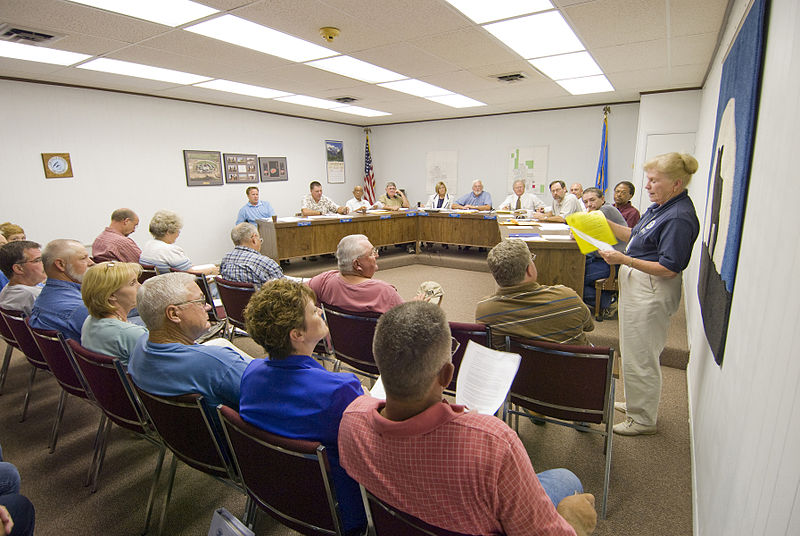
The posts on Tuesday 1/27/2026, here and here, noted HOA Board’s “Power Trip” screeches to halt as 200 households secretly gather to remove them. Removal of Board members happens, but that may not solve the issue as others then must step up to fill the vacancies …
When the property owners association, an authorized organization responsible for managing shared property within a community (most often a condominium or homeowners association), fails to fulfill its duties, people may feel forced to come together and take action against board members. That’s what happened in a neighborhood in Florida, where over 200 homeowners decided to vote out certain Board members, leaving them fuming. One homeowner (identified in the post) posted about the incident (linked in the post) on Reddit in late November.
So what happened? Owners apparently were frustrated with what they said were power trips and selective rule enforcement in the community, so they decided to take matters into their own hands. Surprisingly, over 200 signed to support the recall (another term for a removal vote). Then the Board members whose recall was sought started freaking out. The owner who posted on Reddit described some of their behavior – see the post. Also, the Board allegedly warned homeowners against posting anything negative about them or else the owners would be fined $100 a day. A link to that “warning” is also in the post. More behavior by those Board members is also described in the post.
Despite trying to intimidate the homeowners, the Board couldn’t figure out who had started the recall, leaving them pissed. How the Redditor described the situation is in the post. Of course, that person said, had the Board been a little more considerate towards the community, they wouldn’t have had to face the consequences. The posting Redditor also attached video (linked in the post) showing Board members repeatedly trying to figure out who had started all of it.
Disputes with condo or POAs or HOAs are not uncommon; in fact, one survey shows that while 18% of Americans, including 27% of homeowners, currently reside in a neighborhood governed by an HOA, most Americans (61%) prefer living in a neighborhood without an HOA. What else the survey found is in the post.
The Redditor’s post received an overwhelming response and people shared their own experiences with associations. See this post for some of the comments. One suggested that everything be documented “… so they can’t wiggle out of it later. Minutes, notices, ballot language, recall procedure—the cleaner it all is, the less room they have to scream ‘invalid’ afterward….” This author notes that is good advice, but more to protect the association and the owners who sought the recall than the Board members being recalled.
TAKEAWAY: Recalls (or calls for removal) of Board members happen everywhere. But the procedure set forth in the Bylaws or applicable statute must be followed. Work with a community association lawyer to ensure compliance.

The posts on Thursday 1/29/2026, here and here, told us SHRM (Society for Human Resources Managers) faces service dog lawsuit. Ironic given its mission (which is discussed in more detail at the end of the post).
The backstory? According to a recently-filed lawsuit, SHRM allegedly rescinded a job offer after a candidate requested to have her trained service dog accompany her to the office as a reasonable accommodation, in violation of the Americans with Disabilities Act (and state law). The post contains a link to the suit.
Torres, who received an offer to be a senior specialist in SHRM’s product management department, said her service dog was necessary to detect and alert her “before her blood glucose level rises or falls to a dangerous degree due to her Type 1 diabetes.” She had previously “suffered hypoglycemia so severe that she has experienced life-threatening blackout episodes” about 10 times per year. But about 8 years ago she was paired with the service dog; the post tells us what has happened since then.
After first requesting more information about Torres’ accommodation request, SHRM allegedly denied the request on the grounds noted in the post. Torres was permitted to submit more information, which allegedly showed that doing solely what SHRM had suggested (see the post) would be insufficient. The suit alleges that despite Torres having provided SHRM with the reasons why her service dog is the only reasonable accommodation to protect her from life-threatening events, SHRM abruptly ended the interactive process and withdrew its offer of employment.
Torres’ suit alleged that SHRM’s violations of the ADA were “willful and deliberate, and SHRM committed them with malice and reckless indifference to [her] protected right.” The suit also provided details on SHRM’s mission and services it provides to members (yep, see the post) which makes the allegations even more ironic.
Torres’ suit was filed less than two weeks after a Colorado jury returned a verdict against SHRM (linked in the post) in a race discrimination and retaliation trial, awarding the plaintiff in the case $11.9 million in damages. In that 2022 suit, the former employee alleged that her supervisor “systematically favored” White reports over her non-White reports and more, including retaliating against her, all as in the post.
SHRM’s comment on the suit? See the post.
TAKEAWAY: employers must know how to engage in the interactive accommodation process – and how to deal with those requests relative to service dogs. Contact an employment lawyer for assistance.

The posts on Saturday 1/31/2026, here and here, were about townhome owner (in HOA) battling insurance companies in court after fire coverage denied.
A homeowner is fighting two insurance companies in court after both denied coverage for fire damage to his townhome, leaving him without resources to repair the property more than two years later. Josh Hedin’s townhome was destroyed by fire in November 2022 when a dog jumped onto the stove, a box caught fire and left the home unlivable. The fire occurred on the first night Hedin’s sister was moving into the property with her two sons.
The townhome is part of a homeowner’s association that (as do many nationwide) required Hedin to carry two insurance policies: one a “studs out” policy covering the exterior of the home (which was probably not part of the unit owed by Hedin) and the second an HO6 policy, also known as condo insurance, to cover interior fire damage and personal property (i.e., his property).
“As soon as the adjuster got a hold of the bylaws here, she said there is no coverage for you,” Hedin said. The second insurance company also denied the claim. What they told Hedin is in the post.
Hedin says all insurance premiums were paid in full. The dispute centers on interpretation of the HOA bylaws, with insurance companies disagreeing on coverage responsibilities. So in 2024, Hedin filed suit alleging that the companies breached their contracts and were negligent. The suit actually includes seven defendants, but Hedin asked that the companies not be named as the case moves through the legal system.
What was the response by the defendants? Yep, see the post.
Hedin hopes his experience serves as a warning to other townhome owners about potential coverage gaps.
TAKEAWAY: Make sure you have the coverage you think you do. Consult a community association lawyer to advise on what coverage you must obtain pursuant to the condo/HOA Declaration (CC&Rs) or Bylaws, or even applicable law, and then talk to a broker or agent to ensure you get the correct coverage.