
Below is a review of the posts on Facebook and LinkedIn from the past week. You can check out the full posts by clicking on the links.
NOTE: remember that we now post every other day.

The posts on Sunday 3/22/2026, here and here, discussed 15 homeowner freedoms that are usually against the rules (in a condominium or homeowners association HOA without prior approval).
Owning a home is often seen as the ultimate symbol of personal freedom, but in reality, hidden rules and restrictions quickly become apparent to most homeowners – and especially so when the home is part of a condominium or homeowners association (jointly for this post as HOA).
Certain actions, such as installing a new fence or adopting a pet, may violate local regulations or HOA rules. According to a recent analysis of US housing, roughly one in four homes (!) is part of an HOA, meaning that millions of owners live where there are rules that can dictate everything from paint colors to parking and pets. But they know that moving in …
While owners can usually do what they want inside the home, the restrictions are to protect the community, the environment, and the property’s value. If the rules are broken, intentionally or otherwise, the situation can become frustrating.
Let’s look at some of the most common homeownership “freedoms” that are usually governed by laws and regulations – sometimes easy to overlook. Owners should always do their research before making changes (the ones listed here and others), as violations can lead to financial penalties and more.
1. Parking your car where you want – If you’ve got a spacious driveway or a large lot, it might seem like no big deal to park your car wherever you please. However, many cities have zoning laws that restrict where you can park. And some neighborhoods, especially in HOAs, don’t allow street parking, so you might have to park on your own property. What this rule usually includes is listed in the post.
2. Building a fence wherever you want – A backyard fence may seem like a simple way to create privacy and protect pets, but that doesn’t mean you can just build one wherever you want. Many places require you to submit plans and get approval (from the municipality or HOA) before constructing a fence, particularly if it exceeds a certain height or is placed in a specific area of your property or is made of certain materials. What does this type of rule do? See the post. Again, violations may lead to fines or more. So get approval before building any fence.
3. Renovating without permits – It’s your home and you want to make changes to it when you want, right? Well, major projects often require permits from the municipality. They may also require approval by the HOA. Find out what permits or approvals you need BEFORE YOU START any modification, remodel or other change to your home.
4. Changing exterior colors without approval – This is a biggie in an HOA. Whether shutters, doors, windows, decks, or whatever, you need to follow the community’s rules that are in place for the reasons noted in the post. And if you don’t get the proper approval? You could face fines or be forced to repaint (meaning it will end up taking twice the time and twice the dollars for the job). So, like with remodels, get approval BEFORE YOU PAINT.
5. Subletting your property – Whether just one room in the house or the entire house, this is another biggie in HOAs. It also might be prohibited in your municipality or subject to restrictions or a specific process. HOAs may prohibit subleasing entirely or have strict procedures. So do what’s noted in the post.
6. Altering the landscape without approval – Yep, another HOA biggie. The municipality or HOA may have rules as to what changes you can make – and what requires approval before being done. Landscaping is a fun way to improve your yard, but you can’t always plant whatever you want. Why these rules might be in place is in the post.
7. Installing a satellite dish – Many homeowners want to install a satellite dish, but there are often restrictions on where they can place it. How federal law (with the FCC – see the post) interacts with municipal or HOA requirements is in the post.
The many other “freedoms” are listed and described in the post …
TAKEAWAY: Whether a home is within a condominium or homeowners association or not, there are probably things an owner will do that come under municipal or HOA rules – know the rules BEFORE acting. And contact a community association lawyer if there are questions.
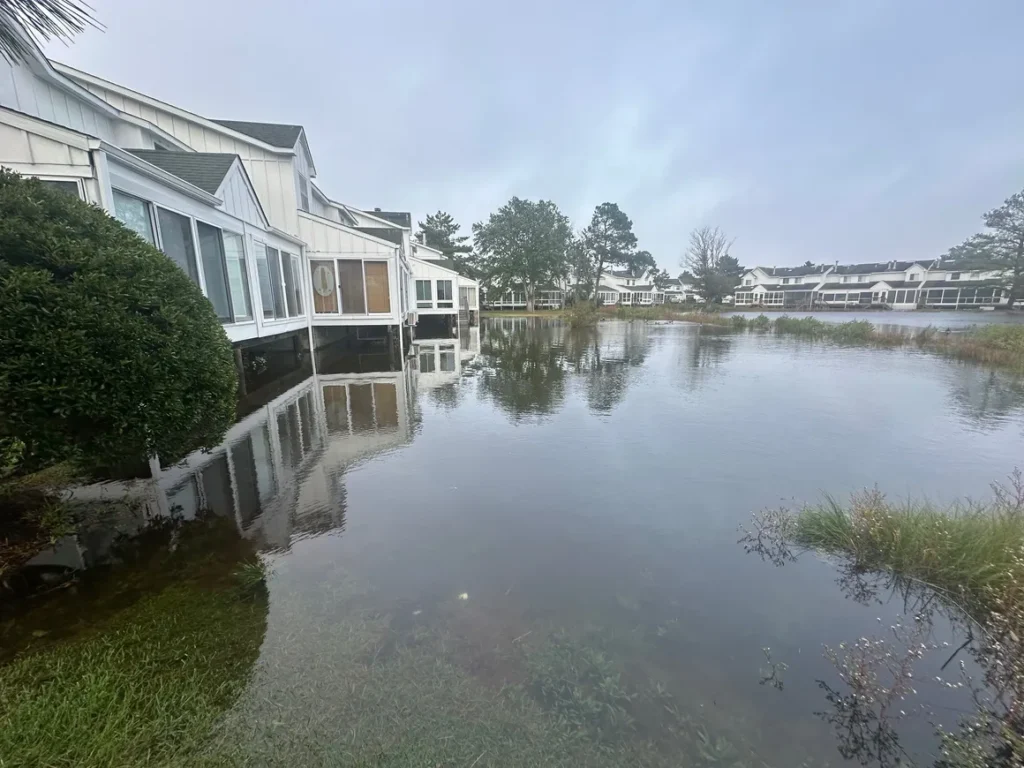
The extra posts on Sunday 3/22/2026, here and here, noted condo owner asked county for flooding help. HOA sued. Common for (dissident) residents’ socmedia posts to be confused with official condo/HOA communications.
Simone Reba was worried about the future of her southern Delaware vacation home when she began seeking solutions to the increasing risks posed by coastal storms and floods. She didn’t expect her curiosity would get her sued.
The nine-member condominium association board that manages her community filed a lawsuit against her last fall, seeking to stop her from asking public officials for funding or other support for flood repairs or resiliency measures for the community. (Yes that sounds odd, keep reading).
The Association claims Reba was speaking on behalf of the Association at county meetings, in emails with government officials, and on her personal website in the ways, and for the items, listed in the post. But Reba’s attorney said that anything she might have said ”falls within the scope of core political speech.” Part of what he said is quoted in the post.
The dispute highlights growing tensions in Delaware’s low-lying coastal communities as residents grapple with worsening flood risks tied to sea-level rise and coastal erosion (and other communities where one or more residents is unhappy with what the community’s Board is or is not doing on a particular item). But here this also sets up an early test of a new state law designed to protect people from lawsuits that they claim are meant to silence public speech.
Reba’s quest for solutions to her condo’s flood risks — which are only expected to increase as climate change exacerbates sea-level rise along the East Coast — is now just one thing causing her stress. Between the suit and the association’s messages to residents, Reba says her reputation has also been damaged. How she said this has all affected her and her home is in the post..”
Reba doesn’t make a reputational counter-claim in the suit, but the condo association argues that its reputation has been damaged. (Stop laughing – keep reading the post to see on what they base that argument.) How does Reba counter that claim? By pointing to what the association admitted in its court papers (which is noted in the post).
The Association points to a website Reba created (which is linked in the post) to keep her research into flood risks and potential solutions. What the Association says is the problem with that site is also in the post (including the effect on at least one local real estate agent).
The debate over raising the buildings in the association— and who should bear the cost — has pitted residents against the board before. It first became a point of contention over a decade ago, after Hurricane Sandy damaged several buildings in the neighborhood and left residents arguing in court over who was responsible for the fixes. So in this suit the association specifically addressed Reba’s website. Her (partial) response to that is in the post.
Reba insists that her website is fact-based and the suit is an attempt to silence her. But the association’s case is based on more than just her website – see the post. How Reba’s lawyer countered that part of the suit is also in the post. And Reba wants punitive damages awarded against the association (on the basis noted in the post).
The Association’s complaint is linked in the post if you want to read it.
Remember we said the community has had water issues before? Well, water regularly flows under some of its buildings, including the 11-unit building with the condo Reba and her husband bought in September 2023 for $337,000. They had dreamed of owning beachfront property and bought it sight-unseen after falling in love with the community during previous trips there with friends. The association admits that water flows under its buildings; what it said about the history of flooding damage is in the post. But Reba says it’s almost at that point – the post explains why. And that’s why she started doing her research.
The community was essentially designed to welcome the tides — a handful of the buildings were constructed on raised pilings. But based on publicly accessible flood mapping tools (linked in the post), much of the community sits less than 10 feet above sea level (which can make it more vulnerable during tropical storm or winter nor’easter conditions).
The community includes 47 buildings with 477 condominium units; it is mostly in a floodplain surrounded by natural and manmade waterways. Since it was constructed, sea level measured nearby has risen about 7.25”. And what are future expectations regarding sea level there? See the post. And that’s without accounting for erosion or other things as noted in the post.
As noted above, there was a prior suit between residents and the association related to water. After Superstorm Sandy in 2012, water damaged about two dozen units in four buildings. In 2016 some residents sued the condominium association and others after being told they would each have to pay tens of thousands to address an alleged lack of repairs that made some units legally uninhabitable (the post has a link for more detail on that).
In that 2016 case, the judge denied the association’s attempts to stop individual condo owners from speaking out about the litigation and storm damage. Key to that suit were discussions about the need to elevate some of the buildings — then to the tune of about $400,000 each. How did that play out? See the post. And that all came back in the association’s suit against Reba – the post explains how/why. And the question of whether to raise the buildings is also back again.
Owners are voting on whether they want to raise their buildings for further flood protection and/or explore the possibility of a tidal flood gate on the drainage pipe and, if so, if they’d be willing to privately foot the bill for those efforts. How much would that be per unit? See the post.
Circling back around, Reba’s pending motion to dismiss the association’s suit against her is set for argument in April. But she may no longer own the condo then. See the post.
TAKEAWAY: At some point, almost every condominium or homeowners association will be faced with a large and costly repair or replacement; it may be mandatory (with owners footing the bill regardless of ability or desire) or something where owners can decide whether to proceed. Contact a community association lawyer with questions.

The posts on Tuesday 3/24/2026, here and here, told us federal Third Circuit Court revives White police officer’s case, applies recent SCOTUS ‘reverse bias’ ruling in Ames. In case you forgot about the holding in and effect of Ames, see our posts of Sun. 6/29/2025, Mon. 6/30/2025, and Tues. 7/1/2025.
Let’s take a closer look at this suit (to which there is a link in the post). After interviews, the officer and someone else were trying for promotion to chief of police in August 2019. Massey had eight years more experience at the department and, as “officer in charge” at the time of the interviews, was “responsible for three-quarters to 90 percent of the department on a day-to-day basis.” And the other person? See the post.
After Massey was not selected, he filed suit against the borough and five members of the hiring committee under state law and the Civil Rights Act of 1866, alleging racial and religious discrimination. NOTE: that date is not a typo – this statute is being leaned on more often now. See our posts of Sat. 12/6/2025, here and here.
The federal trial court found that Massey had not met the requirements of the state law’s “background circumstances rule” (described in the post) and granted summary judgment for the defendants.
In its ruling on appeal, the 3rd US Circuit Court of Appeals (whose decisions are precedential in PA and NJ) pointed to the US Supreme Court’s 2025 decision in Ames v. Ohio Department of Youth Services (linked in the post) which was issued after the trial court ruled. The Third Circuit held that the NJ Supreme Court would rely on Ames in overruling the basis of the statute on which the trial court relied.
The Third Circuit found that Massey had credible evidence to convince a jury of discrimination, including that one member of the hiring panel said she preferred the other (selected) candidate because “he’s a minority” and the other things noted in the post.
A quote from Massey’s attorney after the Third Circuit ruling is in the post. Attorneys for the borough did not respond to a request for comment by press time.
This case is one of the earliest applications of Amesandaligns with attorneys’ predictions that “reverse discrimination” will be an active area for litigation this year. More on that is in the post.
TAKEAWAY: While the case at issue technically turned on a NJ statute, it affirmed that the holding in Ames comes into play in many ways, supporting the right of every worker to be free from discrimination on the basis of race.

The posts on Thursday 3/26/2026, here and here, told us how a private fire association uses liens (similar to condo/HOA) to enforce coverage. Yep, know the obligations attached to a property before purchase.
The letters arrived in every Hidden Valley mailbox one Monday in December. Each was addressed simply: “Dear Homeowner.” Many residents had never heard ofthe association thatwas asserting its authority. The South Maricopa Fire Association said it was writing to clear up a “misunderstanding” about mandatory membership and assessments: every homeowner within its boundaries must pay $100 per quarter for fire service. Missed payments might lead to SMFA placing a lien on the home. Public records show the warning was not hypothetical. 24 liens were recorded in 2024. The 2025 number is noted in the post.
Interestingly, the SMFA is not a fire department in thetraditional sense. It owns no fire stations, employs no firefighters and operates no equipment. Instead, it functions as a private assessment authority created by developers to fund fire protection in unincorporated areas outside the city limits. In a written statement it provided, SMFA said its role is far narrower than many residents assume. How it described its duties is in the post. And under the same framework related to SMFA, a 2.5-acre parcel of land has already been conveyed to the city for a future fire station to serve the area. The arrangement exists because fire service in the unincorporated county is not funded through property taxes.
When the agreement was approved by the City Council in 2022, it was emphasized that participation was voluntary and driven by landowners and developers. Developers were required to identify a fire provider as a prerequisite for construction and insurance coverage (or development could not go forward).
At the time, SMFA told city leaders that SMFA owned no fire trucks and employed no firefighters, and that contracting with the city was the only viable option to provide coverage “on day one.” How the arrangement would work is detailed in the post. But is the contracted coverage, for which the owner must pay SMFA, as good as it was supposed to be? See the post. But as the letter states, payment is not optional.
The arrangement was not meant to be permanent. Under pre-annexation agreements approved in the early 2000s, subdivisions in that area are slated to be annexed into the city once they reach 51% occupancy (when municipal services, including fire protection, will transition to city responsibility). So what’s the problem? The occupancy threshold remains largely unmet. See the post for details. And until annexation occurs, the areas remain dependent on private entities like SMFA to fund fire protection.
SMFA was incorporated in 2005, during the area’s first housing boom. Developers, racing ahead of infrastructure, embedded a private fire association into deed restrictions for homes on the city’s outskirts. Membership was mandatory. Assessments ran with the land. That was all intended as a temporary bridge until annexation brought municipal service. Then the housing market collapsed. From 2007-2010, construction stalled, fire stations were not built and annexation agreements expired. But the recorded covenants and obligations to pay remained.
Now, two decades later, the same subdivisions are reactivating under approvals granted under a starkly different context. Local governments have little leverage to renegotiate terms. There is one public agency positioned to absorb the areas. See the post for more details on that. But that agency cannot just expand to cover the other new developments; it requires a vote of owners. (The post has more details.)
The December letter from SMFA explained how owners are not being billed twice – because fire service in the covered area is not funded through property taxes, the private assessment replaces what would otherwise be a public tax. And as an assessment it is enforced privately, through liens (and, ultimately, foreclosure authority). And as construction began more recently, so too did SMFA remind stakeholders of its role. See the post about its communications to the public agency (and the difference between the two entities and how they are funded).
SMFA noted that its authority is established through recorded covenants that run with the land and are disclosed at purchase. The board refused further comment, but noted that what changed in how it operated was enforcement of its obligations. See the post for those details (and the underlying reason).
The real issue is not just who responds to emergencies, but who controls the revenue stream and the mechanisms that keep it intact. SMFA asserts it remains necessary until City fire coverage kicks in. And when might that be, given the dedication of land for a fire station? See the post.
And until then, as payments come due and are not made, SMFA records liens that convert those missed assessments into secured debt attached to the property.
TAKEAWAY: read all documents related to your property before you purchase. Make sure to fulfill all obligations related to that property after purchase – of suffer the consequences.

The posts on Saturday 3/28/2026, here and here, explained that a PIP is not always discriminatory under SCOTUS’ relaxed bias test, court says. Yep, fact matter.
Walsh, a longtime HNTB information technology employee in her mid-50s, successfully completed the performance improvement plan (PIP) but left her job less than a year later. She alleged age discrimination and constructive discharge, claiming that the PIP was an adverse action imposed upon her because of her age. She also claimed that HNTB stopped awarding her pay increases and stripped her of certain job duties.
A federal district (trial) court granted summary judgment to HNTB. Earlier this month the 1st Circuit (federal appellate court) affirmed, holding that none of the alleged actions met the US Supreme Court’s relaxed proof standard for plaintiffs alleging job discrimination established in its 2024 decision in Muldrow v. City of St. Louis (linked in the post).
The 1st Circuit noted in its decision that “there is no one-size-fits-all answer” for the question of whether a PIP qualifies as an adverse employment action under the meaning of federal civil rights laws; “Rather the inquiry is fact-intensive and PIP-specific.”
The court’s analysis included a discussion on the implications of Muldrow (which is explained in the post). Here Walsh alleged that the presence of a PIP was itself enough to meet the bar established by Muldrow. But the 1st Circuit said that the PIP merely provided her with an opportunity to correct unsatisfactory performance. What the Court said the PIP did not do is listed in the post.
In looking at Walsh’s claim that the PIP was imposed because of her age, the court said she had not shown the PIP altered the terms and conditions of her employment. It specifically called out one of the PIP’s provision – see the post.
The 1st Circuit also rejected Walsh’s other discrimination claims, including that HNTB blocked her from receiving certain pay increases and stripped her of job duties. What it held is described in the post.
This case may show some of the limitations of Muldrow, which has been described by employer-side attorneys as potentially favoring future plaintiffs. But federal courts have not always looked favorably on PIPs, especially for those containing unfair criteria. A case out of the 7th Circuit (discussed in the post) is an example.
TAKEAWAY: Despite the lesser standard espoused by Muldrow, plaintiffs still must prove discrimination. Facts matter.