
Below is a review of the posts on Facebook and LinkedIn from the past week. You can check out the full posts by clicking on the links.
NOTE: remember that we now post every other day.

The posts on Monday 1/19/2026, here and here, noted Mom blasts ‘absurd’ $150 HOA fine after she was blocked from following rule. Was she really blocked? Sometimes common sense is needed … But let’s look at the facts.
Jessica Ensley, who lives in the Hayden Farms community (in Arizona), told a tv station that she left a paper bag from a takeout order next to her dumpster because the dumpster was full. [Author’s common sense note 1: anything not in the dumpster will get kicked or blown around.]
Ensley said that she’s “a very clean person: who respects the rules. As could be expected, the wind blew the bag away from the dumpster and onto the street. A receipt in the bag had her name on it, so a member of the HOA linked the bag to Ensley. The HOA then sent her a letter that the bag violated the HOA’s rules and she was being fined $150. [Author’s common sense note 2: when you violate HOA rules, you will probably get fined.]
What did Hensley say about the fine? See the post. And what the HOA said was the purpose of the fine? Yep, see the post for that too.
Ensley said the fine “Feels like I’m being taken advantage of.” [Author’s common sense note 2 restated: if you break the rules, and the rules provide for imposition of fines, you will probably be fined.]
Ensley said the dumpsters are only emptied twice a week and she often finds trash blown into her yard from overflow. Did other residents agree with what Ensley said? See the post.
Ensley said she spoke to a property manager about the issue and was told to keep her trash in her home if the bins are filled. [Author’s common sense note 3: if you know the dumpster is full and anything not placed in it will blow around, don’t take anything out to the area until there is room in the dumpster.]
The media requested comment from Hayden Farms HOA.
TAKEAWAY: If the rules say to put trash IN the dumpster, do not put trash BESIDE the dumpster (where it will blow around and you will be fined for violating the rule).

The posts on Wednesday 1/21/2026, here and here, alerted us that Pennsylvania federal court backs higher liability standard for third party harassment. Employers (and employees) need to know this so read on.
A federal judge held in late October that the University of Pennsylvania is not liable for sexual harassment perpetrated by a student against a former teaching assistant and lab manager because the school did not intend the harassment and could not have known that it would occur. Let’s look at the backstory.
The female plaintiff, O’Neill, reported a male student’s repeated improper conduct. Penn responded by enacting a safety plan that limited contact between the two and informed the student that he could face disciplinary proceedings for violating the plan. But O’Neill refused to return to work because Penn did not prohibit the student from accessing the lab in which she worked. Instead, O’Neil sued, alleging hostile work environment, constructive discharge and retaliation claims.
The federal District Court held that no reasonable jury could find Penn liable for the harassment. The judge based his decision in part on a case from the 6th Circuit Court of Appeals, Bivens v. Zep (which is linked in the post).
The 6th Circuit decision was a shift from the standard used by most courts to evaluate workplace harassment claims under Title VII where the alleged harassment is perpetrated by a non-employee. Most circuits followed a standard articulated by the U.S. Equal Employment Opportunity Commission (which is detailed in the post). But in Bivens the 6th Circuit instead held that employers are only liable when they intend for such harassment to occur. The 6th Circuit went on to define what that means (see the post for that additional detail).
The judge in O’Neill’s case said that while he found the Bivens decision persuasive, he still also applied the other standard because he did not think there was too much difference between the two approaches. What else the judge said in his opinion when analyzing the harassment at issue is in the post.
O’Neill claimed that Penn did not address the alleged hostile work environment. The judge disagreed, noting that Penn removed the student from the lab where they worked together and implemented its safety plan on the same day that O’Neill reported the harassment. How the judge fit that into the legal standard he used is in the post.
TAKEAWAY: both Bivens and the O’Neill case could reshape employer liability for third-party harassment, but it does not take away employer’s responsibility to prevent harassment (which should include encouraging reporting of harassment and training managers).
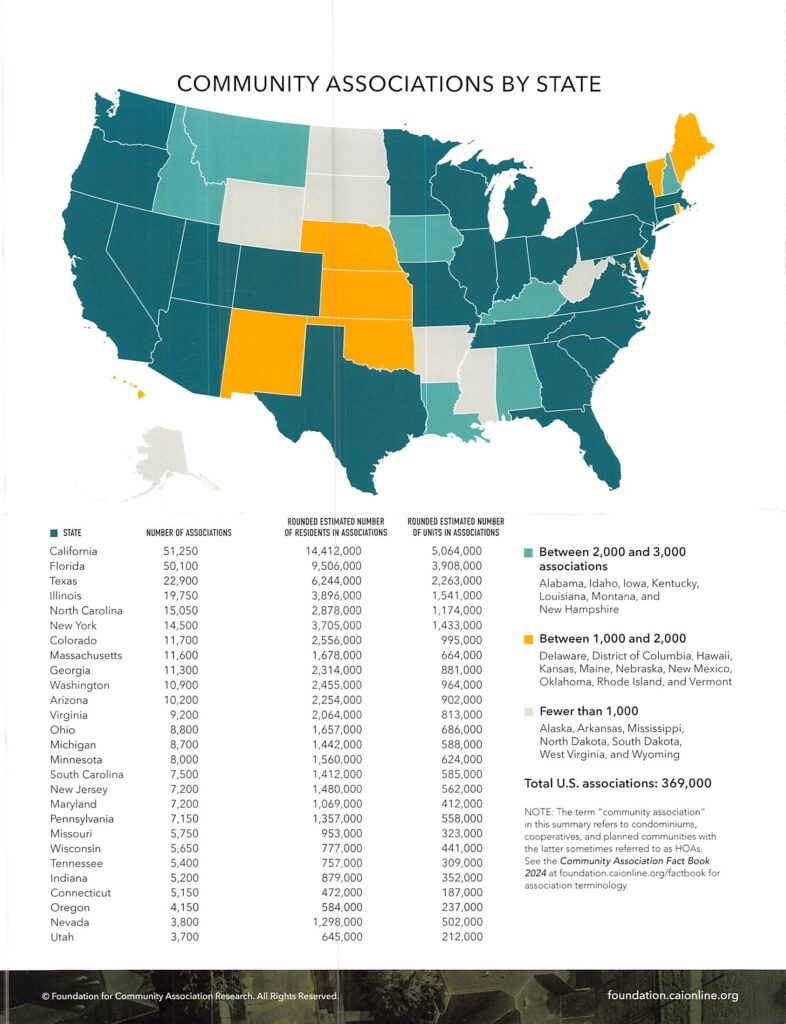
The posts on Friday 1/23/2026, here and here, were about community associations – truly a US way of life. The statistics in the photos included with the post are from research conducted by CAI. One big thing they show is that the number of people nationwide living in community associations continues to grow year over year. And it is expected that 2025 will show more condominium and homeowner associations, more units within those communities, and more owners and residents. For more statistics (including the numbers of associations, units, and residents, as well as their satisfaction with living in their association, see the post.
TAKEAWAY: Construction of more community associations, and the increasing number of people living in those associations, means more legal issues will continue to arise. Consult a community association lawyer (such as the author for whom this area of law makes up a majority of her practice.)