
Below is a review of the posts on Facebook and LinkedIn from the past week. You can check out the full posts by clicking on the links.
NOTE: after over 9 months there is still some instability and fluctuation in federal labor and employment law – and more expected with agencies gaining quorums – so check with us (or another employment lawyer) before taking action based on something in our posts.

The post on Sunday 11/9/2025 noted Ex-Walmart worker’s unexcused concussion-related absences may show bias. Yep, employers must know what is deemed an accommodation request. Remember, there are no magic words. Let’s see what happened here.
Murray’s injuries required surgery, for which Walmart granted her unpaid leave. She returned to work and was assigned to the store’s photo desk (because of lifting limitations) before resuming normal duties. Shortly after this period, a non-work-related concussion caused Murray to miss work. Because she had run out of accrued sick and vacation time, she asked Walmart to excuse her concussion-related absences. Walmart allegedly refused to do so and fired her because she had accumulated too many absences. She alleged disability discrimination, failure to accommodate and retaliation. The judge denied Walmart’s motion for summary judgment on all claims.
This case is one of many centered on the question of when and how an employer becomes aware of an employee’s need for reasonable accommodation under the ADA (the overarching purpose of which is in the post).
The EEOC has said that an individual’s request for an accommodation is the first step in an “informal, interactive process” by which the employee and employer determine a reasonable accommodation. What must an employee say to start the process? See the post.
Here Murray claimed that she made such a request via text messages with her supervisor and later directly asked a store manager that three absences related to the concussion be forgiven. The judge concluded that while the text may not suffice as notice of her need for accommodation, the latter (personal ask) may have. The judge then also noted that a genuine dispute of fact existed as to whether the communications with the store manager constituted a formal request. The basis for that is also in the post.
Part of judge’s analysis also discussed the availability of unpaid leave as a reasonable accommodation under the ADA. On the one hand, there is EEOC guidance on employer’s obligations (see the post); on the other hand, there are court decisions in favor of employers (on the bases noted in the post).
This was not the first time Walmart faced this question in court. In one 2023 case the EEOC alleged that it did not provide intermittent leave as an accommodation to an employee who suffered from seizures. How that suit ended is in the post.
TAKEAWAY: Employers absolutely must know how an employee can invoke ADA protection and what its obligations are after that.
The post on Monday 11/10/2025 told us What to expect now that EEOC has a quorum. On October 7, 2025, the US Senate confirmed the nomination of Brittany Panuccio to be a commissioner of the Equal Employment Opportunity Commission (EEOC). Absent something unusual, she will restore the agency’s quorum. So what might that mean for employers?
First a bit of background. You may remember that since late January the EEOC has lacked a quorum. On Inauguration Day, there were four sitting commissioners—three Democratic appointees, and one Republican (Commissioner Andrea Lucas) who was immediately designated acting chair. But then in late January the White House took the unprecedented step of firing two of the Democratic commissioners (which is the subject of pending litigation – see as an example our post of Sun. 4/20/2025), leaving the EEOC with only two sitting members and the lack of a working quorum. How that scenario has limited the EEOC is in the post. But now there will be a quorum, with a two-to-one Republican majority. Based on the priorities of the White House, and the public statements and actions to date of the acting chair, there are predictions on hat employers might expect going forward (especially now that the government shutdown has ended).
We start with Lucas who, on her first full day in office, issued a statement acknowledging her designation as acting chair and laying out her priorities and goals for the agency. The short, one-paragraph statement is in the post. After that, in her eight months as acting chair, Lucas has used the full range of the agency’s authority (even without a quorum) to advance the agenda in her statement.
Unsurprisingly, topping the list are Diversity, Equity, and Inclusion (DEI) Activities. The elimination of so-called “illegal DEI” in the workplace has been a focus of the current administration’s domestic agenda (with unending support from Lucas). You may recall from our post of Tues. 3/11/2025 the EEOC, in conjunction with the US Department of Justice (DOJ), issued two “technical assistance” guidance documents related to what they define as illegal DEI in the workplace. What the guidance characterizes as “illegal DEI” is in the post (and our prior post). While the EEOC is prohibited from promulgating substantive regulations under Title VII, it is expected that with a quorum in place again, we will see additional guidance coming out on the EEOC’s view as to what it considers “illegal” DEI activities. There is also expected to be a focus on investigation and enforcement in the area.
Rights of Religious Employees. Another prediction has proven true almost instantly. The EEOC will (continue to) prioritize protection of the rights of religious workers as it has since the beginning of this administration. During the first Trump administration, then-Commissioner Lucas co-chaired a working group whose focus is in the post. She also supported the EEOC’s revision of its guidance on religious discrimination in the workplace (which placed heavy emphasis on the need for employers to accommodate the religious practices of their employees). That of course is a developing area since the Supreme Court’s decision in Groff v. DeJoy (linked and described in the post). Given Lucas’s stated priorities and long-standing interest, and the favorable climate in many courts, employers can expect that the current EEOC will construe DeJoy as broadly as possible in favor of religious workers and investigation and enforcement of charges of religious discrimination or harassment will be a priority.
LGBTQ Employees. Lucas has fully endorsed Executive Order 14168, “Defending Women from Gender Ideology Extremism and Restoring Biological Truth to the Federal Government” (defined in the post for ease of reference). The administration also contends that the Supreme Court’s decision in Bostock v. Clayton County (yep, a reminder of the decision’s finding is in the post) has been interpreted too broadly and has directed the attorney general to issue guidance to “correct” what it perceives as a misapplication of the case. What the EEOC has done since January relative to LGBTQ issues generally is in the post. And after the inauguration in January 2025 it also said that at least for the foreseeable future it will basically do nothing to investigate or prosecute charges alleging discrimination on the basis of sexual orientation or gender identity but instead will let the private sector handle the charges – see the post for more detail. This means employers should be on the lookout for guidance on the EEOC’s view of the contours of Bostock, as well as revision (or recission) of guidance regarding harassment on the basis of gender identity and sexual orientation.
Pregnant Worker Fairness Act Regulations. The PWFA was enacted in 2022; to who it applies, and what it requires, is in the post. When Congress enacted the PWFA, it directed the EEOC to issue regulations and provide examples of reasonable accommodations. When the EEOC promulgated the rules, then-Commissioner Lucas voted against them. It was no surprise that in a statement (linked in the post) issued after becoming acting chair, Lucas said that while she supported parts of the rule, she disagreed with a number of its provisions and opposes the regulation insofar as it “conflat[es] pregnancy and childbirth accommodation with accommodation of the female sex, that is, female biology and reproduction.” What else she said in that statement is in the post. With that background, employers should expect that the EEOC now will either significantly modify existing PWFA regulations or perhaps withdraw them entirely and issue a new set of rules more narrowly defining the circumstances under which an employer may be required to accommodate a pregnant worker or applicant.
Harassment Guidance. In 2024, post-Bostock, the EEOC updated its guidance on harassment in the workplace, including addressing how Title VII prohibits discrimination on the basis of sexual orientation and gender identity. Examples of unlawful discrimination that are provided within the updated guidance include those noted in the post. Acting Chair Lucas voted against the guidance when it came before the EEOC in 2024 and has stated publicly that she would seek to rescind or revisit it in whole or in part when a quorum was again in place. This played out recently after a federal court in Texas holding (linked in the post) that certain portions of the guidance relating to LGBTQ issues were unlawful and the EEOC then took action – see the post for what it did. With a quorum, employers should expect the EEOC to formally repeal those provisions and perhaps revisit the guidance entirely.
Litigation Authority. Full speed ahead (to advance the priorities). Without a quorum, the EEOC was limited in its ability to bring certain classes of significant litigation, including those alleging systemic or “pattern or practice” discrimination or cases presenting unsettled matters of law or in conflict with precedent in the relevant judicial circuit; it also has been limited in its ability to file amicus briefs. Now, with a restored quorum, the EEOC can act in those situations. But even though it now can, it is doubtful the EEOC will initiate suits alleging discrimination on the basis of disparate impact based on direction from the acting chair (detailed and linked in the post). But employers should keep in mind that even if the EEOC does not pursue disparate impact cases, it remains a valid theory of discrimination under Title VII, Supreme Court precedent, and numerous state laws, so private litigants might still file such suits.
TAKEAWAY: Considering that even without a quorum the last 8 months the EEOC devoted significant time and resources to advancing the White House’s agenda on workplace civil rights, employers should expect full speed ahead, including revised or new guidance, pushing that agenda.

The post on Tuesday 11/11/2025 was about fired because of faith: employer obligations for religious accommodation. As noted in our post yesterday 11/10/2025, this is a legal minefield for employers now.
In a recent federal court case, McCormick v. Chicago Transit Authority, a former transit employee won a jury trial and $300,000 in damages (the maximum award permitted for the claims at issue) on his charge that the employer’s failure to grant him a religious exemption to its vaccine mandate was discrimination under Title VII. Let’s look at more details and the implications.
McCormick had sought an exemption and accommodation based on his Catholic faith and his opposition to vaccines derived from aborted fetal cells. The employer denied the accommodation request and terminated him for failure to abide by its vaccine policy. This case is an important reminder for employers to tread carefully with requests for religious accommodation in the workplace, especially in light of the Groff v. DeJoy decision from the Supreme Court and the current administration’s religious freedom priority (actively supported by the EEOC’s aggressive enforcement). See our post from yesterday 11/10/2025 for more on the EEOC’s enforcement. Also, many judicial decisions have made it easier for employees to establish a sincerely held religious belief and more difficult for employers to show an undue hardship in response to accommodation requests.
Religious Discrimination Claims 101 – Title VII of the Civil Rights Act of 1964 requires employers to provide reasonable accommodations to employees for their religious practices unless the accommodation would cause an undue hardship. What employees must show to establish a claim for failure to accommodate is detailed in the post.
Challenges for Employers in Handling Religious Accommodation Requests – Employers may decline to provide a religious accommodation when the employee does not have a sincerely-held religious belief that justifies the accommodation—but as noted this has become increasingly difficult and, if not handled properly, could result in legal liability. That was what happened in McCormick.
There the employer tried to attack McCormick’s sincerity with evidence that he had strong political and secular reasons to oppose vaccines, including his distrust of medical institutions. The employer also had other arguments as noted in the post. Those arguments failed both at summary judgment and at trial. Many federal courts have ruled that an accommodation request may be plausibly based on religious beliefs even if the employee also invokes secular considerations. What that means in plain English is in the post.
The second basis on which employers may decline to provide a religious accommodation is when doing so would result in an undue hardship for the organization. But that now comes under the Groff v. DeJoy standard (meaning that an employer’s burden is now as noted in the post).
TAKEAWAY: The current lay of the land makes it harder for employers to deny employee requests for religious discrimination and, on the flip side, easier for employes to bring suit over such denials. Employers must train managers and HR and have proper processes in place to fulfill their accommodation obligations. Get an employment lawyer involved.

The post on Wednesday 11/12/2025 noted HOA lawyer involved and $$$$ thousands in fines for mulch mishap. Would better communication and adherence to the governing documents have averted all of this? Let’s take a closer look.
“Be governed accordingly!” is the haunting message homeowner Danielle Reyes received from the lawyer representing her community’s homeowner’s association (HOA) recently. Reyes had been emailing legal letters and pushing back against fines the Glen Meadow Community Association had levied upon her for exchanging pine straw for mulch in the flower beds in front of her home in May 2025.
Reyes had moved in July 2024 to buy her first home before age 40, but she said her dreams of homeownership quickly turned into a nightmare at the hands of what she believes is a targeted, unregulated abuse of power by her neighbor, who sits on the HOA board. The Association placed a lien on Reyes’ home and claims she owes more than $4,000 in fines and attorneys’ fees as of Oct. 25, 2025.
Reyes believes the violations started after a dispute with her neighbor over cutting tree limbs that were leaning over her roof. Her neighbor is the HOA treasurer. The post describes Ring camera video and subsequent cell phone video surrounding the laying and removal of the mulch on Reyes’ side of a brick wall. Within three weeks after that, Reyes received an HOA violation letter referencing community architectural covenants/rules (noted in the post). The letter said it was her third notice for that violation so she would begin receiving daily fines. Reyes disputes what the HOA says – see the post.
The HOA treasurer declined an interview without her attorney present, claiming harassment, and did not respond to follow-up requests for comment.
Do the community covenants and guidelines bear out what the HOA claimed? See the post (and perhaps stifle a small chuckle).
Reyes reached out to the HOA’s management company, Tolley Community Management, and the HOA board to challenge the violation. In a recorded phone call from June, the HOA vice president told Reyes the treasurer took action without consulting the board and “without asking anybody.” What else the VP said in that recorded conversation is in the post.
The board waived Reyes’ initial fines dating back to May. Tolley told Reyes the letter incorrect (for the reason in the post) but that she would be receiving a corrected violation in the future.
On June 2, Reyes hired a surveyor to stake her property lines. Her neighbor, the HOA treasurer, claimed trespassing and demanded that the surveyor stop. What the neighbor/treasurer said in a recorded cell phone VID is in the post. She then called the police, and when they arrived the officers told her the surveyor was within his legal duties and asked her to go back inside. What does police body cam footage show? See the post. And what did the neighbor/treasurer tell the officers? Yep, in the post.
The next day, Reyes received a letter from Tolley stating she had a $450 balance due on her account, but with no reason stated. On June 10, Reyes received the amended mulch violation and the daily $25 fines started on June 20. And Reyes can no longer access her HOA ledger on the Tolley portal.
Is Reyes’ situation unique? Another homeowner said she placed black mulch in front of her home without approval and never received a violation. What several neighbors think is in the post.
As is common, there is no agency in that state that “polices” HOA actions, meaning that it is up to the owners to take the HOA to court if they have a viable claim. In this case court documents show the HOA has placed liens on a handful of homes in the community.
Reyes wasn’t done; she continued fighting the violation by sending cease-and-desist letters to everyone involved. She then received an email from Tolley’s president, the content of which is in the post. Reyes was shocked. Tolley did not respond to requests for an interview. The investigating media found nothing in the HOA’s covenants or rules, or even in its contract with Tolley, that would let it do what the president said it would.
Oh, but this is not over. The HOA’s attorney then (identified in the post) sent Reyes a cease-and-desist letter in September, charging her nearly $700 for it. What the letter said is also in the post. It included the sentence “Let that reality guide you carefully as you proceed forward from this point.” The letter also referenced the neighbor and Reyes’ actions – see the post. Then the next day, September 10, Reyes received a notice of a lien placed on her house for past-due association fines. In October, she received an abatement notice, stating the HOA would be removing her mulch at her expense if she did not. The HOA’s attorney did not respond to requests for an interview.
So who is actually in charge for this landscaping incident? What Tolley told Reyes in an email is in the post. But the next day, the HOA president contradicted that in an email to Reyes – that too is in the post. A former board member shared a letter she received from the HOA president in February 2024 relative to landscaping enforcement. (Yep, in the post).
Interestingly, the investigating media confirmed that the HOA president is currently running for Congress in another state – see the post for details, including a link to a campaign YouTube video he posted on June 3, 2025, one day after the police incident and days before Reyes received the amended violation notice. And what else is public record about the HOA president and his relationship to the HOA? See the post. He too did not respond to requests for an interview.
The current three-member HOA board has been in office for two years with vacant secretary and assistant secretary positions. According to an election results email from Tolley to HOA members in December 2024, Reyes received the most votes to be HOA secretary in 2025, but Reyes said no one has communicated with her regarding onboarding. Instead, when she asked Tolley about that position earlier this year, she got a surprising answer (for which this author would like to see the legal basis). See the post. Several community members said they are attempting to elect a new board in the November 2025 election through Tolley. None of the current board members responded to requests for interviews.
NOTE: there is a VID embedded with the post too.
TAKEAWAY: Condo and HOA board members (directors and officers) hold a fiduciary position – they have not attained a bully pulpit to avenge (deemed) personal wrongs. Talk to a community association lawyer if this all too common situation arises in your community.

In the post on Thursday 11/13/2025 we read that nightmare neighbor turns frustrated homeowner’s property into unlivable swamp. This author smiles at the suggestion near the end …
Start out by just look at the photo (which is great only for St. Patrick’s Day …)! One exasperated Redditor (linked in the post) reached the end of their patience when a neighbor’s neglected pool became a mosquito breeding ground. Why they could not even go outside this past summer is in the post. And as if that weren’t enough, there was a genuine health concern. See the post.
The person posted on a subreddit (linked in the post) where homeowners can turn when communication has broken down and legal action is on the table (which, this author notes, is not the same as contacting an actual community association lawyer). Here a language barrier was part of the problem. See the post. Instead, the owner claimed they approached the authorities, including the HOA and the city’s code enforcement, with a photo they took using a drone. What the HOA said is in the post (which makes this author wonder what’s in the Governing Documents that the HOA could not act). Code enforcement told the owner something similar – see the post.
But the owner did post the alarming photo (that is in the post). How would you like that next to your house?! Those commenting on the Reddit post gave differing suggestions as to how the owner might proceed. A few are listed in the post. (Again, this author smiles at the next to last suggestion listed in the post.)
TAKEAWAY: Condo and homeowner associations have Governing Documents that set forth owners’ maintenance responsibilities. They are supposed to enforce those responsibilities. Contact a community association lawyer for help regarding enforcement.

The post on Friday 11/14/2025 told us EEOC sues Apple for allegedly discriminating, retaliating against a Jewish worker.
Soon after converting to Judaism, the worker, a 16-year veteran of one of the company’s stores, his new manager allegedly denied a request for a religious accommodation to have Fridays and Saturdays off to observe the Sabbath. The manager also disciplined the worker and eventually terminated him under the pretext he violated the company’s grooming policies. The EEOC recently filed suit (which is linked in the post) alleging that Apple failed to accommodate the Jewish worker’s faith and then fired him because of his religion and in retaliation for his complaint of religious discrimination. Apple did not immediately respond to a request for comment.
As you’ve seen (see our posts on Mon. 11/10/2025 and Tues. 11/11/2025 as just some examples), this suit is just one of the latest in a series field by the EEOC related to religious discrimination, a focus of the current administration as supported by the EEOC. A statement from the EEOC’s Philadelphia Regional Office is in the post.
As you know from our post of Tues. 11/11/2025, while employers may be exempted from providing religious accommodation if they can prove undue hardship, the bar for proving undue hardship was raised. In the Apple suit, the EEOC requested a permanent injunction and other non-0monetary relief detailed in the post.
The EEOC has pursued similar cases before. It recently announced a settlement with P.F. Chang’s – see our post of Sat. 11/8/ 2025.
TAKEAWAY: As an employer you must know your obligations to accommodate employees’ sincerely held religious beliefs. Before you take adverse action, contact an employment lawyer. It will probably be much cheaper that way.
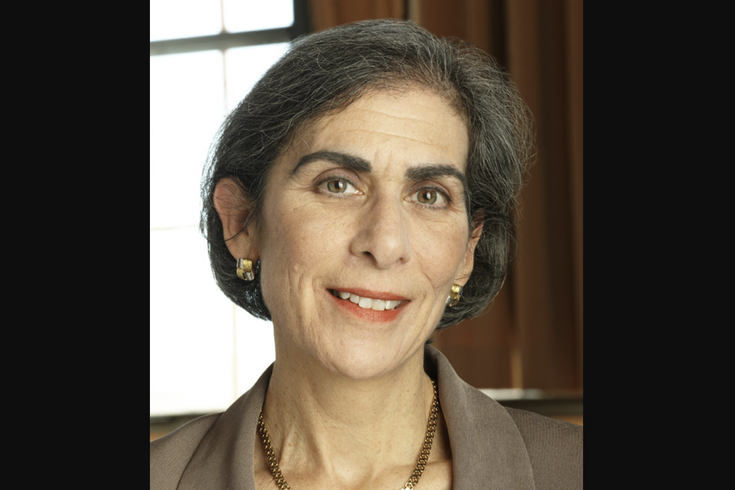
Finally, in the post yesterday 11/15/2025, we read that law professor Wax asks Third Circuit to revive race discrimination suit. (Photo from Univ. of Penn.)
University of Pennsylvania law professor Amy Wax has appealed the dismissal of her claims that the school engaged in racial discrimination by disciplining her for statements that a faculty hearing board labeled “disrespectful and dismissive” to minority groups. The appeal was docketed on Sept. 29, 2025, just over a month after the federal trial court judge in Pennsylvania (identified in the post) concluded that Wax had failed to state a viable claim under federal anti-discrimination statutes. Let’s dive deeper.
The disciplinary process started in March 2022 when the law school’s dean sent Wax, who is white and Jewish, a letter, (some of) the content of which is in the post. In support, the letter cited statements Wax allegedly made, including those noted in the post. A university faculty hearing board found that Wax had engaged in “flagrant unprofessional conduct” and recommended sanctions, including a one-year suspension at half pay and the loss of her named chair. Wax sued in January, alleging that the school’s actions violated the multiple federal statutes listed in the post. She also brought state law claims for breach of contract and false light invasion of privacy. The university moved to dismiss the suit in March, arguing that Wax had failed to state a viable discrimination claim.
The trial court judge dismissed the suit in August, saying that Was had not sufficiently pled that the university discriminated against her because of her race. One part of the decision touching on the First Amendment is quoted in the post. The judge also noted that while Wax claims that other faculty members were treated more favorably, their speech (described in the post) was not similar to hers. He also noted another differentiating basis -see the post. After dismissing the federal claims with prejudice (meaning that she cannot re-file them in this or another suit), the judge declined to exercise supplemental jurisdiction over Wax’s state law claims, saying there was no affirmative justification to keep them in federal court.
TAKEAWAY: Every adverse action taken by an employer – no matter in what setting – is not illegal. Some are, but most are not. Consultation with an employment lawyer prior to taking adverse action helps ensure legal compliance.