Below is a review of the posts on Facebook and LinkedIn from the past week. You can check out the full posts by clicking on the links.
NOTE: there is still some instability and fluctuation with the (attempted) changes in federal labor and employment law, so check with us or another employment lawyer before taking any action based on something in our posts.
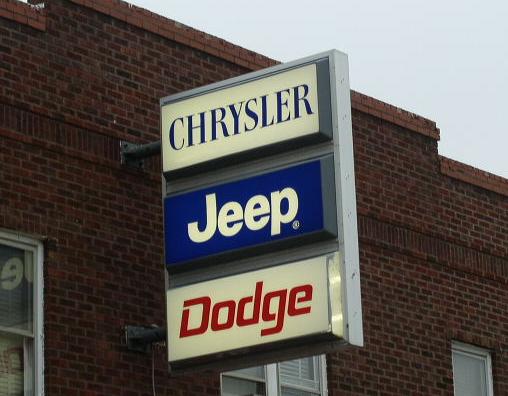
The post on Sunday 7/27/2025 noted EEOC sues Chrysler manufacturer FCA for allegedly firing a worker for not working during Passover. NOTE accommodation was previously approved four times over a period of years and then withdrawn/refused. Ugh. Let’s look at more detail.
The US EEOC filed suit in early June alleging that automaker FCA US (a subsidiary of Stellantis) denied a worker’s request for a religious accommodation to observe the Sabbath and take unpaid time off for Passover. FCA – known for the Chrysler, Dodge, Jeep, Ram and Fiat car brands — allegedly disciplined and eventually fired the worker, who practices orthodox Judaism, for not working the Sabbath or during Passover. How the EEOC’s suit described the worker’s religious beliefs is in the post. FCA allegedly stopped excusing the worker’s Friday absences and instituted mandatory Saturday work.
The EEOC alleged that FCA’s actions violate Title VII (the prohibitions and mandates of which are in the post). The EOC’s statement is also in the post. Allegedly FCA failed to accommodate but instead disciplined the employee for attendance violations (for not working during the Sabbath), even after the employee complained. The employee then filed a charge of discrimination with the EEOC and the company allegedly chose not to participate in conciliation did not immediately respond to a request for comment.
The lawsuit requests a jury trial. The remedies requested by the EEOC are listed in the post.
TAKEAWAY: The EEOC is pushing religious freedom (i.e., non-discrimination) now so be on the right side of legal.
The post on Monday 7/28/2025 told us White House makes key NLRB nominations, opening door for NLRB to operate at full capacity. For better or worse, this may happen soon. Employers take note.
The White House has nominated two additional members to the National Labor Relations Board which has lacked a quorum for most of this year. What the NLRB does is in the post. It requires a three-member quorum to issue decisions in matters brought before it. In January, Member Gwynne Wilcox was removed from her position, leaving just two Board members. One of the results of that is noted in the post.
On July 17, 2025, the Trump Administration nominated Scott Mayer and James Murphy to fill the two open Republican seats. Details on the nominees are in the post. If they are approved by the Senate, the Board will operate under a GOP majority (but it won’t last long as noted in the post).
The Senate has also made recent progress in filling the role of General Counsel for the NLRB. The General Counsel effectively serves as the Board’s chief prosector and also oversees Board regional offices. The Senate Health, Education, Labor and Pensions (HELP) Committee recently reviewed the nomination of Crystal Carey for that position. How that may work out procedurally is in the post. In the interim, William B. Cowen continues to serve as the Board’s Acting General Counsel.
TAKEAWAY: In case you’ve not had enough upheaval in the labor & employment arena the last few months, there may soon be more if the NLRB begins issuing decisions again.

The post on Tuesday 7/29/2025 asked: How can condo or homeowners’ association board make more money? The post asserts that it starts with a business approach.
At a time when many community associations are struggling with increased costs stemming from structural inspections and reserve funding obligations as well as rising insurance premiums, many boards are looking for ways to grow revenues to cover increased association expenses. While owners’ general assessments will always represent the lion’s share of association revenue, there are a few other sources for associations to generate revenue.
When associations’ financial needs exceed budgeted funds, special assessments may be the only viable solution. The normal uses for special assessments are noted in the post, but there are other times when funding needs immediate attention. For example, increased exposure to legal liabilities (such as those listed in the post) could precipitate unbudgeted remedial expenses. Rather than carrying that expense, a special assessment could be levied.
One of the most important tasks for associations and their boards is effective enforcement of rules and regulations. That may entail imposing reasonable fines for documented violations (a revenue source). Associations should have a violation/fine schedule/policy; review it with association counsel to ensure legal compliance. Some of the things that lead to violations and fines are listed in the post.
A caveat is that while fines do generate revenue, that is not their primary purpose. The primary purpose is as noted in the post.
Another possible source of revenue for associations to consider is rental/leasing fees charged to owners to rent their residences. Such fees should be authorized by the governing documents and could cover those types of things as listed in the post. Amenity rentals (such a those listed in the post) are also a common means of generating added revenue for associations. And associations with excess parking or storage space can consider renting any unassigned spaces to residents or, if permitted by the governing documents, to others who may be in need of such offerings.
Any such rentals should be at reasonable rates and take into account the things noted in the post – discuss all of that with an attorney. Ordinarily such rentals also will not require a vote of owners but come within Board discretion of community management.
Communities may also turn to advertising and sponsorship opportunities with local businesses and organizations that wish to reach their residents and guests. That could include ads in the community newsletter or sponsorships of resident events and the other things noted in the post.
There are also a number of small revenue streams that associations can consider, including vending machines in common areas, coin-operated laundry machines, parking fees for guests, and more as noted in the post. Those items offer revenue streams but also may be a great benefit for residents.
TAKEAWAY: Assessments need not be the sole source of income for an association – but discuss others with a community association lawyer to ensure legal compliance.
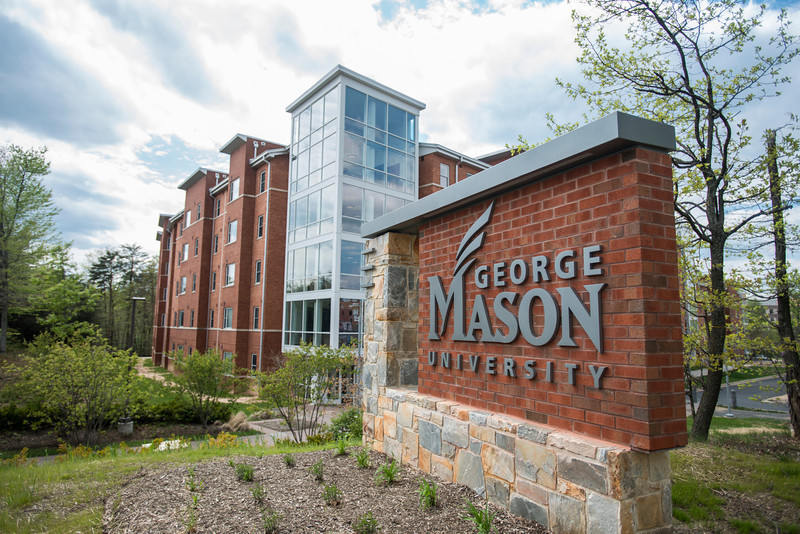
The post on Wednesday 7/30/2025 told us that the Department of Justice (DOJ) investigating George Mason University (GMU) hiring practices over alleged discrimination. Another one in the crosshairs …
According to DOJ, it is focused on determining whether GMU violated Title VII. A statement from DOJ’s Civil Rights Division is in the post.
In a letter to GMU Board of Visitors Rector, DOJ said it has “reason to believe” that race and sex were used as “motivating factors in faculty hiring decisions” under GMU President Gregory Washington. The actual letter is embedded in the post.
DOJ asserted that on July 23, 2020, Washington emailed a GMU faculty listserv in which he said he planned to create a process for “renewal promotion and tenure” that would benefit “faculty of color and women.” More of what Washington allegedly said in the email is in the post (along with a statement by DOJ).
The investigation into GMU comes just weeks after University of Virginia President James Ryan resigned due to pressure from the Trump administration. Part of what Ryan said in his unselfish resignation is in the post.
The current administration has made tacking diversity, equity and inclusion (DEI) policies, particularly in government and educational institutions, a priority. As part of that, the Education Department launched the “End DEI” Portal in February 2025. What it allows (at least in part) is noted in the post.
There was no response from counsel for George Mason University as of publication of the post.
TAKEAWAY: As with other areas, and specifically law and education, the new administration is pushing an anti-DEI (or what it calls evenhanded application of policy) stance. Be alert so that you can make sure you are in legal compliance – discuss with an employment lawyer to be sure.

In the post on Thursday 7/31/2025, we learned that Portland Fire & Rescue faces more claims of racial discrimination. Notice “more”… Meaning there were (or are) already others.
The city of Portland is facing another lawsuit from a Black employee claiming Portland Fire & Rescue discriminated against him. Eric Heard, a fire inspector who worked there for 19 years (it’s unclear if he is still actively employed), is seeking more than $3 million in a lawsuit filed in 2024 against the city. He alleges that his managers discriminated against him during training and internal promotions because of his race. A statement from his attorneys is in the post.
The suit has not been previously reported. The most recent development is a filing by the city in which it denied the claims (on the basis noted in the post). According to Heard’s suit, supervisors allegedly broke their own HR rules and state law in various incidents dating back to 2019 including those things listed in the post.
The City’s attorneys’ response includes what is noted in the post. The case is set for trial on Sept. 18.
This isn’t the first time Portland Fire & Rescue has responded to such allegations. In May, a jury ruled that it was responsible for racial discrimination and retaliation against another Black employee, Jason Wilson, after the City sought to dismiss the case. The award in that case, along with a ink to more information on it, is in the post.
TAKEAWAY: Discrimination happens in both the public and private sectors – it shouldn’t, but it does. Where there’s smoke there is often fire (pun intended here).

The post on Friday 8/01/2025 noted homeowner fined for distributing free water now raising $50K for legal battle with HOA. For the background on this, see our prior post.
The homeowner hit with fines for giving out free bottled water is ready to throw down. David Martin from made a splash when he racked up $650 worth of citations from his homeowner’s association for leaving a cooler of free bottled water in his driveway. Now he’s trying to raise as much as $50,000 to take the HOA to court.
The saga began in 2020, when Martin placed the cooler on his property to help passersby beat the heat, but his HOA said the ice chest violates bylaws about unsightly junk. The citations began rolling in last summer, first for $25, then going up to $100 when Martin neither paid them nor moved the cooler. What Martin says about the cooler, and whether it violates the HOA’s rules, is in the post.
But now the would-be obscure dispute has gone viral, with Martin landing in national headlines and supporters rallying behind his cause. People have sent him more than 150 cases of bottled water so far.
The saga has raged for more than a year, and suing the Canyon Trails Unit 4 West Homeowners’ Association could cost $40,000 to $50,000 in legal fees (according to several lawyers Martin consulted). But he’s not backing down.
Martin can’t afford to pay lawyers out of pocket, but he has begun selling T-shirts, banking on his new virality, on the website for his custom sneaker business. What the t-shirts say and show is in the post.
The HOA said it has no problem with Martin handing out water, but stated he cannot advertise such projects on his lawn. A more detailed statement from the HOA is in the post. Martin said that the cooler doesn’t violate rules against permanently stored items because of how he handles it (see the post).
For Martin, the issue is bigger than the water bottles. The cooler was inspired by his grandfather, who turned his house into a community food pantry and would hand out free food to anyone who came knocking, Martin said. How Martin sees what happened and how it turned into what it is now is in the post.
A special meeting of the HOA was held on July 10. Out of 210 ballots, 190 voted for the removal of three members of the board. They were due to be removed from their roles the day after the vote but they called an emergency session to invalidate the vote (on the basis noted in the post). Board members also questioned whether the 210 votes were enough to establish a quorum in a community with over a thousand homes.
Martin showed records he claims answer those questions – see the post.
And what will Martin do if a court rules against him? See the post.
TAKEAWAY: HOA (and condo) boards are charged with enforcing the association’s governing documents – but sometimes the interpretation of those documents turns into a battle in court. Get a community association lawyer involved early (in the hopes of avoiding such action).

Finally, in the post yesterday 8/02/2025, we saw that Wiccan sues former employer over religious discrimination, harassment. Remember the employee need only have sincere religious beliefs, not ones that you agree with.
A Wiccan woman who previously worked at a furniture store has filed a lawsuit against her former employer, claiming she was humiliated for her religious beliefs, that she was kissed on the lips by one of the owners without her consent, and that she was fired after she complained to management about the alleged harassment. The suit was filed by Jessica Corbett against White’s Furniture, Inc., on July 13.
The suit alleges that Corbett worked as a front desk clerk at White’s Furniture from August 2020 to July 2024. The complaint names several employees and direct supervisors as being responsible for the alleged discrimination, including Arthur and Lee White, the president and vice president of the company.
Corbett says during her multi-year employment she was “subjected to unwanted ongoing and persistent harassment on the basis of her religion” by management and other employees. She alleges that the alleged harassment included remarks that “tarot cards are witchcraft” and more as detailed in the post.
Further, the complaint accuses the Whites of choosing to harass Corbett because she “did not share or follow [their] Christian religious beliefs,” and of repeated efforts to “coerce [Corbett] to conform to” the religious beliefs of the owners. Details on that are also in the post.
Corbett’s suit also claims that she was subjected to “different and harsher work rule standards” and was unfairly scrutinized by management during her employment. Factual details on that are in the post. How Corbett describes what she considers a legal hostile work environment is also described in the post.
But there’s more. In addition to the alleged religious discrimination, Corbett claims she was sexually harassed by Arthur White. Specifically, the complaint alleges that she was “subjected to an unwanted sexual advance and sexual touching when A. White kissed [Corbett] on her lips without her consent.” What Corbett says she did after that, and how the company responded, is all in the post. Corbett was terminated on July 12, 2024 (which she claims led to the damages identified in her complaint and in the post). What she seeks in the suit (both monetary and non-monetary) is listed in the post.
TAKEAWAY: Let us say it again: employees with sincerely held religious beliefs are entitled to (certain) legal protections – know what you as an employer can or cannot do to avoid legal risk and liability.